Seeing Weather in a Dream
Seeing weather in a dream points to your mood, approaching changes, and the news moving around you. Clear weather suggests relief and clarity, while cloudy or stormy skies whisper of inner tension and uncertainty. The details change the meaning.

General Meaning
Seeing weather in a dream speaks less about the sky outside and more about the climate moving over your inner world. This dream often carries signs of your mood, approaching changes, the direction of news, and the hidden pressure or relief shaping your life. Just as the sky can clear in an instant and then close under clouds, the human heart changes too. A weather dream gathers that shifting nature and places it before you. Sometimes it comes like a warning, sometimes like comforting news, and sometimes it simply whispers, “Look—this is what is happening inside.”
The beauty of this symbol is that it does not close itself into one meaning. When you see sunny weather, there may be a path ahead becoming clearer, a warm message, or a connection that opens your heart. Rain may look like the sky crying, yet it often carries cleansing and mercy. Fog says that something is not fully visible yet; a storm may point to bottled-up tension, speeding events, or sudden breaks. Cold weather carries distance and withdrawal; hot weather brings intensity, vitality, and sometimes impatience. So in a dream, weather is less a scene than an atmosphere, less an object than a climate.
As you read the dream, the details matter deeply: was the weather changing during the day, were you outside, were you looking up at the sky, were you waiting for news, were you alone or in a crowd? This symbol connects outer conditions with inner ones. Sometimes the weather outside reflects the weather within; sometimes the reverse is true. That is why seeing weather in a dream feels like a narrow gate opening both to the sky of fate and to the climate of the heart.
Three Lenses of Interpretation
The Jungian Lens
From a Jungian perspective, weather is the emotional climate of the unconscious. Here the sky is not just nature’s backdrop, but the wide dome of the psyche. Clouds carry shadow; the sun is the light of consciousness; wind is thought and feeling in motion; rain is the release of repressed emotion. Watching the weather in a dream often means witnessing your own inner climate. As you look at the sky there, you may actually be looking at yourself. In Jung’s language, this kind of dream makes the gap between persona and inner reality visible: the face you show the world and the season you carry inside are not always the same.
The weather symbol is an important threshold on the path of individuation, because a person begins to notice change not only in events, but also in the tone of their feelings. Sunny weather can strengthen trust, openness, and a sense of wholeness. It may suggest a temporary harmony between inner and outer worlds, a moment of closeness to the Self. But when you see a storm, that harmony may seem broken, yet what is really happening is that the material hidden in shadow is rising to the surface. For Jung, the shadow is not only what is bad, but also what has been repressed and left unrecognized. A storm is sometimes those parts knocking at the door. Fog likewise becomes a call to face the unknown; you may feel lost, yet that very lostness can make room for a new sense of direction.
A sudden change in the weather carries the archetype of transformation. A delayed decision, a buried feeling, a postponed confrontation suddenly appears in the sky. This dream can also evoke anima or animus, because weather forms a delicate bridge between feeling and thought. If you saw the wind pulling you somewhere, clouds settling over you, or the sun breaking through at once, it may be said that the psyche is not moving in a straight line, but in a living rhythm. Jung would say that this rhythm invites you to read not only events, but also your own inner nature.
The Ibn Sirin Lens
In the dream tradition of Muhammad ibn Sirin, the sky, clouds, rain, wind, and light are all read alongside news and changes of state. Seeing weather in a dream is not treated as a single object, but as a gathering of signs. In Nablusi’s Ta’tir al-Anam, clouds, rain, and wind are interpreted separately; when they come together, they describe mercy, trial, or warning reaching a servant’s condition. Kirmani also links weather conditions to travel, the arrival of news, and the words moving through people’s hearts. And in the reports attributed to Abu Sa’id al-Wa’iz, a clear sky may be read as relief, while a darkened sky can signal the pressure waiting ahead.
In classical interpretation, sunny weather often means openness, relief, and matters becoming visible. For some, it points to a joyful piece of news; for others, to honor and ease. Nablusi especially reads open weather as clarity in the outward world and a road that can be seen. Rainy weather has two sides: if the rain is gentle, harmless, and blessed, it is associated with mercy and abundance; if it is violent, flooding, or damaging, it may point to hardship, debt, pressure, or overflowing conditions. According to Kirmani, rain that comes on time and in measure is good; rain that exceeds its measure can magnify the trial.
Foggy or overcast weather is often read in the sources as uncertainty, hidden matters, or the inability to reach the full truth of a situation. In the line of Ibn Sirin, a covered sky may point either to a scattered mind or to a concealed matter in the environment. Storms and strong winds, if they cause damage, are interpreted as turmoil, panic, sudden change, or the pressure of a strong authority. Abu Sa’id al-Wa’iz says that wind can work like a hidden hand carrying news, which is why weather in a dream often speaks of invisible forces touching your life.
There are also contradictions in classical interpretation. The same rain may mean abundance for one person and tears for another. The same storm may mean affliction for one person and the time of cleansing and relocation for another. That is why traditional interpretation does not end with a simple “good” or “bad.” The tone of the weather in the dream must be read together with your fear, your expectation, your intention, and the feeling left at the end of the dream. For the sky is sometimes the mirror of the condition falling into the heart.
The Personal Lens
Now ask yourself gently: what climate have you been moving through lately? What kind of weather has been pressing against your daily life—clear, heavy, foggy, full of sudden winds? Because this dream usually speaks less about the sky outside than about the weather inside you. Maybe a matter is about to become clear, but you are still looking toward the horizon. Maybe you are in a period of waiting, and this dream carries the sound of that waiting. Or maybe you are standing on the edge of a decision, and the weather is whispering, “Look, the conditions have changed.”
How did you see the weather in the dream? Did the sky open, or did the clouds grow heavy? If it rained, did the rain bring peace or send you searching for shelter? If the wind touched your face, did it make you feel alive, or did it sweep you away? These details say a great deal. The same scene can leave one person relieved and another burdened. The inner voice of your dream is hidden right there.
What relationship, what task, what decision in your life is creating its own weather right now? Do you feel the atmosphere suddenly change when you speak to someone? Or does your sky open when you turn inward? A dream does not always give you a verdict; sometimes it only names what you already feel. For that reason, it helps to listen to this dream not as an outside judgment, but as an inner reminder. Once you notice the climate inside you, you slowly begin to hear how to move through it.
Interpretation by Color
In weather dreams, color carries the soul of the sky. Blue whispers openness, gray a state in between, black a heavy pressure, white purity, and red the tension or sunset tone of change. In classical interpretation too, the color of the sky is tied to the condition of the soul. Nablusi and Kirmani both suggest that changes in the sky often carry news, relief, or warning. The colors below are the most common faces of weather in a dream.
Blue Sky
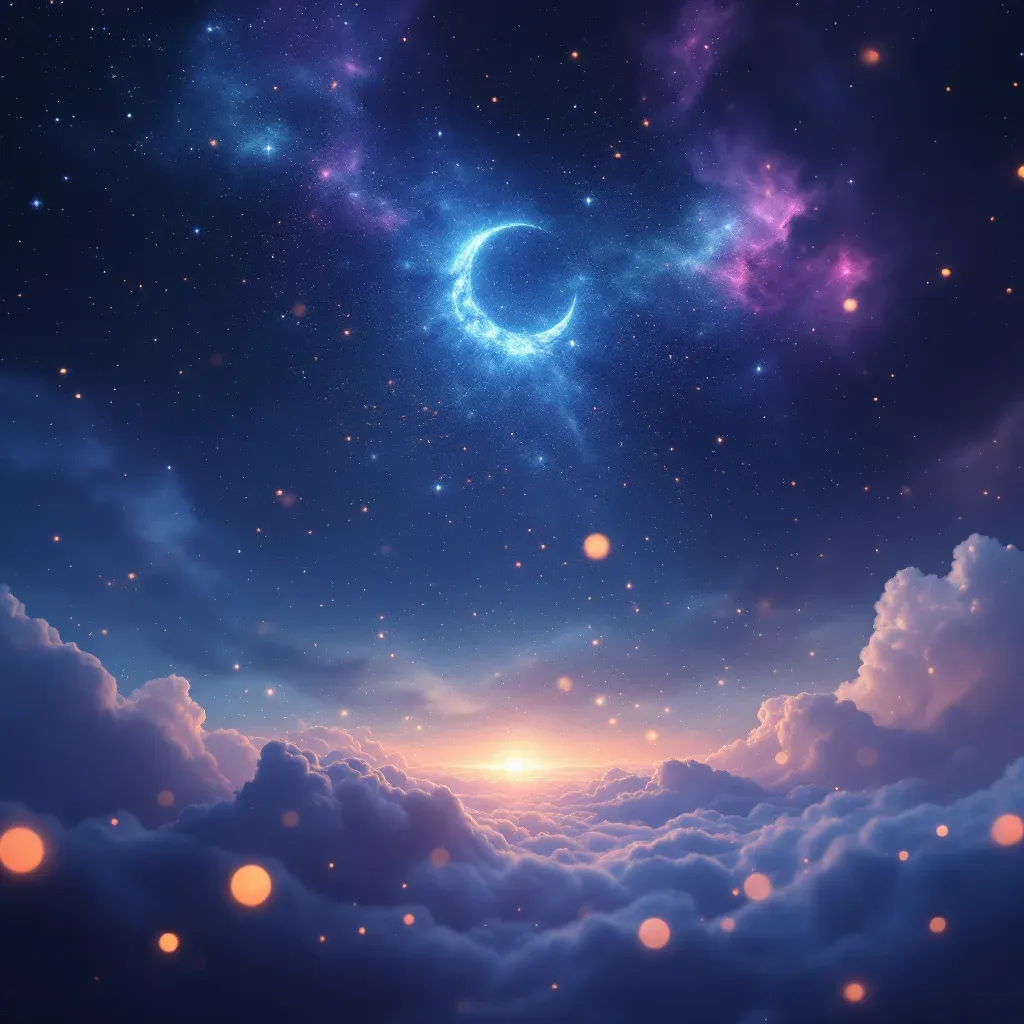
Seeing a blue and open sky points to the mist lifting from your heart. In a Jungian reading, this means the expansion of consciousness and the easing of emotional confusion. Close to Nablusi’s interpretation of open sky, a blue sky often stands for relief, visibility, and the ability to see ahead. If you were walking under a blue sky in the dream, it may suggest that a matter in your life will take on a more honest and simpler shape. If you are waiting for news, its tone may soften. If you are facing a decision, your mind may become clearer. Yet the vastness of a blue sky can also carry a sense of distance; too much openness can feel like emotional exposure.
Gray Cloudy Weather
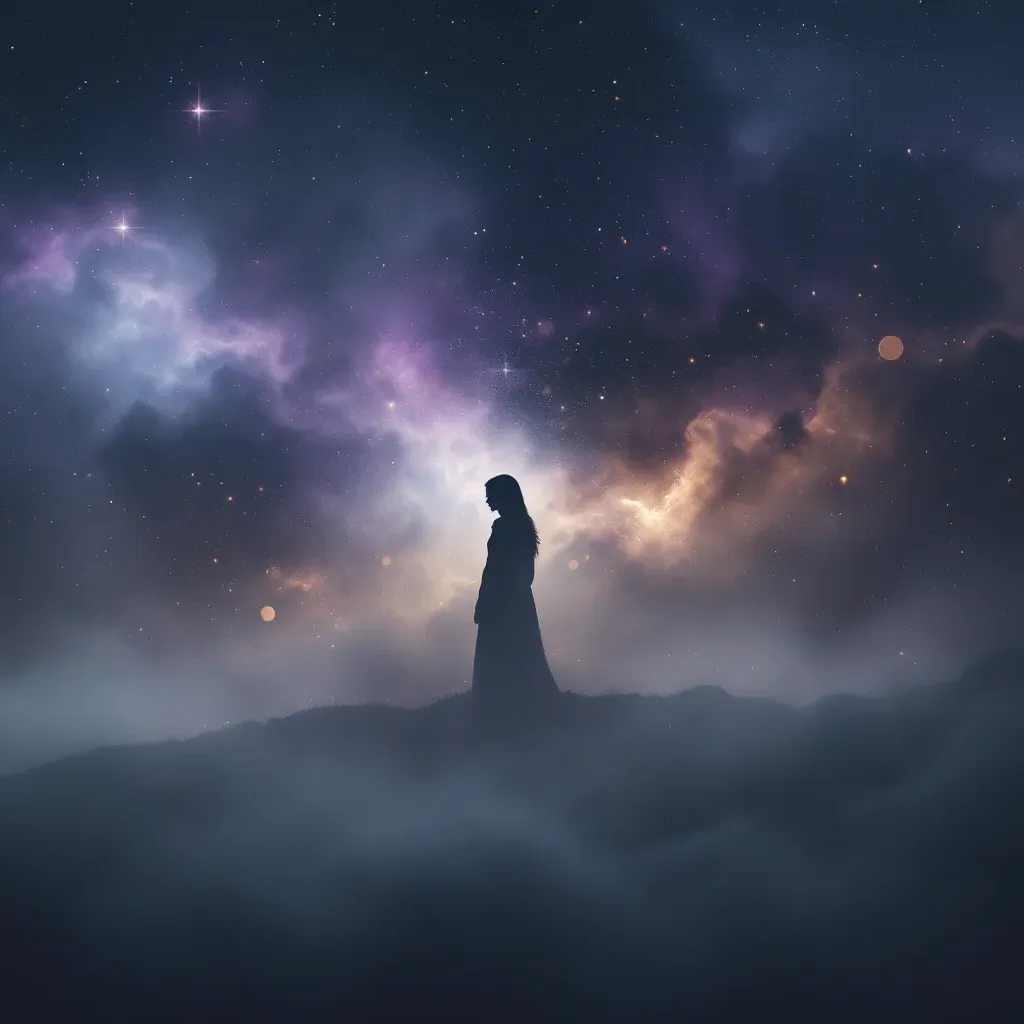
Gray weather is neither fully dark nor fully bright; it speaks of an in-between state, a process standing on the threshold. Kirmani often reads covered and neutral sky states as waiting and delayed clarity. This dream may show that feelings have not yet fully settled and decisions have not yet crystallized. Gray weather can sometimes feel calm, because it pulls you away from haste. But it can also feel like a heaviness sinking into the heart. If you felt cold while looking at a gray sky, it may point to a distance you feel in relationships or work. The condition is not broken; it is simply suspended.
Black and Dark Weather

Black or dark weather is one of the most striking signs in dreams. Abu Sa’id al-Wa’iz sometimes links a darkened sky with fear, concealment, or heavy news. Yet this is not always an ominous sign; a dark sky can also be the opening of deep layers of the unconscious. For Jung, darkness is where the shadow is encountered. If the black weather tightened around you, a repressed feeling may be coming into view. Sometimes it is a symbol of outside pressure; sometimes it points not to collapse but to restructuring. Trying to find your way in the dark may also mean that you are beginning to recognize your own light.
White and Light Misty Weather
White weather can also describe a brightness blended with mist. These dreams carry a state where visibility is incomplete but not threatening. In the line of Ibn Sirin, a sky leaning toward white is often connected with the purification of intentions and the softening of words. Yet misty whiteness can also point to a wish that has been overly idealized. What you see is not clear, but it is not harsh either. For that reason, this kind of weather may whisper that you need to trust your intuition in a matter. Especially in emotional questions, it may be better to accept a path that opens slowly rather than demand an immediate answer.
Red, Orange, or Blushing Sky
A sky tinted red or orange carries the emotional heat of change. According to Kirmani, red tones can sometimes point to anger, urgency, tension, and conflict; at other times they mean power and vitality. A sky reddening like sunset may signal the closing of one period and the threshold of another. If these colors felt peaceful, the transition may be unfolding gently. But if the redness of the sky felt threatening, words may be hardening, emotions heating up, or a relationship may be reaching a quick boil. This dream may have left the trace of a “hot issue” in the sky.
Interpretation by Action
In a weather dream, what matters most is often not only what you saw, but what happened to it. Does the sky open, close, rain fall, wind rise, a storm break, or the weather suddenly shift? Classical interpretation also multiplies the meaning through movement. Nablusi and Kirmani read weather together with time, news, and influence. Below are the strongest forms of movement in weather dreams.
The Sun Breaking Through
When cloudy weather suddenly opens and the sun appears, it is usually a sign of relief and clarity. Close to Ibn Sirin’s interpretive line, this scene can describe ease after sorrow, hidden matters becoming visible, and the road being illuminated. In Jungian terms, it is a surge of energy into consciousness, a dark matter beginning to move toward light. If you have been waiting for something for a long time, this dream may carry a sense of visible progress. Yet the sudden sun can also create a feeling of exposure, because what was hidden is no longer hidden.
Rain Falling
Rain is one of the most classic faces of the weather symbol. Nablusi reads gentle, harmless rain as mercy, blessing, and vitality. Kirmani often pairs timely rain with good news. If the rain soaked you and made you feel refreshed, it may point to tears that cleanse, burdens that soften, or the washing of the soul. But violent and destructive rain suggests overflowing emotions or pressure. If you were running from the rain, you may be avoiding a feeling in waking life. If you welcomed it, your heart may be asking to be emptied and renewed.
A Storm Breaking
A storm carries the highest tension in the dream. Abu Sa’id al-Wa’iz links strong winds and storm conditions with turmoil, sudden change, and the pressure of authority. But a storm is not only destruction; it can also clear a space, burst open what was suppressed, and break an old order. In Jungian language, a storm is the shadow knocking loudly at the door. If the storm frightened you, there may be an event outside you or a pressure inside you that has become overwhelming. If you remained standing despite it, that is a sign of resilience. It may also be a change you fear but need.
The Wind Changing Direction
When the wind shifts from one direction to another in a dream, it often means that decisions, relationships, or the flow of news are changing course. Kirmani sees wind as an invisible but effective force; a change in wind means a change in influence. If the wind first hit your face and then came from behind, support and momentum may strengthen. If a favorable wind suddenly turns against you, a task that was easy may become harder. From a Jungian perspective, this is the psyche searching for direction and the ego trying to establish a new balance. The wind’s direction reveals which side of life is pushing you.
Fog Settling In
Fog is the temporary withdrawal of clarity. In the line of Ibn Sirin and Nablusi, it can be associated with truth being covered, intentions not yet visible, or a period of indecision. If you entered the fog and lost your way, it suggests that you may also be moving through uncertainty in waking life. Yet fog can be protective; not everything needs to be seen at once. Jung would say this is the unconscious slowing you down and preventing rushed decisions. When fog settles, outside noise softens, and you may begin to hear your inner voice more clearly.
The Weather Suddenly Changing
If the weather changes suddenly in a dream, the rhythm of your life is about to change too. A shift from sun to cloud, from warmth to cold, from calm to tension can point to unexpected news, sudden decisions, surprise confrontations, or a sharp turn in mood. Abu Sa’id al-Wa’iz often treats such rapid changes as a call for caution and attention. This scene says, “The conditions are not fixed.” In Jungian reading, change is a sharp bend in the individuation process; the old persona cracks, and a new attitude begins to appear. If the weather changed all at once, what has been moving inside you may also have turned in a new direction.
Cooling Down and Feeling Cold
Seeing the air cool and make you shiver relates to distance, emotional withdrawal, and the need for protection. In Nablusi’s interpretations, coldness can sometimes carry relief and ease, especially when it follows oppressive heat. But if the context is harsh, cold weather can also mean emotional distance, relational coolness, or a slowdown in affairs. If you shivered and searched for shelter, some area of your life may not feel warm enough right now. From a Jungian perspective, this is a short withdrawal of emotional resources; the person is pushed inward for a while.
Heat Building Up
Seeing oppressive heat in a dream is usually read through intensity and pressure. Kirmani connects excessive, uncomfortable heat with heavy work, harsh words, or impatience. If the heat felt good, it may also carry vitality and movement; but if it was suffocating, it suggests that the limits of mind and body are being tested. In Jungian terms, heat is the rise of libidinal energy; it can be creative drive or tense pressure. This dream may be saying, “Something is getting too hot”: a relationship, a matter, a hope, or an inner argument.
Interpretation by Scene
Weather gains new meaning depending on the place where you see it. The same rain speaks differently at home, on the road, or by the sea. In the Ibn Sirin tradition, place determines the direction of the sign. When the language of the sky meets the location on earth, the message becomes clearer.
Weather at Home
If the weather changes inside the house, or if you are looking at the sky from a window, the dream touches the inner world and the family field directly. The house is a person’s private space, so the weather inside it is the closest form of the soul’s climate. According to Nablusi, wind entering the house can mean news, a visitor, or an influence coming in. If the sun opened inside the house, there may be relief within the family, gentler conversations, or the easing of a burden. If the house grew dark, there may be silence, hidden tension, or a feeling of pressure among the people living there.
Weather on the Road
Seeing weather on the road tells you how the path of life is flowing. Kirmani often connects the combination of road and weather with travel, decisions, and changes in direction. Moving along a sunny road may show that your intention is clear and your steps are easy. A foggy road may show indecision and a lack of direction. Walking through stormy weather may point to a difficult but instructive process. If the weather suddenly worsened while you were on the road, your plans may change under unexpected influence. This scene looks straight at the movement of your life.
Weather by the Sea
Seeing weather by the sea means standing at the edge of feeling. In Jungian language, the sea represents the unconscious, while the weather represents the visible emotional state above it. When these two symbols come together, it becomes clearer how close the feeling is to the surface. Calm, open weather may signal peace with your emotions. If the sea and sky are both stormy, the inner world may be in powerful motion. Within Nablusi’s frame, such scenes can also describe news descending into the heart. The feeling you had by the sea is central to the interpretation.
Looking at the Sky from a Window
Looking at the weather from a window means standing both inside and outside at once. This scene carries the sense of taking distance and watching your life. Abu Sa’id al-Wa’iz often associates such sky-gazing dreams with reflection, lesson-taking, and searching for direction. If the window was open and wind came in, the outside world may be entering your inner space. If the window was closed, there is a need for protection or withdrawal. If you felt the sky was speaking to you through the window, it is an intuitive call.
Weather in a Crowd
Seeing weather in the middle of a crowd describes the social climate and the collective mood. If the sky opens over a square, there may be relief and a shared breath in the group. If there is a storm in a crowd, arguments, rumors, or a field of tension may have spread. Kirmani suggests that weather affecting a community carries collective pressure or joy beyond the personal. For Jung, this is the visible form of the collective unconscious. A person absorbs not only their own weather, but also the weather around them.
Interpretation by Feeling
The same weather can feel completely different in a dream. One person rejoices in rain, another fears it; one finds peace in fog, another loses direction. What truly opens the dream is the feeling you had in the moment. Classical interpretation gives this weight too: intention, fear, relief, and surprise all change the direction of the sign.
Feeling at Peace with the Weather
If you felt calm while watching the weather, it means that even if life is changing, there is a ground strong enough to hold you. In Jungian terms, this is a short harmony with the Self; inner and outer worlds recognize each other. Close to Nablusi’s reading of relief, open weather or gentle rain may show that your heart is expanding. Peace here is not passive stillness, but the ability to trust change. If you looked up at the sky and felt relieved, perhaps what is inside you is more orderly than you thought.
Feeling Afraid of the Weather
If fear is present, the dream often points to pressure, uncertainty, or overflowing feeling. You may have feared a storm, darkness, sudden change, or stifling heat. In a tone close to Abu Sa’id al-Wa’iz’s warning style, such fear dreams often describe a condition that needs attention. But fear does not always mean danger outside; sometimes it is the voice of a confrontation hidden inside. For Jung, fear is the language of first contact with the shadow. Remembering how frightened you were can help you understand the center of the dream.
Resisting the Weather
If you pushed against the weather in the dream—for example, if you walked into a storm or stood in the rain without shelter—it shows a resilient side of you. According to Kirmani, struggling against weather can mean trying to move forward despite the conditions. This can be read positively: a spirit that does not give up, a will that does not step back. But excessive resistance may also show the tendency to force everything into solution. In Jungian terms, this may be the ego resisting nature, meaning the natural flow of the psyche. The point here is this: not every weather can be fought; some changes ask to be accepted.
Being Surprised by the Weather
A feeling of surprise means the dream caught you off guard. A sun that suddenly opens, fog that drops in at once, unexpected rain, or unseasonal heat may point to surprise developments in life. In the line of Ibn Sirin, unexpected sky conditions are often linked with news arriving suddenly. Surprise here means both openness to new information and a loss of control. If you were surprised without fear, you may be ready to accept what is new. If surprise came with fear, the change may not yet have prepared you fully.
Being Pulled into the Weather
If you felt yourself being drawn into the weather, merging with the sky, or wrapped by the wind, this is a powerful symbol. For Jung, such scenes can show a person being drawn into a wider field of consciousness, with the boundaries of the individual self softening. In the lines of Nablusi and Abu Sa’id al-Wa’iz, this can sometimes relate to surrendering to fate, or to contemplation and trust. Being pulled into the weather may look like a loss of control, yet at times it is simply becoming aligned with the larger picture. This feeling is one of the dream’s deepest touches.
Being Swept Away by the Weather
If the wind or storm swept you away, it suggests that your sense of ground has been shaken. Kirmani often reads being swept away as loss of direction, being under influence, and pressure from outside forces. If panic came with it, you may be too exposed to outer conditions in waking life. But if being swept away turned into a feeling of flight, it can also suggest freedom and the loosening of old boundaries. In Jungian reading, being swept away means the ego lets go of control and meets the flow of the unconscious. This scene reveals what you are holding onto.
Waiting for the Weather to Change
Waiting for the weather to change is connected with patience and threshold states. If you looked at the sky with the feeling that “something is about to happen,” you may be living in the quiet space before a door opens. In the interpretive world of Ibn Sirin, waiting is often tied to the ripening of news. Waiting for the sun to come out symbolizes hope; waiting for the rain to stop symbolizes endurance; waiting for the fog to lift symbolizes patience. This dream reminds you that change does not always open at once—it often unfolds with time.
Small Signs That Carry the Whole Meaning
Weather does not usually appear alone in a dream; it speaks with other details. The cloud behind the sun, the smell after rain, the sound carried by the wind, the openness of the sky, or the weight of night all shape the color of the interpretation. Kirmani and Nablusi often remind us that a small detail can change the ruling. So in a weather dream, these subtler points matter too: was it morning, evening, or night; were you alone or looking at someone; were you outside or watching from a window; what did you feel as the weather changed?
Open weather seen in the morning is often a gentle sign of a new beginning. Clouds gathering in the evening may suggest that something is moving toward closure. A night sky and stars call forth deeper intuition and inward awareness. If you heard the wind, a message that has not been heard may be trying to make itself known. The smell of rain strengthens the emotional tone of the dream; sometimes it carries longing, sometimes cleansing, sometimes peace. If the sky felt very low, the weight above you may have grown heavier. If it felt endless and wide, your horizon may be opening.
Another side of this symbol is that it often carries the fine vibration between the future and the present. Weather likes the question, “What will happen in a moment?” That is why this dream reads the change inside the instant. If the weather changed after someone spoke, if the sky darkened after a conversation, each of those details forms the border around the message. In classical interpretation too, the sign is not a single point but the whole scene. When you see weather in a dream, it asks you not only to look at the sky, but to notice your own state inside that sky.
Final Layer: What the Weather Is Saying to You
Seeing weather in a dream often opens into the question, “What is the climate of my life saying?” The feelings you keep hidden, the news you are waiting for, the tiredness you carry, the openness you hope for—all of these gather inside this symbol. The sun may be a promise of relief. Rain may bring cleansing and abundance. Fog may honestly reveal uncertainty. Storm may give voice to repressed energy. Cold may speak of distance and the need for protection; heat may speak of intensity and movement. Weather is, in truth, a language of transition: the sign appearing in the sky as one state becomes another.
So when you read this dream, do not rush. Do not judge it at once. Notice which weather comforted you and which pressed against you; which change excited you and which frightened you. When the lines of Ibn Sirin, Kirmani, Nablusi, and Abu Sa’id al-Wa’iz come together, one thing becomes clear: the sky is not only above you. You also carry your own sky. And the weather you saw in the dream is often the letter sent to you by that inner sky.
If you want, you can now describe the dream in more detail: what was the weather like, what time of day was it, and how did you feel? With those details, the interpretation can breathe much more sharply.
Frequently Asked Questions
-
01 What does seeing weather in a dream mean?
It points to your mood, approaching changes, and news coming from your surroundings.
-
02 What does seeing sunny weather in a dream mean?
It is interpreted as clarity, relief, and matters becoming visible.
-
03 Is seeing stormy weather in a dream always bad?
Not always; it can signal inner tension, pressure, or a sudden change.
-
04 What does seeing foggy weather in a dream mean?
It suggests uncertainty, indecision, and a matter that has not yet become clear.
-
05 What does seeing rainy weather in a dream tell you?
It can point to emotional release, purification, and sometimes the beginning of a merciful process.
-
06 How is cold weather in a dream interpreted?
It is often read as distance, withdrawal, or emotional coolness in some relationships.
-
07 What does it mean if the weather suddenly changes in a dream?
It can indicate an unexpected transition in life, a sudden piece of news, or a sharp shift in mood.
✦ Just for you ✦
Write your dream,
we'll read it
If what we wrote above doesn't quite fit — tell us yours. Your own weather dream, with its unique details, may deserve a different reading.
✦ Your dream arrived.
We'll get back to you when the reading is ready. Don't want to wait? Download RUYAN for an instant reading.
Could not reach the server.
We saved your dream locally — when you reload later, we'll auto-resend it.
Next step
This reading is a beginning. Let's look at your whole dream — if you wish.
RUYAN reads your "Weather" dream through your life, your birth chart, and your recent dreams — one by one, just for you.