Seeing a Storm in a Dream
Seeing a storm in a dream means buried tensions are rising to the surface, change is speeding up, and your inner compass may feel shaken. Sometimes it is a cleansing break; sometimes it is a warning threshold. The details—from the wind’s direction to where you seek shelter—change the message.

General Meaning
Seeing a storm in a dream is the wind-form of the intensity weighing on your soul. This dream often whispers that something is moving beneath the calm surface of your life: suppressed words, postponed decisions, delayed confrontations, accumulated fatigue… A storm is not only the sky’s language of anger; it is also a passage that clears, scatters, and reveals what was hidden. That is why seeing a storm in a dream does not always lead to the same door. Sometimes it announces an approaching change; sometimes it is simply the conscious mind catching up with a transformation already underway.
This dream can also speak of acceleration in your life. Something that was moving slowly may suddenly gain momentum; in relationships, at work, at home, or in your inner world, things may have begun to shift out of place. A storm is one of the symbols that challenges your sense of control. In a storm, people search less for a route and more for shelter. The dream often reminds you of this: where do you need protection now, where do you need patience, and where do you need to move forward with courage?
Some storms carry warning, others purification. If fear dominates the dream, it is the voice of pressure and insecurity. If the storm passes without harming you, it shows that you have found a center within yourself despite the chaos outside. For that reason, this dream can be read as both unsettling and instructive—like a letter that shakes you and teaches you at the same time.
Three Perspectives
Jung’s Perspective
From a Jungian perspective, a storm is like the collision of consciousness and the unconscious. The darkening sky describes repressed material approaching the surface. As an archetype, the storm is not chaos itself, but the call for transformation hidden within chaos. The ego wants order, yet the psyche sometimes raises the wind when order has reached its limit. For this reason, seeing a storm in a dream may indicate that an old structure is no longer enough on the path of individuation. The persona—the face you show the world—may have become too rigid or too fragile in certain areas. The storm cracks that shell.
In Jung’s depth psychology, weather often carries collective forces. A storm reaches beyond personal anger and touches a larger field of transformation. If you see a storm over the sea, it suggests direct contact with the stirring of unconscious emotions; water represents feeling, while wind represents the speed of thought. When these two elements combine, reason and emotion may strain against each other. Strong wind also carries the meaning of encountering the shadow: the part of you you do not want to see, have suppressed, or tried to keep under control now wants to become visible.
If you see a house in the middle of the storm, it is a call toward the self archetype; the house may represent the whole psyche, the inner structure of your being. When chaos rages outside, searching for a room, a window, or a shelter inside suggests a need to rebuild your center. To Jung, crisis can become the threshold of individuation if met consciously. A storm dream often carries exactly such a threshold: an old identity dissolves, and in its place begins a more authentic search for self. So even if the dream is frightening, it is not only destruction; it is also the psyche’s attempt to restore its own balance.
Ibn Sirin’s Perspective
In the interpretive tradition of Muhammad b. Sîrin, wind and storm are often read together with strong news, upheaval, and the influence of authority. Depending on its intensity, a storm may point to trial or to the swift resolution of an affair. According to Kirmani, a hard-blowing wind can be interpreted as pressure coming upon a person or an order passing over them; in Nablusi’s Tâbîr al-Anâm, wind also carries the meaning of mercy and movement if it does not bring harm. In other words, the same symbol may be both a favorable breeze and a warning gale.
As Abu Sa’id al-Wa’iz transmits it, a storm may look frightening, yet it can conceal a hidden cleansing; wind lifts dust, reveals what is hidden, and shifts the layers in place. Therefore, seeing a storm in a dream may point to a concealed matter coming into the open. If the storm enters the house, it is interpreted as tension within the family, unexpected news, or a disturbance affecting the home. If the storm remains outside and you stay safely inside, that may show a veil placed between you and hardship.
Kirmani says that strong wind can sometimes bring travel and change, while Nablusi advises paying attention to the direction and effect of the wind. Harmful wind brings fear and conflict; beneficial wind brings movement and relief. From the Ibn Sirin line of interpretation, a storm dream is not always bad in itself. After the storm, the sky may clear, matters may open up, and narrowness may lift. For some, this dream is an approaching test; for others, the expansion that follows the test. The abundance of wind can at times announce a crowded flow of news, and at times a sudden turn touching destiny.
Your Personal Perspective
Now ask yourself gently: what has been overflowing inside you lately without a name? A postponed word? A delayed decision? A relationship that drains you? A storm dream often arises not from the weather outside, but from pressure within. In waking life, where do you feel pinned down? In what area are you always trying to look strong while quietly wearing yourself out?
Perhaps this dream is your soul’s graceful way of saying you can no longer carry something alone. Sometimes people see the storm outside, but the real question is where you are already living inside a storm. Work, family, love, anxiety about the future, financial pressure, waiting in uncertainty… Which one feels closest to you? The dream may be pointing to that area and asking you to look at it honestly.
Also consider this: what did you do in the storm? Did you run, hide, watch, or keep walking? Because the meaning of the dream is partly hidden in your response. Running may speak of a need for protection; walking may speak of inner resilience. If you stayed calm in the dream, it suggests a stronger center than you may realize. If you were afraid, that is not weakness—it is simply the voice of being human. The dream is not asking for perfection; it is asking for awareness.
Now form one sentence: what do you most want to stop, to wait for, or to endure in your life right now? The answer may show you where the storm is blowing.
Interpretation by Color
Seeing the storm itself matters, but the color it carries can change the meaning. The darkness of the sky, the tone of the clouds, the breaking of light, even the color of dust can shift the interpretation. Masters of dream interpretation like Kirmani and Nablusi advise looking not only at the symbol’s presence, but also at its quality. So beyond simply seeing a storm in a dream, it is worthwhile to remember whether it was black, white, red, yellow, or gray.
Black Storm

A black storm carries hidden fears and uncertainty. In Nablusi’s line, such dark weather may indicate heavy news, inner tightness, or a process where the person cannot see ahead. In a Jungian reading, black calls up the shadow archetype: the dense, closed form of the qualities you struggle to accept. This dream may be linked to repressed anger, delayed grief, or anxiety that has not yet been named. Still, black does not always mean a bad ending; sometimes the night is at its darkest just before dawn. The darkness of the storm may describe the pressure that comes before cleansing.
White Storm
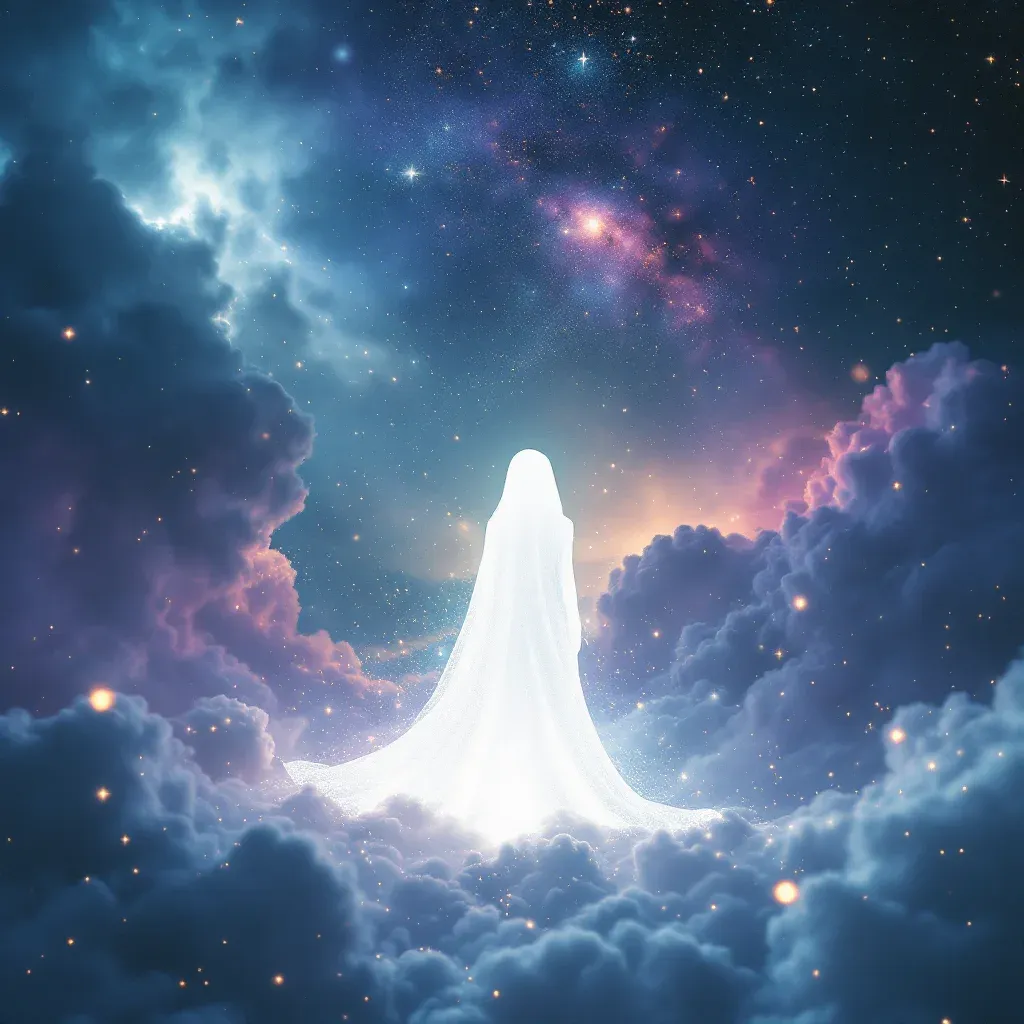
A white storm is a stranger and more cleansing symbol. A storm arriving with snow, mist, or bright clouds may seem harsh on the surface, yet its intention can be purifying. In Abu Sa’id al-Wa’iz’s mystical line, whiteness is often linked to purification and the lifting of veils. Kirmani also says that beneficial winds sometimes carry a person into a new order. A white storm resembles an inner purification crisis: first you lose your direction, then you arrive at a simpler truth. If there is little fear and much wonder, this dream may herald a clean transformation.
Red Storm

A red storm is the color of tension, anger, and haste. This image may especially point to rising pressure in relationships or a period when decisions are being made under emotional strain. In the interpretive tradition of Muhammad b. Sîrin, redness is often associated with trial and heat; for that reason, a red storm may mark an area that needs attention before an argument grows larger. In Jungian terms, red carries life force as well as impulsiveness. If powerful energy has been building inside you, this symbol brings it out into the open. Its blessing is that it calls you to act; its warning is losing your direction to anger.
Yellow Storm
A yellow storm suggests both weakness and sensitivity. In classical interpretation, yellow tones are sometimes read as illness, fatigue, or the evil eye; but here it is better understood more broadly as drained energy. In Nablusi’s approach, yellow can indicate a period when body or soul is weakened. A storm appearing yellow may suggest that words from around you have worn you down, or that your attention has been scattered. This dream may be whispering that you need to slow down and listen to your body and mind. Yellow is a color that asks for care; combined with a storm, it warns that mistakes become more likely when you rush.
Gray Storm
A gray storm represents limbo and areas where decisions cannot yet be made. Neither fully dark nor fully bright… In this case, the dream speaks of an uncertain transition. From Kirmani’s practical interpretive line, gray weather shows a time when clarity is desired but not yet reached. In Jungian language, this is a threshold state: an old way of holding on dissolves, while the new one is not yet fully formed. A gray storm does not only call you to patience, but also to read the signs carefully. There is a crisis present, but its shape may not yet be complete.
Interpretation by Action
What the storm does in the dream is one of the biggest factors changing its meaning. Simply appearing is one thing; approaching, striking, or dispersing is another. In the Ibn Sirin school, direction, harm, and lasting effect matter greatly. Here we look at what the storm does to you, because sometimes the essence of the symbol lives in the action itself.
Approaching Storm
An approaching storm describes a process that has not yet fully broken but whose energy can already be felt. According to Kirmani, a force drawing near calls a person to take precautions; for this reason, this dream may suggest that an affair, a conversation, or a change is close at hand. From a Jungian perspective, an approaching storm is the unconscious knocking on the door. Tension felt before anything fully appears shows that intuition is growing stronger. This image often comes in times when you sense that “something is about to happen.” Its gift is preparation; its difficulty is the anxiety of waiting.
Severe Storm
A severe storm is pressure becoming impossible to hide. In the line of Muhammad b. Sîrin, growing intensity may point to events becoming harsher as well; especially if there has been a long-postponed issue in your life, the dream may say it will no longer step back. Nablusi reads harmful wind as a warning, so a severe storm calls for caution. In Jungian language, this is the moment when the ego reaches its limit. Just when a person thinks they are controlling everything, the psyche speaks more powerfully. In this dream, finding your center matters as much as escape.
Walking in the Storm
Walking in a storm is a symbol of resilience and determination. In Abu Sa’id al-Wa’iz’s interpretive language, difficult journeys carry spiritual maturity when endured with patience. This dream shows your will to move forward even when conditions are far from ideal. If you are walking in the storm, you may have chosen to pass through fear instead of around it. Its blessing is courage and endurance. Its caution is overstraining yourself and neglecting your own limits. If you found your direction while walking, it suggests that your inner compass is stronger than you think.
Running from the Storm
Running from the storm is a clear expression of the need for protection. Kirmani says that in situations where a person protects themselves, harm can sometimes lessen; so running is not always cowardice. Sometimes the soul simply says it is not ready to face something yet. Still, the dream can also signal delay. In Jung’s view, escape postpones the encounter with the shadow. If you are always running, consider what issue in your life you are avoiding. The dream may be whispering, “A step back may help for a while, but not forever.”
Finding Shelter in the Storm
Finding shelter carries the meaning of a protective threshold. According to Nablusi, being protected from harmful wind can be interpreted as a veil being placed between you and hardship. This dream may show that there is a support, relationship, structure, or inner center you can trust. In Jungian reading, shelter is the protective space of the self. Seeing a room, a door, or a roof in the middle of chaos speaks of the psyche’s ability to gather itself again. If you feel peace in the shelter, the dream carries hope.
The House Shaking in the Storm
If the house is shaking, the effect is not only outside; it touches your life structure directly. Kirmani may relate wind entering the home to family matters. This dream may show a disturbance involving household life, order, security, or shared decisions. In Jung’s view, the house is the psyche itself; its shaking describes a process that requires rebuilding the inner structure. This can be frightening, but it can also mean an old, hardened pattern is beginning to soften.
Clearing After the Storm
The sky opening after the storm is one of the most hopeful variations. In Abu Sa’id al-Wa’iz’s spiritual line, relief after hardship is a recurring motif. If the storm passed and the air became still, it suggests that clarity, relief, or an easier decision may follow the turmoil you are living through. Nablusi also draws attention to the beneficial side of wind; here the dream carries transformation more than destruction. This scene says, “What came may have arrived not only to scatter you, but also to rebuild you.”
Reaching Someone in the Storm
Reaching someone in the storm shows a relational test. If you are trying to protect someone, it reveals the importance of your bond with that person. If someone reaches you, your need for support comes forward. In the Muhammad b. Sîrin tradition, another person’s presence strengthens the themes of news and relationship. In Jungian terms, it may also touch the anima or animus theme—the search for contact with the side that completes you. Reaching out to someone in the storm symbolizes the effort to stay connected even in the middle of chaos.
Getting Lost in the Storm
Getting lost in the storm describes a loss of direction and temporary disarray. Even though this dream can feel frightening, it often points to an inner recalibration. In Nablusi’s world of interpretation, losing your way can mean your current plans need to be reconsidered. Jungianly, it means the old maps no longer work. Being lost is not a bad ending; sometimes a new direction is born only when the old one disappears. Still, caution is needed: do not make important decisions too quickly right now.
Interpretation by Setting
Where the storm appears changes the weight of the symbol. Is it over the sea, inside the house, in an open field, in a city, at night or during the day? The setting shapes the reading. Interpreters like Kirmani and Nablusi often take place into account, because the same wind can speak of emotion at sea, family at home, and social pressure in the street.
Storm at Sea
Seeing a storm at sea is one of the strongest signs of emotional turbulence. In Jungian terms, the sea is the unconscious; storm above it means feelings rising to the surface. In the line of Nablusi and Abu Sa’id al-Wa’iz, wind mixed with water is a force that is difficult but deep. This dream may carry uncertainty, longing, emotional overflow, or indecision in a relationship. If the sea is especially rough, your feelings may be just as intense. If you are watching from a calm shore, you have the ability to observe these emotions rather than be swept away by them.
Storm at Home
Seeing a storm at home describes a shock entering the household. According to Kirmani, wind entering the house may point to news affecting the family or an event that disrupts the inner order. In Jungian language, the house represents the inner world and the sense of belonging; a storm inside the house shows that inner security is under strain. This dream can sometimes relate to sharp conversations within the family, and at other times to changes in home life. If windows are breaking, your protective boundaries may have weakened. If the lights stay on and you stand calmly, it means you are preserving your center even in the middle of chaos.
Storm in an Open Field
Seeing a storm in an open field intensifies the feeling of exposure. This scene is closely linked to work, the future, and your sense of direction. Nablusi says that a person left exposed is more vulnerable to the wind; for that reason, the dream may call you to strengthen your support network. In Jungian terms, the open field is the vulnerable ego. No walls means an encounter with bare reality. This dream may have frightened you, but it also suggests an honest confrontation.
Storm in the City
Seeing a storm in a city carries social pressure, daily chaos, and unrest amid the crowd. In Kirmani’s practical interpretation, movement seen in crowded places can point to events in your environment. In Jungian terms, the city is the realm of persona—the identity you wear in public. A storm in the city shows that this identity is being tested. Work life, your social circle, status, and visibility may come to the forefront here. Sometimes it is also the answer to the question, “Why is there so much noise inside me when everything looks fine outside?”
Night Storm
A night storm calls up hidden fears and invisible anxieties. In Abu Sa’id al-Wa’iz’s mystical view, night is a time of inward turning and secrets. A storm arriving at night is the soul speaking in the hours when daytime feelings go unnoticed. In Jung’s view, this is a space where the unconscious is more free to speak. If the sky is dark in the dream, you may not be able to see ahead; that is normal. This dream advises first recognizing the anxiety, rather than waiting for an overnight solution.
Interpretation by Feeling
How you felt in the storm is one of the dream’s hidden keys. Was there fear, excitement, calm, helplessness? The same image can open very different doors depending on the emotion attached to it. Classical interpretation also weighs intention and effect, because the accompanying feeling speaks as much as the symbol itself.
Fear of the Storm
Being afraid of the storm shows that a pressure in your life is genuinely affecting you. This fear is not weakness; it is an alarm. In Nablusi’s line, fear may be one of the signs pointing to possible harm. In Jung’s view, fear is a message from the shadow: “There is something here you have not looked at.” If your chest tightened in the dream, you should not minimize whatever is overwhelming you in waking life. Yet fear does not have to be read as purely negative; sometimes it teaches you where your boundaries begin.
Enduring the Storm
Enduring the storm is a sign of strength and patience. Kirmani may interpret remaining upright under great pressure as a favorable kind of force. This dream says you have not fallen apart under difficult conditions. Jungianly, it means you have not lost your center. If you are enduring the storm, there is more resilience in you than you may realize. Still, that strength should not be romanticized; sometimes rest is needed as much as endurance.
Feeling Peace in the Storm
Feeling peace in the storm is a rare but powerful sign. It may show that you have touched the center within chaos. In Abu Sa’id al-Wa’iz’s spiritual interpretation, inner stillness remains precious even when the outside is in turmoil. From a Jungian perspective, this suggests contact with the self; the person is no longer fully defined by outer conditions. The dream tells you that you do not fear change—you may even receive it as a field of transformation. The storm is there, but so is a harbor within you.
Anger at the Storm
Being angry at the storm is an inner rebellion against the pressure life has placed on you. In this case, the dream shows you are not passive, but your emotion is changing shape. In the tradition of Muhammad b. Sîrin, intense reactions are sometimes linked to events coming from outside. In Jungian reading, this is the symbolic carrier of repressed anger. Anger can reveal where a boundary has been crossed. The dream may be saying, “Do not only endure—understand what you are angry about.”
Relief After the Storm
Relief after the storm is one of the most balanced and hopeful feelings. It means breathing again after crisis, loosening after tension. In Nablusi’s interpretive line, even wind that is not harmful can bring good; here the motif of relief is clear. The dream may be telling you that your inner system is reorganizing after a hard period. If you wake with a feeling of lightness, this dream may have come not to frighten you, but to announce a transition.
Frequently Asked Questions
-
01 What does seeing a storm in a dream point to?
It points to pressure, change, and inner tension becoming visible.
-
02 What does seeing a severe storm in a dream mean?
It can be read as a harsher transformation, conflict, or fast-moving news.
-
03 What does seeing a storm at sea in a dream mean?
It may describe emotional waves, uncertainty, and a period where control feels difficult.
-
04 Is seeing a storm at home in a dream a bad sign?
It can signal unrest in the home or a shake-up in family life.
-
05 How is a black storm in a dream interpreted?
It suggests uncertainty, heavy thoughts, and fears left in the shadows.
-
06 What does running away from a storm in a dream tell us?
It suggests delay rather than direct confrontation, a need for protection, or a search for safety.
-
07 What does seeing calm after a storm in a dream mean?
It suggests relief and a new sense of order after a difficult period.
✦ Just for you ✦
Write your dream,
we'll read it
If what we wrote above doesn't quite fit — tell us yours. Your own storm dream, with its unique details, may deserve a different reading.
✦ Your dream arrived.
We'll get back to you when the reading is ready. Don't want to wait? Download RUYAN for an instant reading.
Could not reach the server.
We saved your dream locally — when you reload later, we'll auto-resend it.
Next step
This reading is a beginning. Let's look at your whole dream — if you wish.
RUYAN reads your "Storm" dream through your life, your birth chart, and your recent dreams — one by one, just for you.