Seeing a Sheep in a Dream
Seeing a sheep in a dream usually points to blessing, lawful provision, calm, and a longing for safety within the group. The sheep can symbolize innocence, but also being guided by others or yielding too much. The details change everything.

General Meaning
Seeing a sheep in a dream is often a symbol of gentle provision, a peaceful livelihood, and the search for safety within the crowd. In dream language, the sheep is not a harsh image, yet it carries deep meaning. It does not raise its voice, but it leaves behind a sense of order, surrender, and sometimes a need for protection. That is why a sheep dream is not simply “good” or “bad”; it also asks who has influenced your life, what you have yielded to, and in which area you have been moving with the flock.
Sometimes the sheep is a door to lawful earnings and abundance. At other times, it points to being too compliant, silencing your own voice, or remaining open to other people’s direction. You look at the condition of the sheep: is it calm, in a flock, with lambs, white, black, running away, or attacking? Because a dream can carry more than one message inside the same symbol. One sheep may bring soft news to the household; another may remind you of a structure in your life that is guiding you too strongly.
In the Islamic tradition of interpretation, sheep are often linked with wealth, blessing, flocks, obedience, spoils, and women, though not every report leads to the same conclusion. In the line attributed to Ibn Sirin, seeing a sheep is often tied to good and property; in Nablusi, it can sometimes describe the bond between ruler and ruled; in Kirmani, it speaks of the shape of gain. Abu Sa’id al-Wa’iz approaches it more spiritually: the sheep may be the softening of the heart, the calming of the ego, and a visible form of trust in God.
So when you see a sheep in a dream, it may be saying, “Peace is coming,” while also whispering, “Where have you placed your compassion?” The details can completely change the direction of the dream.
Three Ways of Reading It
The Jungian View
From a Jungian perspective, the sheep touches one of the oldest images in the collective unconscious: the flock. The flock represents safety, but also the risk of the self dissolving. Seeing a sheep often reveals the relationship between persona and inner nature; it makes visible the tension between the obedience expected of you by society and the unique voice within you. If the sheep in the dream is calm and gentle, then a part of the psyche is seeking rest, protection, and softness. After a period of hardness, self-defense, or constant control, the sheep figure may be telling you, “Step back a little. Do not forget the softer side of yourself.”
But the sheep is not only innocence. In Jung’s symbolic language, every gentle figure has a shadow. Too much docility, passive obedience, surrendering your own will, and losing yourself in the group may appear here. If you see a flock of sheep, it is worth asking whether you have allowed other people’s rhythm to pull you too far away from your own path of individuation. The flock satisfies the longing to belong, yet it also makes the self anonymous. Sometimes the sheep is a call to be yourself; sometimes it whispers, “Keep your softness, but build your boundary too.”
In terms of feminine energy, the sheep is close to a nurturing, protective, and receptive archetype. In a dream carrying anima energy, the sheep may point to tenderness, the refusal to reject vulnerability, and the need not to belittle the soft place in the heart. But if the sheep becomes aggressive or chases you, you may be meeting a transformed form of repressed anger. In Jung, the shadow does not always arrive in a rough shape; sometimes it emerges through the most innocent symbol. That is why the sheep is a threshold: calm on the surface, deep in its work.
The Ibn Sirin View
In the dream interpretation tradition attributed to Ibn Sirin, sheep are often associated with property, blessing, spoils, and provision. Especially if a sheep appears in the home, it can suggest goodness entering the house, abundance reaching the family, and a softer livelihood. According to Kirmani, the sheep may signal wealth that will come into your hands, or a matter you will manage; if seen in a flock, it may point to collective gain or a blessing that comes through numbers. In Nablusi’s Tâbîr al-Anam, the sheep can also represent a submissive group or a modest blessing. And in the reports associated with Abu Sa’id al-Wa’iz, the sheep is linked with the softening of the heart and the cleansing away of hardness.
In Islamic interpretation, attention is paid to the sheep’s color, number, and behavior. A white sheep is more openly connected with goodness and clean provision, while a black sheep may, according to some, signify a different kind of blessing, or a sign of separation within the flock. A flock of sheep often points to abundance, but a scattered flock may suggest a breakdown in order. In reports attributed to Ibn Sirin, slaughtering a sheep leans toward sacrifice or vow; milking a sheep points toward gaining provision in a fruitful way. Nablusi, unlike interpretations involving predators such as cats or wolves, often treats the sheep as a safe and useful animal; still, if the sheep attacks, an unusual warning layer appears.
For some, the sheep can also point to women, family, or the blessings within the household; for others, it symbolizes softness before authority. Kirmani connects the many sheep with gain, while Abu Sa’id al-Wa’iz gives it a deeper reading: if a person becomes lost in the flock, they should check the direction of the heart again. That is why the dream cannot be reduced to one sentence. Sometimes the sheep speaks of worldly blessing, sometimes of domestic peace, and sometimes of the soul’s surrender.
The Personal View
Now ask yourself slowly: what has been softening your life lately? Is it someone’s presence, a structure, a job, or the quiet expectation you carry inside? Seeing a sheep in a dream sometimes asks, “Whom do you trust?” Because the sheep is a symbol of trust, but also a mirror of over-trusting, over-silencing, and leaving your direction to others.
Is there any part of your life where you are being pulled into the flock? At work, in family life, in relationships, or among friends, is your own voice drawing back? If the sheep in the dream gave you peace, perhaps your heart is finally finding the calm it has been seeking. If the sheep frightened you, then even within a soft-looking situation you may have felt pressure. Dreams do not always show an open threat; sometimes they simply shape your inner unease.
And think about this: is something growing in your life right now? A job, a relationship, an intention, a prayer, a plan? If you saw a lamb, you may be looking at a tender but precious beginning. If you saw a flock of sheep, support and abundance may be present, but so may the pressure of the crowd. If a sheep bit you or chased you, perhaps something once thought harmless is now asking for boundaries.
Remember the feeling the dream left behind. Sometimes meaning lives in the feeling before it lives in the symbol. Did this sheep bring you peace, or leave you with a quiet warning?
Interpretation by Color
The sheep’s color changes the tone of the dream. A white sheep is read more openly and favorably; a black sheep carries a deeper, hidden, or unusual meaning. Gray may point to mixed emotions, brown to earth and effort, and mottled colors to a process that is complex but alive. The color layer either softens or sharpens the interpretation. In the lines of Nablusi and Kirmani, color is often read together with the purity of intention and the visible outcome.
White Sheep
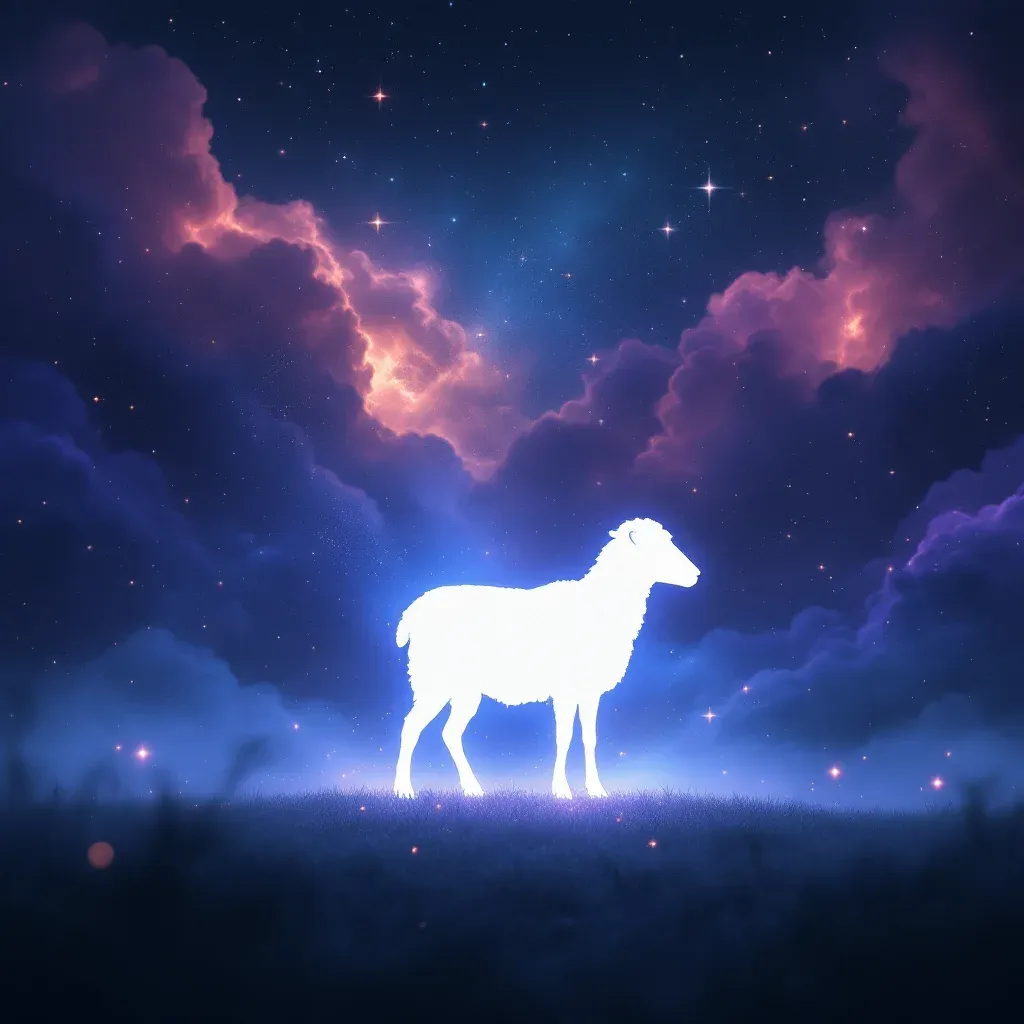
A white sheep is one of the most uplifting faces a dream can show. In many interpretations, it points to clean intentions, lawful earnings, peace entering the home, and a door opening to blessing. In the interpretations attributed to Ibn Sirin, whiteness is often linked with clarity and goodness; when combined with a sheep, that meaning becomes even gentler. If a white sheep comes toward you, there may be an honest support, a clean opportunity, or an event that eases your heart. If the white sheep is within a flock, the chance of belonging to a collective blessing becomes stronger.
But whiteness is not only purity; sometimes it can also show a situation that has been idealized too much. Abu Sa’id al-Wa’iz may be read as reminding you that soft blessings should awaken gratitude in the heart. A white sheep asks you to recognize the value of what has reached you. Kirmani might interpret it as blessing entering the household, a clean opening in work, or relief in material matters.
Black Sheep
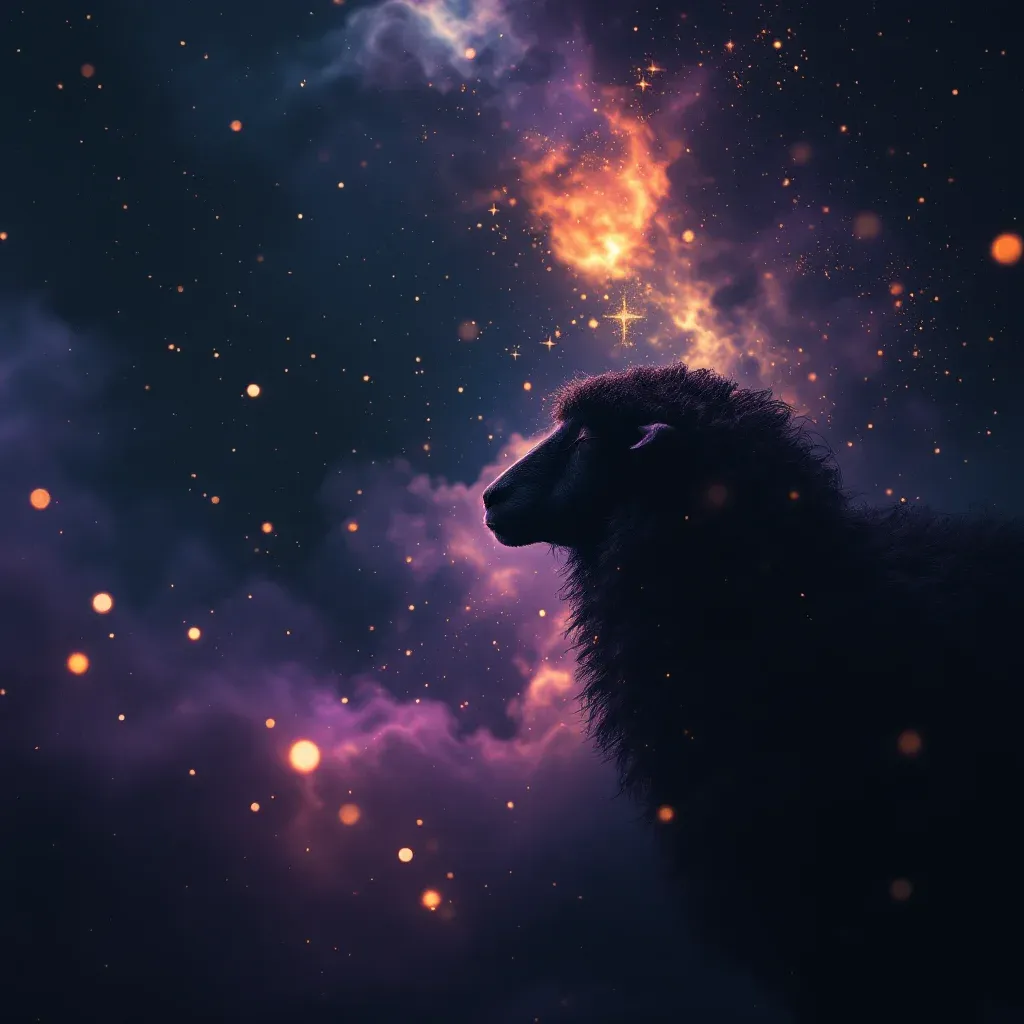
The black sheep is a two-sided symbol in traditional interpretation. To some interpreters, it carries a blessing that stands apart within the flock; to others, it suggests a hidden tension. In Nablusi’s Tâbîr al-Anam, differing colors may speak of a different character within the family or of the person becoming singular within the crowd. A black sheep is not necessarily bad, but the dream may be asking, “Is the path everyone else is following truly your path?”
If the black sheep is calm, it may point to a deep but hidden strength. There may be a matter concealed from you, a truth not yet visible, or a thought that quietly occupies you. If the black sheep is aggressive or frightening, repressed anxiety becomes more visible. According to Kirmani, differently colored animals often change not the event itself, but its tone. Here, the black tone calls for attention and inward looking.
Gray Sheep
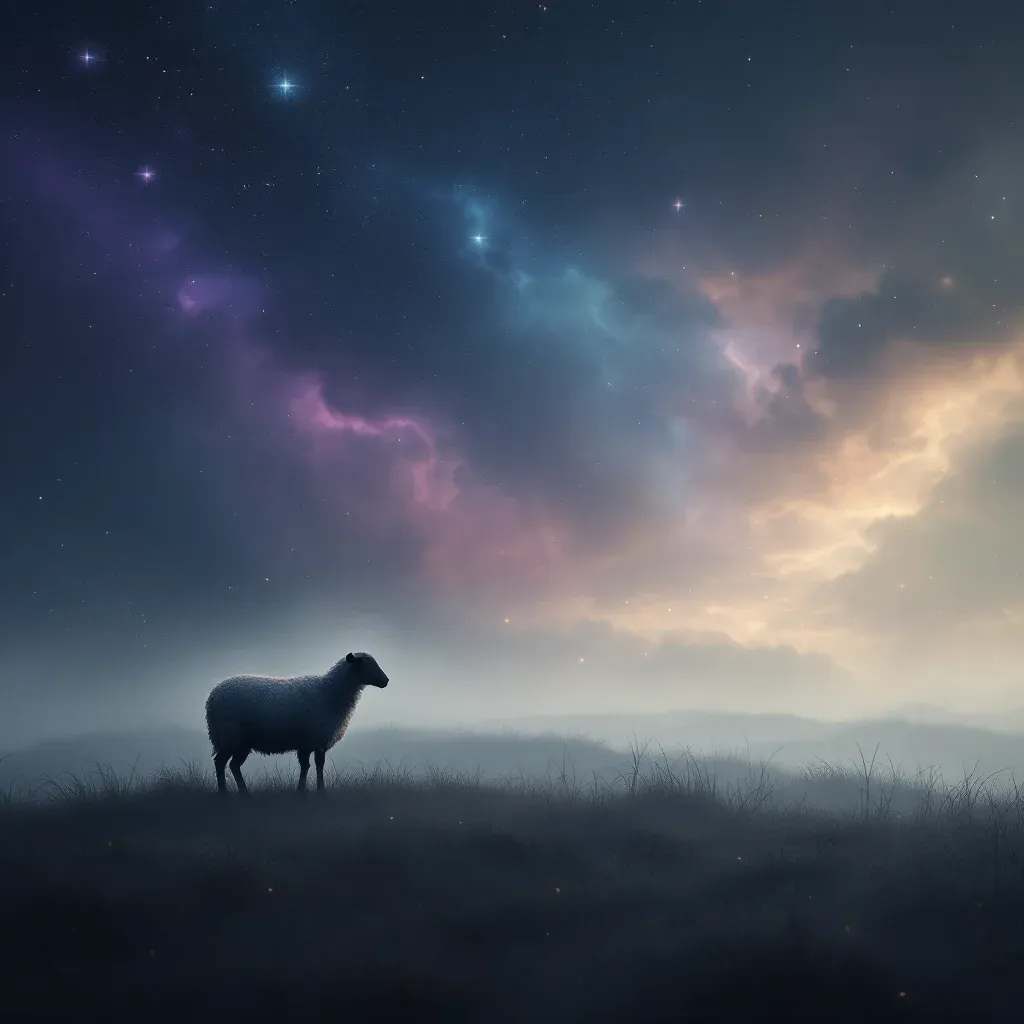
The gray sheep describes areas where nothing is fully clear. Not completely white, not completely black… If your life contains mixed emotions, uncertain intentions, or a situation caught between two paths, this color touches that place. From a Jungian point of view, gray is a threshold where shadow and light exist together and final judgment is delayed. The dream says: do not rush. Look more closely. Distinguish.
If the gray sheep leaves the flock, you may need to form your own opinion. If it comes close to you, something that looks complicated may actually be easier to resolve than you think. In a spiritual reading close to Abu Sa’id al-Wa’iz, gray tones can remind you of the in-between stages of the soul’s purification.
Brown Sheep
A brown sheep is the color of earth and effort. This dream is often associated with gain that grows through patience, realistic steps, and a settled order. Kirmani links earth-related colors with work and livelihood; when combined with a sheep, it speaks of the blessing in daily life. Seeing a brown sheep may show that a project you have worked on is slowly beginning to bear fruit.
This color carries the feeling of a blessing that is modest but solid, without display. If the sheep seems calm, you may need a more grounded structure in your life. If it looks tired, you may be passing through a period where the same effort has become too heavy to carry.
Mottled Sheep
A mottled sheep speaks of a mixed but lively fate. Several feelings, intentions, or people may all be active at once. Nablusi can be read as suggesting that when an animal appears mixed in color, the situation will not be one-dimensional. A mottled sheep may bring abundance on one hand, and the need for discernment on the other. Because every color pulls in a different direction.
This dream whispers that there are different personalities around you, that life is varied, yet you must not lose your inner center. In a tone close to Abu Sa’id al-Wa’iz, the mottled sheep can remind you of remembrance and grounding so that the heart does not scatter.
Interpretation by Action
In a sheep dream, movement changes the fate of the symbol. A still sheep and a running sheep are not the same; a slaughtered sheep is different from a fed sheep, and a sheep that chases you is another matter entirely. In the Ibn Sirin line, action is one of the most decisive parts of interpretation. That is why behavior matters here.
Lamb
A lamb is the sign of a delicate beginning, a protective intention, and a blessing that is still taking root. In the line of interpretation attributed to Ibn Sirin, young animals are often linked with new goodness, lineage, future plans, or household joy. If you saw a lamb, something valuable may be sprouting in your life, even if it does not look large yet.
This dream says, “Do not rush” when it comes to a relationship, a job, a prayer, or an inner change. According to Kirmani, young animals may show that what comes to you is still weak, but full of promise. If the lamb comes close to you, your protective side is active. If it disappears, then there may be a development that needs your care.
Flock of Sheep
A flock of sheep means abundance, community, family, support, and togetherness. In Nablusi’s Tâbîr al-Anam, the flock often connects with plenty and wider livelihood. If you see a flock of sheep, there may be a group, family, or work structure supporting you. This is a fortunate crowd, but it can also carry the risk of losing your own direction.
If the flock moves in an orderly way, your life may be entering a smoother flow. If it scatters, your support system may be fragmenting, or you may feel uncertain. Kirmani often interprets large clusters of animals as collective provision and shared fortune.
Feeding Sheep
Feeding sheep speaks of a blessing that grows through effort. This dream is not only about receiving, but about caring, taking responsibility, and producing livelihood through tenderness. In a style associated with Abu Sa’id al-Wa’iz, feeding is an act that refines the heart, because you give a part of yourself.
If you are feeding sheep, there may be a project or relationship in your life that you are trying to grow. This dream whispers that your patience will be rewarded, but it also points to an area that may shrink if neglected. To feed a sheep well in dream language is to work steadily and protect what is growing.
Milking Sheep
Milking sheep means receiving provision, seeing effort bear fruit, and taking in a gentle form of gain. In some reports attributed to Ibn Sirin, milking is tied to a blessing that turns directly into benefit. If the milk is clean and plentiful, goodness increases; if it is cloudy, there may be a mixed element in the gain.
This dream points to a period of giving effort and receiving return. But if the sheep is uneasy while being milked, there may be some fragility in the path of your gain that you should watch carefully. Kirmani often reads milk and milking as signs of blessing.
Slaughtering Sheep
Slaughtering a sheep is one of the strongest symbols. It is associated with sacrifice, vow, purification, paying a debt, or the closing of a cycle. In Nablusi’s interpretations, the act of slaughter may sometimes represent sacrifice and sometimes release from a burden. If the dream came with a peaceful feeling, it may suggest the acceptance of an intention or the solution of a difficulty.
But if the slaughter felt frightening, guilty, or confused, it may also speak of the resistance inside you when giving something up. In an Abu Sa’id al-Wa’iz type of reading, slaughter can symbolize the hard but necessary side of disciplining the ego.
Selling Sheep
Selling a sheep can mean letting go of a blessing, changing your structure for a temporary gain, or handing responsibility to someone else. Kirmani pays close attention to the shape of gain in dreams where property changes hands. If the sale is profitable, it points to good timing; if it is harmful, it may show rushed decisions.
This dream sometimes asks, “What are you giving up?” It may feel as if a process that once served you is now being released. The matter is not always loss; sometimes it is transformation.
Sheep Running Away
A sheep that runs away may mean a missed opportunity, a structure breaking apart, or a blessing that was not protected. In the Ibn Sirin line, running away often points to loss of control. If you chased it but could not catch it, there may be an area of your life that has been neglected.
A fleeing sheep can also show your own soft side withdrawing. In other words, the dream may speak not only of an outer event, but of an inner escape.
Chasing Sheep
Chasing a sheep means trying to catch what you want. This dream can show you pursuing an opportunity, or it can mean that a seemingly gentle matter is not easily surrendered. According to Nablusi, pursuit and chasing reveal the direction of desire.
If you caught the sheep, patience may bear fruit. If you did not, perhaps the rhythm of what you seek is different from yours. Chasing a sheep can also show the confusion created by approaching a soft target too forcefully.
Sheep Attacking
A sheep attacking is an unexpected symbol, because sheep are not normally associated with aggression. That makes the dream especially striking. In the tradition attributed to Ibn Sirin, when a naturally calm animal turns aggressive, the usual order is disturbed. A place you thought was safe may suddenly carry pressure or resistance.
This dream may describe a situation where softness has broken down and repressed tension has changed shape. If the sheep is pushing, running at you, or butting you, there may be someone around you who seems harmless but is crossing boundaries. Kirmani would insist that such reversed behavior must be interpreted by context.
Sheep Biting
A sheep bite is when something that seemed small begins to hurt. It is not a great threat, but it is bothersome, boundary-crossing, and demanding your attention. In Nablusi’s language, an animal bite often carries influence, harm, or warning; in a soft animal like a sheep, this becomes even more symbolic.
The dream may point to a crack in a relationship that seemed well-intentioned, an unexpected obstacle at work, or the hurting of your own softer side. The location of the bite, whether it hurts, and whether there is blood will change the interpretation.
Killing Sheep
Killing a sheep is a strong symbol of closure. If it appears within sacrifice, vow, or a conscious intention, it may mean the letting go of a burden, repayment of a debt, or a purification process. Abu Sa’id al-Wa’iz reminds us in such sharp dreams that intention is decisive.
But if the act carries anger, regret, or unnecessary cruelty, you may be too harsh toward your own gentle side. In a Jungian reading, it may also indicate the suppression of tenderness.
Sheep Giving Birth
If a sheep is giving birth, you are at a threshold where growth is showing itself directly. This may mean new earnings, joy within the family, multiplication in a project, or a new responsibility that needs protection. In the lines associated with Kirmani and Nablusi, dreams involving birth are often linked with doors opening.
If the birth was easy, there is blessing in the flow of the process. If it was difficult, the path toward beauty may require effort. A sheep giving birth is abundance multiplying, but it also asks for an increase in care.
Interpretation by Scene
Where the sheep appears shapes the social and inner field of the dream. The home, the street, the barn, the meadow, the flocking ground, the doorway… every place opens a different door for the symbol. In traditional interpretation, the place shows where the intention has landed.
A Sheep Entering the House
A sheep entering the house is read as blessing, calm, and gentle news entering the home. In the Ibn Sirin line, useful animals that enter the house often point to fortune reaching the family. The sheep in the house means that livelihood is touching the inner life of the home.
But if the sheep is restless in the house, it may whisper that an outside influence is causing disorder in the family. Kirmani changes the interpretation according to the animal’s behavior: calmness means goodness, while turmoil calls for caution.
Sheep in the Street
Seeing a sheep in the street is an unexpected blessing or an unusual encounter outside the normal order. This dream may point to a soft opportunity appearing in the middle of everyday life. In Nablusi’s line, the street represents the public space that everyone can see; seeing a sheep there may show good results in a matter shared with others.
But a lost sheep in the street may also indicate an intention that has lost its direction. If you are gathering the sheep back together, it may be time to collect the scattered parts of your life.
Sheep in the Barn
A sheep in the barn means orderly earnings, protected blessing, and abundance with clear boundaries. This scene speaks of the safe space between effort and result. According to Kirmani, animals seen in closed and orderly places are often tied to provision that can be managed.
If the barn is clean, things may be in place. If it is dirty, there may be neglect alongside the blessing. Abu Sa’id al-Wa’iz can be read as reminding you that order in care reflects order in the heart.
Sheep in a Meadow
Seeing sheep in a meadow speaks of a free but safe flow. This dream is connected with work that grows naturally, ease, and a state of mind that can breathe. In a Jungian reading, open space is a favorable field for the expansion of the self.
If the flock spreads across the meadow, abundance and multiplication are strong. If the sheep are too separated, there may be a risk of scattering through too much freedom. The dream asks for both space and boundary.
Sheep at the Door
A sheep at the door is a sign of an opportunity or decision arriving at the threshold. The door is passage; the sheep is a gentle but lasting development. This scene may make you feel that a message, a visit, or a proposal is approaching.
Kirmani often reads threshold symbols as a blessing that has not yet entered fully, but has become visible. If the sheep stands calmly at the door, goodness is waiting. If it tries to come in, then the time for decision has arrived.
Interpretation by Feeling
The feeling of the dream is half the symbol. The same sheep may bring peace to one person and fear to another. Dreams carry not only outer image but inner vibration. In this section, the feeling colors the interpretation.
Being Afraid of a Sheep
Being afraid of a sheep shows that something normally gentle has unexpectedly stirred tension in you. This may be an area of life that seems harmless but pressures you from within. In Nablusi’s line, fear of animals can sometimes reflect the symbolic form of pressure in waking life.
Fear of the sheep can also arise from the obligation to remain too compliant. Perhaps some part of you no longer wants to always appear good. From a Jungian angle, this is a gentle encounter with the shadow.
Turning Into a Sheep
Turning into a sheep means becoming one with the flock, withdrawing your own will, or surrendering to softness. This dream can carry either a search for peace or a loss of identity. In a Jungian reading, it may be the dissolving of the boundary between persona and essence.
If the transformation felt comforting, a hardened self may be beginning to loosen. If it felt disturbing, you may be under too much influence from others. Becoming a sheep carries compassion, surrender, and the risk of disappearing all at once.
A Talking Sheep
A talking sheep is one of the most striking images a dream can offer. It can be read as the unconscious speaking directly. In Jung’s language, an animal speaking means instinct has risen into symbolic speech. If the sheep talks, both the words and the feeling behind them matter.
In Islamic interpretation, a speaking animal is often taken as a surprising message or sign. Abu Sa’id al-Wa’iz pays attention to the way such dreams awaken the heart. What did the sheep say to you? That sentence may be the key to the dream.
A Sick Sheep
A sick sheep points to weakening blessing, a tired structure, or a favor that needs protection. This dream does not say the door of goodness is closed; it says it needs care and attention. Kirmani often connects the illness of an animal with some disruption in blessing.
If the sick sheep made you feel pity, you may be seeing your own worn-out side. Perhaps you have neglected an area carrying too much weight. The dream becomes a call to slow down.
A Lost Sheep
A lost sheep symbolizes a missed opportunity, a scattered intention, or a part of yourself you are searching for. This dream usually says that you are looking for something but cannot quite find its place. In the Nablusi tradition, lost symbols often relate to an unfinished order.
If you find the lost sheep, scattered energy can be gathered again. If you do not, perhaps what you seek is not outside but inside. A lost sheep may also whisper of innocence that has been misplaced.
What the Sheep Says in the Overall Flow
Seeing a sheep in a dream usually leaves you with a soft but persistent reminder rather than a harsh fate. The main body of the dream is made of blessing, calm, flock, belonging, and protection. Yet the same symbol also carries the risk of too much conformity, openness to other people’s influence, or putting your own voice in the background. That is why the dream has a side that invites gratitude and a side that asks for attention.
If the sheep is calm, clean, white, and close to you, then relief, provision, and peace may be at your door. If the sheep is aggressive, lost, sick, or mixed in color, then some area of your life may be asking for care, boundaries, and a more conscious direction. Traditional interpretations do not lock the dream into one verdict; they look at your state, your timing, and your feelings. Jung, meanwhile, opens its inner counterpart: a delicate rope is being walked between the wish to belong to the flock and the need to become yourself.
Sometimes the sheep says, “Be calm.” Sometimes it whispers, “Do not sacrifice yourself too much.” Sometimes it brings blessing, and sometimes it asks you to create the order that can carry that blessing. The dream does not leave you with a final verdict, but with a threshold. Your task is to look at that threshold and sense which door in your life you are standing before.
Frequently Asked Questions
-
01 What does seeing a sheep in a dream mean?
Most often, it points to provision, peace, group order, and gentle fortune.
-
02 What does seeing a white sheep in a dream mean?
It is usually read as pure intentions, good news, and a door opening toward inner peace.
-
03 Is seeing a black sheep in a dream bad?
Not always; it can suggest difference, hidden worry, or standing apart from the flock.
-
04 What does seeing a flock of sheep in a dream mean?
It speaks of community, abundance, and support in numbers, but also being open to others’ influence.
-
05 What does seeing a lamb in a dream mean?
It points to a new beginning, a delicate blessing, and something that needs protection.
-
06 How should feeding sheep in a dream be read?
It means earnings that grow through effort, tenderness, and responsibility carried with grace.
-
07 What does seeing a dead sheep in a dream mean?
It may show a cycle closing, delayed blessing, or a worn-out pattern in your life.
✦ Just for you ✦
Write your dream,
we'll read it
If what we wrote above doesn't quite fit — tell us yours. Your own sheep dream, with its unique details, may deserve a different reading.
✦ Your dream arrived.
We'll get back to you when the reading is ready. Don't want to wait? Download RUYAN for an instant reading.
Could not reach the server.
We saved your dream locally — when you reload later, we'll auto-resend it.
Next step
This reading is a beginning. Let's look at your whole dream — if you wish.
RUYAN reads your "Sheep" dream through your life, your birth chart, and your recent dreams — one by one, just for you.