Seeing a Horse in a Dream
Seeing a horse in a dream is read as power, freedom, travel, and the awakening of your inner will. The horse’s color, movement, and attitude toward you can shift the message from a blessed rise to a tension that asks for care. The details change the interpretation sharply.
General Meaning
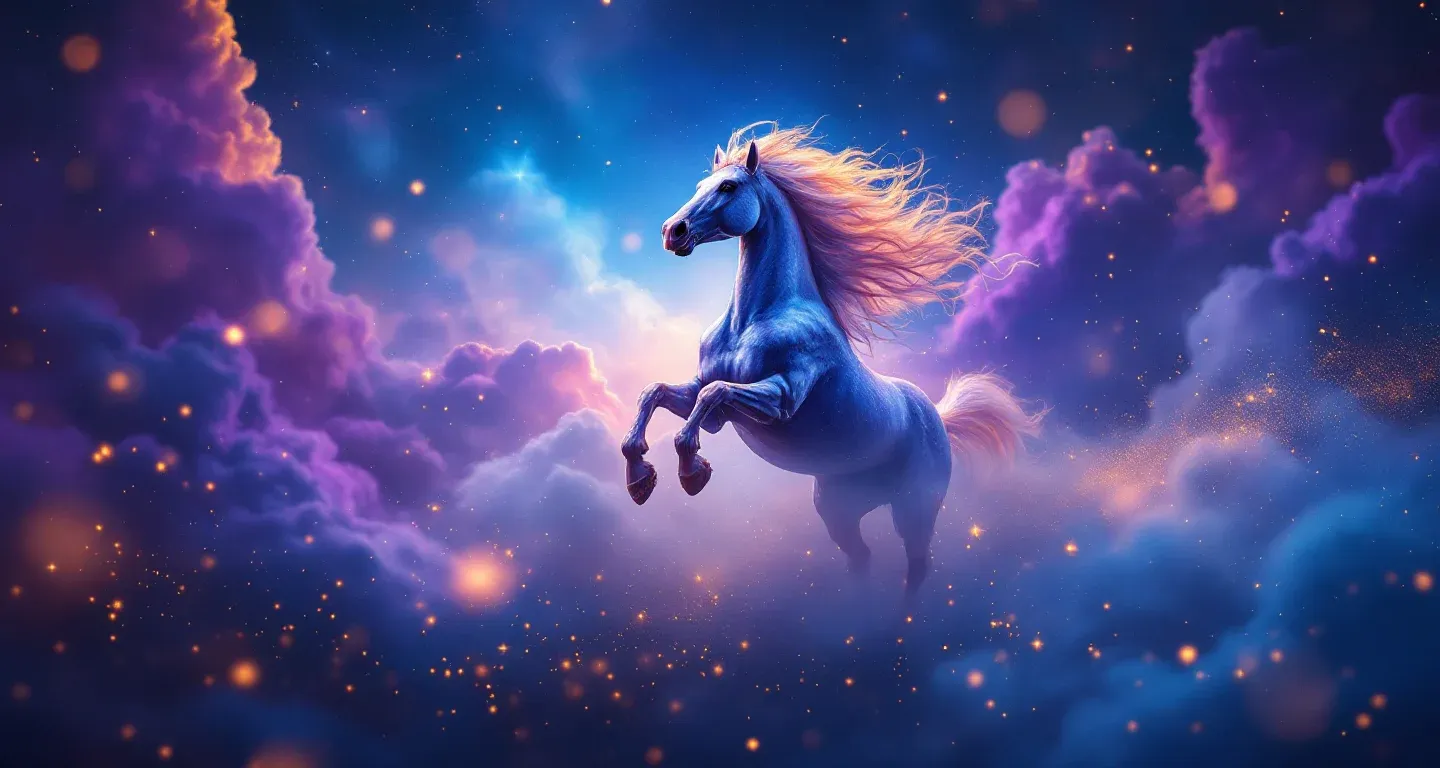
Seeing a horse in a dream is often the visible form of your inner urge to move, your strength to endure, and your need to find direction. In dream language, the horse is not an ordinary animal; it is a walking will, a carrying force, and sometimes a quiet companion riding with you toward your own destiny. That is why a horse entering the dream often feels like a door opening. At times it gives courage, and at times it gently asks, “Where are you going?”
What the horse speaks of is not only power. Riding it, trying to catch up with something, moving away from a place, or even holding back a feeling are all part of its symbolism. For that reason, seeing a horse in a dream is read together with work, relationships, reputation, travel, inner discipline, and the need for freedom. If the horse is calm, the dream may carry a more blessed, balanced, and supportive tone. If it is wild, running away, attacking, or wounded, the interpretation becomes more cautious, because there is power here, but its direction is not yet clear.
In the classical interpretation tradition, the horse is often associated with honor, provision, travel, military life, strength, and superiority. But dream language is never one-sided. In a Jungian reading, the horse can also appear as instinctive energy, vitality rising from the unconscious, and the return of a buried force on the path of individuation. In your life right now, is your posture growing stronger, or is something inside you calling you somewhere? The horse often appears exactly there.
Sometimes the horse describes not a person but a season. A period of acceleration, a threshold that needs a decision, a road that must be crossed with patience… If you saw the horse in a wide plain, moving easily with calm eyes, it may point to an open road ahead. If you saw it in a narrow place, in darkness, tied up, or wounded, it whispers that your power feels trapped and is searching for a new order. The horse is an old mirror reading the energy in your life.
Interpretation Through Three Windows
The Jung Window
From Carl Jung’s perspective, the horse is one of the symbols of raw life force carried in the unconscious. This animal is linked not only to strength and speed, but also to instinctive flow, body memory, and the drive for free movement. Seeing a horse in a dream is often the surfacing of an energy the ego tries to control but cannot fully rein in. Sometimes this energy appears as a creative breakthrough, sometimes as sexual vitality, and sometimes as the courage to decide.
In a Jungian reading, the horse also carries the tension between persona and shadow. The orderly face you show the world must somehow come to terms with the natural and instinctive side you carry inside. A calm horse can show that these two poles have made some peace. A galloping horse tells you that something held inside no longer wants to wait. A runaway horse suggests that a power not yet owned feels lost. Perhaps the vitality inside you is a part of you that has been kept quiet for a long time and now wants back on stage.
This symbol can also be read through the layers of anima and animus. For a male dreamer, the horse often calls up will, directional strength, and controlled desire; for a female dreamer, it may appear as rising vitality, freedom, and the need for movement in the feminine field. But Jung does not lock symbols into gender; the real question is which force is speaking in the soul. The horse calls you on the path of individuation: to listen to the rhythm of your own being, not the pace of others.
Sometimes the horse is also a messenger of the road toward the Self. This is a creature that carries a human being, yet does not bow to it. In other words, it builds a bridge between conscious will and unconscious vitality. How did you see the horse in the dream? Did you want to ride it, or did you simply watch it from afar? That distinction matters. Riding is the attempt to claim the energy; watching it means you are looking at a power you have not yet contacted. Jung would remind you here: the dream brings back what you repress, not to frighten you, but to make you whole.
The Ibn Sirin Window
In the interpretive tradition associated with Muhammad ibn Sirin, the horse is often linked with dignity, honor, livelihood, travel, and the fulfillment of one’s aim. Seeing a horse is commonly taken as a blessed sign, especially when it brings prestige, opens a road, or carries a new duty. According to Kirmani, the horse can also point to power and position coming into your hands; if the horse is tame and beautiful, this suggests that matters will soften. In Nablusi’s Tâbîr al-Anâm, the horse is sometimes associated with authority, military life, journeys, and a blessed road. As Abu Sa’id al-Wa’iz transmits it, seeing a horse may indicate rising in rank or the opening of a new door in life.
But in classical interpretation, the horse’s condition is the real key. A white horse, in the view of many interpreters, carries cleanliness, goodness, right intention, and joyful news. A black horse is understood with strength and grandeur; for some, it points to heavy but powerful provision, while for others it is a test of authority that requires patience. Red or chestnut-toned horses can be read as haste, excitement, and active affairs. Kirmani likens a fast-running horse to a provision that comes quickly, while Nablusi says that if the horse becomes hard to control, it may be a whisper to watch your ego and ambition.
Riding the horse is also important. In the line of Muhammad ibn Sirin, riding usually means taking charge of an affair and moving toward a goal. But if the horse drags you, and you cannot control it, the meaning changes: power is present, but direction is weak. Abu Sa’id al-Wa’iz sometimes connects a tied horse with patience, and at other times with a delayed wish. A dead horse may mean the end of a phase, or the fatigue of endurance. Here the reports vary: one reading points to an opening of goodness, another asks for caution. The context of your dream tells you which is closer.
Another subtle point is where the horse appears — in the home, in the street, in a square, or on a distant road. Nablusi sometimes interprets a horse entering the house as goodness and strength arriving at the home; at other times, it is an outside movement entering family life. Kirmani, meanwhile, often reads horse scenes through work life and the male figures around the dreamer. If the horse obeys you, matters often go smoothly; if it attacks, inner and outer pressures are rising. The essence of the classical view is this: the horse is the form of power, but power is not always easy to govern.
The Personal Window
Now turn back to your own life. In what area are you trying to speed up lately? Are you standing at the edge of a decision, or are you already on a path and looking for more strength to continue? Seeing a horse in a dream often reveals the part of you that says, “I can carry this.” But at the same time it asks: are you truly directing this power, or is the power directing you?
How did you see the horse? Was it calm, skittish, wild, looking at you? Because the horse’s behavior in the dream speaks surprisingly well with your behavior in daily life. Maybe you have already learned patience, but the part of you that longs to move is still waiting. Or maybe it is the reverse: you are running fast, but your soul is saying, “Wait a moment.” The horse appears here like a shadow measuring your inner rhythm.
Right now, who or what in your life carries you like a road you will need to ride? Work, relationships, family expectations, a goal, a responsibility… A horse sometimes represents the burden you carry, and sometimes the power to carry it. That is why the dream does not come to frighten you, but to make your endurance visible. Yet the line between endurance and strain is very thin. Are you standing on that line?
And there is this too: a horse is not only about moving forward; sometimes it is about changing direction. If you have felt stuck in the same place for a long time, this dream may be suggesting a new kind of movement. Maybe it is a conversation, maybe a journey, maybe the time to leave an old idea behind in your mind. The horse brings you into contact with your own courage. Seeing it in a dream can feel like an old friend arriving to whisper, “The strength is already in you.”
Interpretation by Color
The horse’s color changes the tone of the meaning. In classical interpretation, colors are not only decoration; they open different doors for intention, fate, and mood. Interpreters such as Kirmani and Nablusi sharpen or soften the reading by paying close attention to color. The colors below carry the most common nuances of seeing a horse in a dream.
White Horse
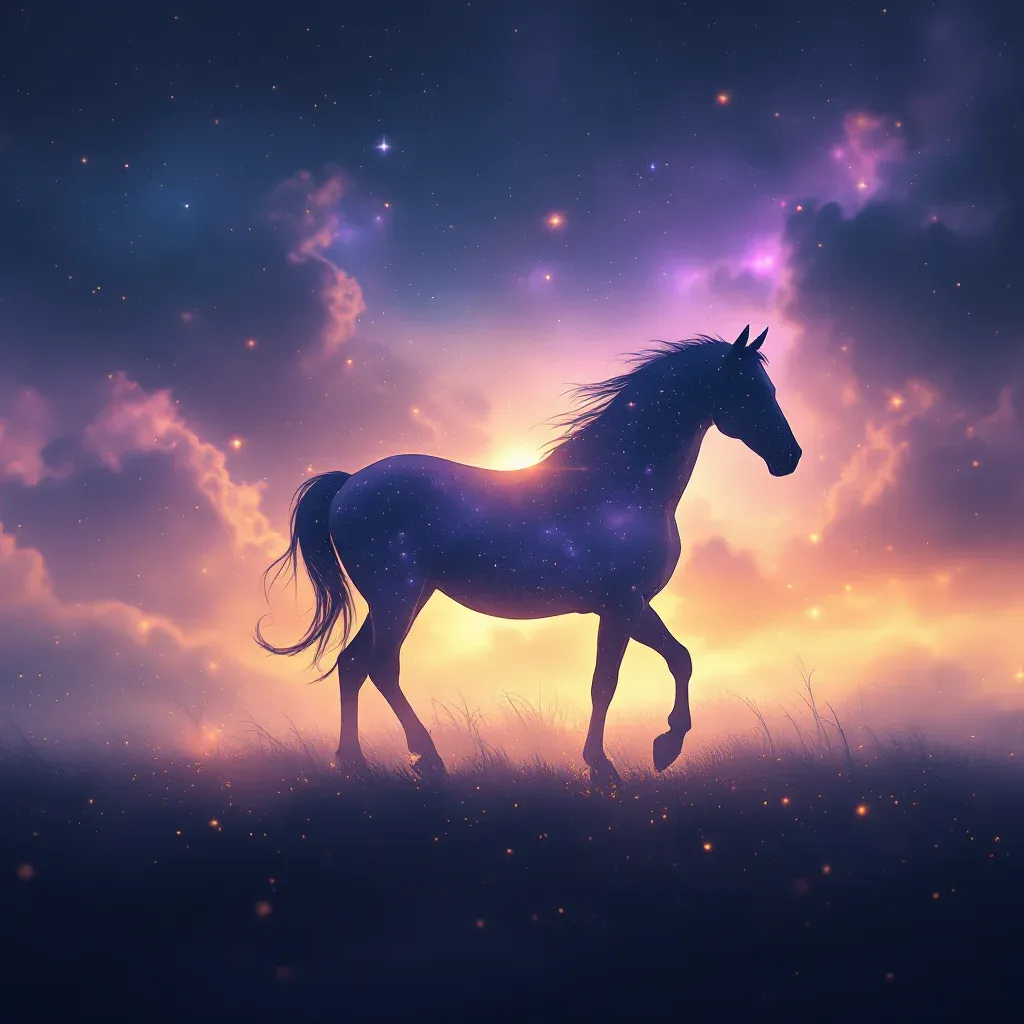
A white horse is, for most interpreters, one of the most relieving signs. In the line of Muhammad ibn Sirin, whiteness joins cleanliness, truth, and a favorable direction. A white horse may mean an open road, a pure intention, or joyful news ahead of you. In Nablusi’s Tâbîr al-Anâm, whiteness leaning toward goodness gains strength when joined with the horse’s noble nature. This dream often points to a calm rise, a sound relationship, or a decision moving you closer to inner peace. But if the horse appears too dazzling or unreachable, it may also point to an idealized goal.
Black Horse
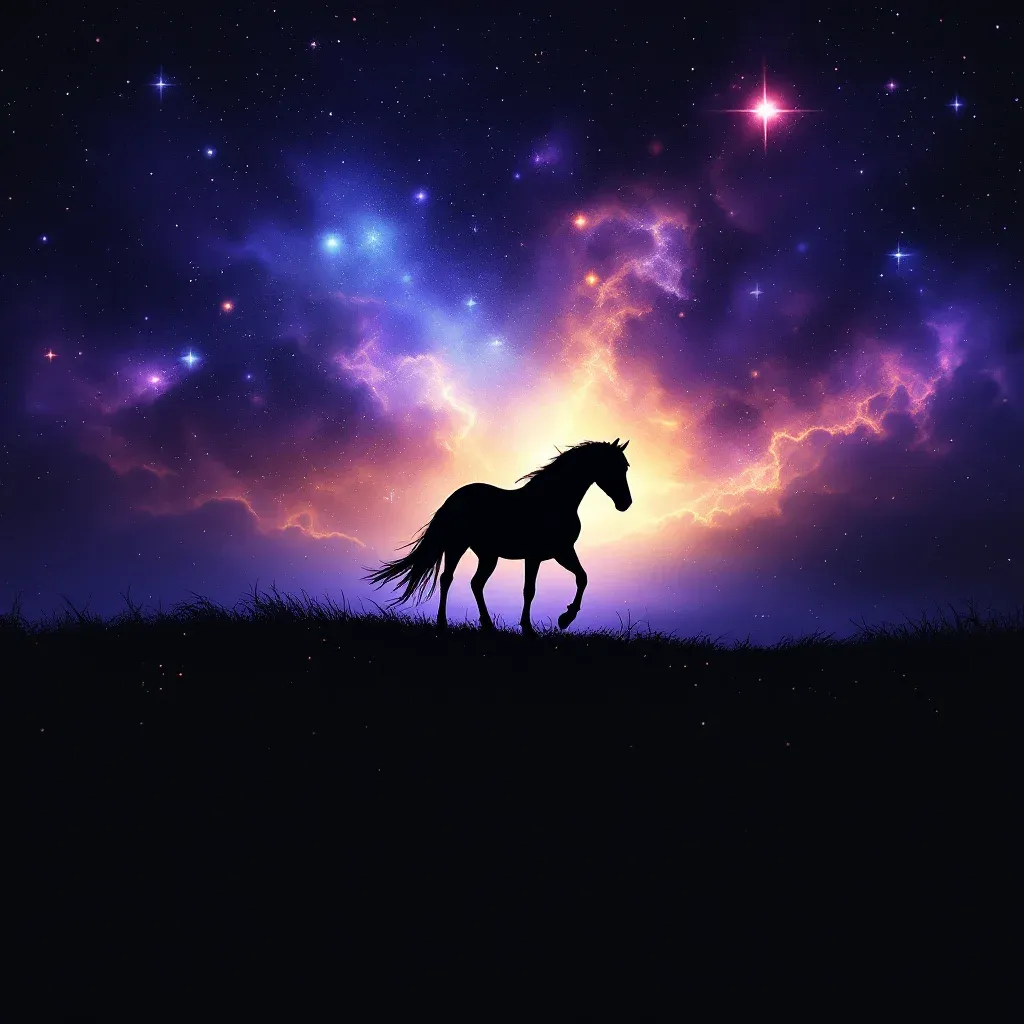
A black horse may look heavy at first glance, but it is not always negative. According to Kirmani, the black horse carries grandeur, authority, and strength; yet this power often brings a serious responsibility with it. Nablusi sometimes associates the black horse with state matters, a powerful male figure, or a demanding workload. If the black horse is calm, it represents deep and enduring strength. If it feels frightening, aggressive, or set in a dark scene, then the need to face shadow and regain control comes forward. The black horse’s message is this: your power may be great, but so is its shadow.
Red Horse
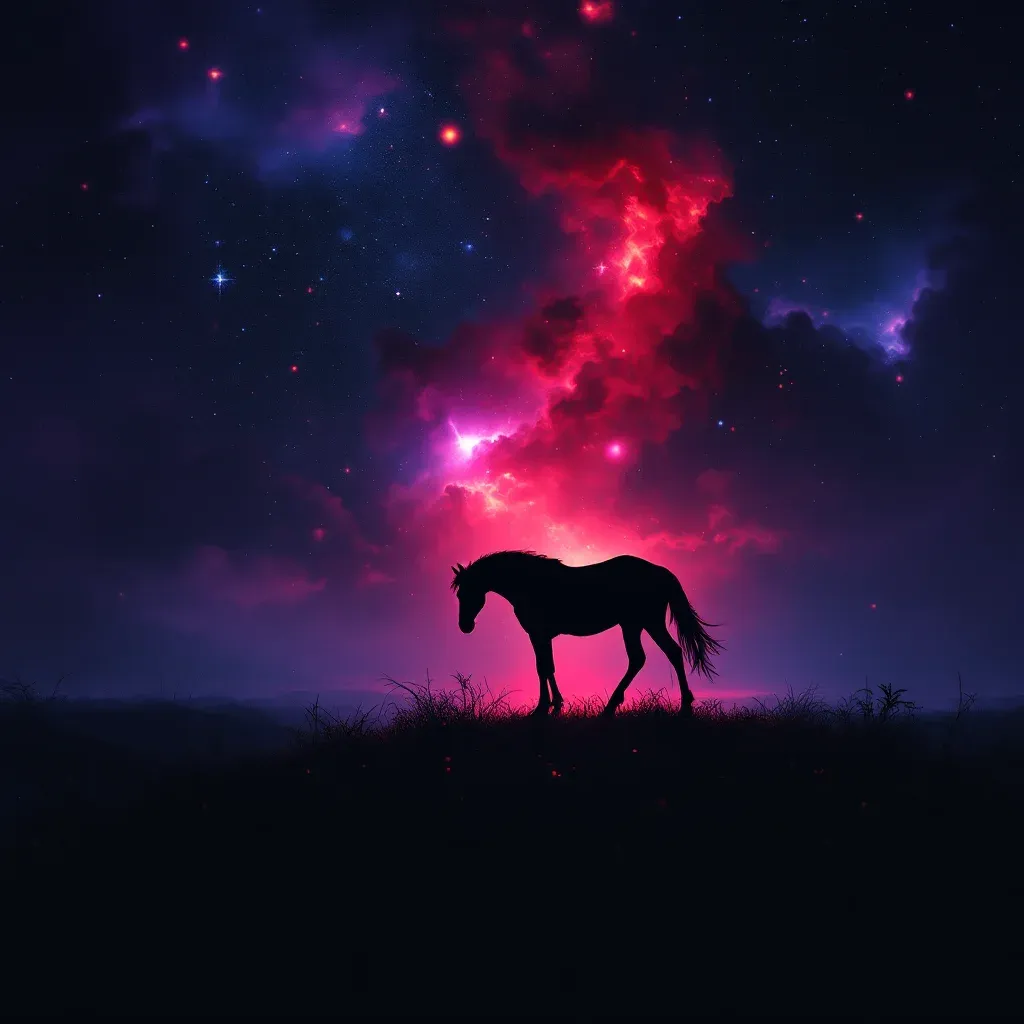
A red or chestnut horse is the colorful face of movement and fire. Abu Sa’id al-Wa’iz often reads lively colors together with haste, enthusiasm, and excitement. This horse can mean a matter is speeding up, an emotional surge is rising, or competition is increasing. But red can also carry impatience and impulsiveness. Seeing a red horse in a dream especially touches periods when decisions are made too quickly and the heart moves ahead of the mind. It whispers, “There is passion here, but direction is needed too.”
Brown Horse
A brown horse speaks the language of the earth. Kirmani often links earthy tones with stability, effort, and livelihood. Seeing a brown horse may point to steady progress without showiness. This dream speaks of grounded strength, an opportunity that grows through work, or long-term effort. Nablusi also tends to see a more practical, everyday kind of goodness in earth-toned animals. A brown horse often means “not flash, but continuity.” There may be something quietly growing in your life as well.
Spotted Horse
A spotted or mottled horse shows an inner world that cannot be reduced to a single color. In Abu Sa’id al-Wa’iz’s approach, mixed colors can mean mixed intentions or possibilities colliding with one another. This horse may symbolize a development that is both good and tiring at the same time. It looks like an opportunity, yet uncertainty lies inside it; it feels like a relationship, yet it holds complicated emotions. Kirmani advises caution with mixed appearances. So this dream should be read carefully, not in a single sentence.
Interpretation by Action
What the horse does determines the pulse of the dream. A calm horse and a galloping horse do not speak the same language. The horse’s behavior reveals pressure, opening, patience, or conflict in your life. The action itself matters especially here, because in classical interpretation, the verb can change the direction of the fate.
Riding a Horse
Riding a horse is one of the most commonly favorable scenes. In the reported interpretations of Muhammad ibn Sirin, riding a horse is linked with taking on a task, moving forward, and gaining prestige. Kirmani says that a controlled mount carries success and managerial strength. If you are riding the horse smoothly in the dream, you may be taking the reins in some part of your life. But if you struggle, fall, or feel afraid while riding, then your relationship with power is not yet fully settled. This dream is not only about moving forward; it is about being able to carry yourself while you do.
Looking at a Horse
Looking at a horse from a distance means noticing a force you have not yet touched. In Nablusi’s interpretive line, watching an animal can sometimes mean sensing a coming opportunity without entering it immediately. If the horse is looking at you, a part of you may be waiting for your answer. Looking at the horse is the thin line between fear and admiration. This dream may also show a conscious mind asking, “What is this power telling me?” Seeing power is one thing; claiming it is another.
Feeding a Horse
Feeding a horse is interpreted as nourishing your own strength, patience, and ability to move forward. Abu Sa’id al-Wa’iz often reads acts of care and feeding as effort, responsibility, and a blessing being grown. This dream whispers that a goal or a relationship will grow if it is not neglected. If you felt peaceful while feeding the horse, it means you are in harmony with your inner strength. But if the horse was hungry, restless, or kept following you, then buried needs may be asking for more attention.
A Horse Chasing You
A horse chasing you is a scene that people often talk about, but it needs careful reading. According to Kirmani, an animal that chases you may symbolize a responsibility you are running away from. Nablusi may interpret the chasing horse as uncontrolled power or buried haste. If you are running in fear, you may be avoiding an energy in your life — work, relationship, decision, or self-confidence. The dream does not punish you; it simply follows what you are avoiding. If the horse catches you, it may show that the matter you delayed has now reached your door.
A Horse Attacking
When a horse attacks, the tone of the dream becomes sharper. This scene can show that you are in conflict with power. Abu Sa’id al-Wa’iz often links aggressive animals with outer pressure, built-up anger, or overflowed energy. A horse attack may point to pressure at work, a hardened relationship at home, or rising impatience within yourself. But here, not only the horse’s harm matters; your own approach to it matters too. Sometimes an attack is the voice of a vulnerable side. Mismanaging power turns it into an enemy.
A Horse Biting
A horse biting you is like an unexpected harsh touch. In classical interpretation, a bite is often seen as a small but painful warning. Kirmani sometimes explains animal bites as hurtful words from someone close. A horse bite can mean a reaction from a powerful figure, tension with authority, or your own anger turning back on you. If there is bleeding, then the matter has become more visible. This dream warns, “What you thought was small may have grown.”
A Horse Running
A running horse is life itself picking up speed. In the line of Muhammad ibn Sirin, running often points to haste, travel, or developments arriving soon. If the horse is running freely, a wide field may be opening before you. But if it runs out of control, details may be slipping away as things accelerate. Nablusi also sometimes reads a running horse as courage and victory. So the dream can be good, or it can be exhausting. Running is not always winning; sometimes it is having to keep up.
Killing a Horse
Killing a horse is a heavy symbol and must be read with care. This scene can be connected with suppressing power, cutting off an impulse, or closing a chapter. According to Kirmani, killing an animal may sometimes mean removing a danger; at other times, it means extinguishing a useful opportunity with your own hand. If you killed the horse, perhaps you have silenced an energy moving inside you because you were afraid of it. This dream shows the conflict between will and fear. Sometimes killing is not liberation; sometimes it is cutting off a living path.
A Horse Dying
Seeing a dead horse can be read as lost strength, tired will, or a phase that has closed. Nablusi often treats dead animals as a sign that matters have become heavy, opportunities have gone cold, or vital energy has weakened. For some interpreters, however, it may also mean that danger has faded. The reading splits here: on one side, an ending; on the other, a burden no longer threatening you. How did the dead horse make you feel? Sad, relieved, empty? Feeling is the key here.
A Horse Giving Birth
Seeing a horse foal or the horse giving birth speaks of a strength that has just begun. Abu Sa’id al-Wa’iz often reads newborn symbols as a blessing that will grow, a new responsibility, or a fresh intention. This dream marks a potential that is not yet fully formed, but is undeniably strong. A foal is ready to run, but it is still at the beginning of the road. In your life too, there may be a new project, relationship, or inner awareness beginning. It looks small, but it carries the promise of growth.
The Horse Carrying You
A horse carrying you means a journey with support. This scene often says that you are not carrying the burden of life alone, and that a force is moving you forward. According to Kirmani, a good mount can indicate that the place you are headed toward may also be blessed. If the horse carries you safely, the conditions may be favorable. But if you fear falling, you may not feel fully certain about the support you are receiving. The dream asks: do you accept the support being offered to you?
Losing the Horse
Losing the horse may relate to noticing an opportunity too late or failing to use your strength on time. In the line of Muhammad ibn Sirin, a lost mount can be read as a delayed task, a postponed road, or a weakened will. If you feel regret as the horse moves away, it may mirror a missed chance in life. But sometimes this scene means letting go of something that was not right. So losing is not always loss; sometimes it is release from excess.
Interpretation by Scene
Where the horse appears opens the social and spatial layer of the dream. Home, street, stable, plain, or battlefield — each setting shows where power is appearing. The same horse carries a very different mood in a different place.
A Horse Entering the House
A horse entering the house can be interpreted as strength, news, or movement coming into the family. In Nablusi’s line, animals entering the home sometimes represent a guest arriving, and at other times an outside influence entering domestic life. A horse entering the house may mean fresh provision, a dignified development, or a situation that gives you more say within the home. But if the horse is disturbing the house, it may also be an energy that unsettles the order. Kirmani says special attention should be paid to the horse’s behavior in home scenes. If it is calm, goodness leads; if it is restless, tension becomes stronger.
A Horse in the Stable
Seeing a horse in the stable means power that is organized, held back, or kept in reserve. This scene shows potential that has not yet entered the field. Abu Sa’id al-Wa’iz often reads closed spaces as protection and preparation. The horse in the stable can be a force saying, “It is not time yet.” If the stable is clean and orderly, it shows that accumulated energy is being managed well. If it is messy or dirty, then a matter is waiting for care. This dream may mean that the talent is there, but it is waiting to be used.
A Horse on the Plain
A horse running freely on the plain is one of the most relieving scenes. This image carries spaciousness, movement, breath, and a sense of limitlessness. In the line of Muhammad ibn Sirin, open spaces can be linked with paths opening and obstacles decreasing. Seeing a horse on the plain may also show your need for more freedom in life. If you felt your heart open while watching it, the dream is suggesting expansion. But openness can also mean loneliness, so be mindful of that too.
A Horse in Battle
A horse in battle carries struggle, competition, and challenge. Kirmani often interprets war mounts together with bravery, duty, and severe tests. This dream may describe a struggle at work or within the family. If the horse is strong in battle, it suggests that you are holding on in a difficult season. But if the horse is wounded or throws you off, there is fatigue in the fight. The horse in battle is the noble face of power; the battle itself is always draining.
A Horse on the Road
Seeing a horse on the road carries travel, direction, and transition. In Nablusi’s interpretive line, the road is often tied to a journey, intention, and change. If the horse is moving properly, a matter in your life may be resolving step by step. A horse standing on the road suggests indecision. A horse traveling with you on the road may whisper that you are not alone as you enter a new phase. This scene is especially meaningful for anyone seeking a decision. If there is a road, direction must also be asked for.
Interpretation by Feeling
The feeling in the dream is the heart of the symbol. Were you afraid of the horse, happy, amazed, or shaken by it? The same horse opens different meanings when it is felt differently. Emotion is like the key turning the lock of the dream.
Being Afraid of the Horse
Being afraid of the horse may show that you are not ready to face a strong energy. This fear can be directed toward outer authority, inner instinct, or the speed of life itself. From a Jungian angle, fear is the first touch of the shadow; a person can even be afraid of their own power. In classical interpretation, fear may also point to a heart sensing the weight of what is coming. If the horse does not harm you but still scares you, the issue is often more internal than it appears. Fear here is not always an enemy; it may be a messenger.
Admiring the Horse
Admiring the horse means recognizing a noble, strong, or free part of yourself. This feeling can be a sign of an inspiring beginning. In the lines of Nablusi and Kirmani, beautiful animals are often linked with favorable developments. If the horse’s beauty mesmerized you, you may be drawn toward a goal or a person that lifts you. But if admiration becomes too idealized, real contact becomes harder. This dream reminds you that while you look at a power, you may also be looking at your own potential.
Becoming a Horse
Seeing yourself turn into a horse is a very strong symbol. It can be read as the instinctive side becoming visible, the desire for freedom increasing, and bodily energy rising. From a Jungian perspective, this is the loosening of the persona and contact with a more authentic self. In classical interpretation, identifying with an animal can mean either empowerment or burden depending on the dreamer’s state. If the transformation made you feel relieved, you are approaching something more natural. If it frightened you, the feeling of losing control may be coming forward.
A Talking Horse
A talking horse is one of the most fairy-tale-like and striking signs in dreams. Abu Sa’id al-Wa’iz often sees an animal speaking as a powerful message, hidden knowledge, or a surprising realization. A talking horse feels like advice coming from a place your conscious mind has not reached. What did it say? Was it harsh, gentle, warning you? This scene may make you feel that the symbol is speaking from a layer that is almost guiding you, beyond ordinary unconscious material.
Seeing a Wounded Horse
A wounded horse describes tired power. The strength is still there, but it hurts, has been injured, or needs rest. In Kirmani’s approach, injury can be linked with delay in work or a broken force. This dream often appears when you have also been pushing yourself too hard. Seeing a wounded horse can be a warning not to keep running yourself endlessly. If you wanted to help the horse, your compassionate side is also strong. This image teaches you how to protect power.
A Lost Horse
A lost horse means loss of direction, a delayed opportunity, or scattered energy. In the line of Muhammad ibn Sirin, a lost mount can mean a missed chance or a structure slipping out of your hands. If this dream made you feel incomplete, it asks which part of your life has become disorganized. Searching for the lost horse is really searching for the direction that has gone missing. But sometimes what is being searched for is not outside; it is inside.
A Tame Horse
A tame horse is one of the most beautiful signs of manageable power. This scene may show that your energy is carrying you without tiring you, and that your will and instinct are in agreement. In Nablusi’s interpretive line, a well-behaved animal often means ease and softness in what is coming. Seeing a tame horse is especially positive for a blessed road, a trustworthy person, or a work matter moving smoothly. Here power is not harsh; it is simple, quiet, and serviceable.
A Spirited Horse
A spirited horse means pent-up tension and energy without direction. This dream may appear during a period when patience is wearing thin. Kirmani often sees difficult behavior in animals as a sign that matters are becoming harder, words are sharpening, or control is at risk. Dealing with a spirited horse may mirror a real-life test of patience. This image advises you to manage power with rhythm rather than force.
A Calm Horse
A calm horse is one of the most balanced and reassuring signs. This dream may mean a road moving at the right time, a settled decision, or a responsibility carried with peace. Abu Sa’id al-Wa’iz often links states of calm with fruitful patience. The horse’s calmness may show that you have also found a center inside yourself. Sometimes great power makes no noise. It simply walks.
A Galloping Horse
A galloping horse is a symbol of speed, excitement, and sometimes haste. This dream may tell you that a matter will suddenly accelerate, decisions will come one after another, or emotions will rise quickly. Kirmani warns against losing control at excessive speed, while Nablusi sometimes reads this scene as victory approaching. A galloping horse in the right direction is a strong push; in the wrong direction, it is scattering. That is why the direction you felt in the dream matters so much.
An Unstoppable Horse
An unstoppable horse is energy that has overflowed. This may be anger, impatience, a relationship that is hard to control, or life moving too fast. In the line of Muhammad ibn Sirin, lack of control is sometimes associated with the self being overcome by desire. This dream may whisper, “Without reins, there is no direction.” If you struggled to stop the horse, think about whether you are forcing a matter too much in real life.
Seeing a Joyful Horse
Seeing a horse with joy may be a sign of an opening that feels spacious and blessed. This feeling broadens the dream’s good meaning. In Nablusi’s style, animals that are welcomed beautifully are linked with openness of heart and pleasant news. Joy here is not just an emotion; it shows that the symbol itself has softened. If the horse gave you joy, a renewed hope may already be alive inside you. Sometimes the dream reports not the future, but your readiness for it.
The Quiet Call of the Closing
Seeing a horse in a dream often means life is saying to you, “Move.” But that movement does not have to be outward. Sometimes you need to gather scattered energy inside, sometimes rebuild patience, and sometimes simply name the burden you are carrying. The horse represents power, but the meaning is not complete until the direction of that power becomes clear. So the real question in your dream is this: where does the horse inside you want to take you?
This symbol can carry freedom and discipline at the same time. Travel and responsibility, speed and patience… When the details are gathered together, we can read more clearly whether the horse is a friend or a warning. A white horse whispers relief, a black horse carries weighty power, and an attacking horse touches hidden tension. In other words, there is no single horse; the horse that appears in the dream changes color according to your life.
If this dream stayed with you for a long time, something is probably trying to surface. Sometimes courage, sometimes direction, sometimes just the call to stop waiting. The horse’s step reminds you of your own inner rhythm. And right there, the dream opens like a letter.
Frequently Asked Questions
-
01 What does seeing a horse in a dream point to?
It points to power, travel, freedom, and status.
-
02 What does seeing a white horse in a dream mean?
It calls in clean intentions, good news, and a fresh opening.
-
03 Is seeing a black horse in a dream a bad sign?
Not always; it can describe a strong energy that needs control.
-
04 What does a horse attacking you in a dream mean?
It may be a warning about pressure, anger, or a rushed decision.
-
05 What does seeing a horse foal in a dream tell you?
It shows a new strength, a fresh impulse, or a growing opportunity.
-
06 How is feeding a horse in a dream interpreted?
It is linked to nourishing your own power, patience, and effort.
-
07 What does seeing a dead horse in a dream mean?
It can suggest the closing of a chapter, fatigue, or a path that has come to a stop.
✦ Just for you ✦
Write your dream,
we'll read it
If what we wrote above doesn't quite fit — tell us yours. Your own horse dream, with its unique details, may deserve a different reading.
✦ Your dream arrived.
We'll get back to you when the reading is ready. Don't want to wait? Download RUYAN for an instant reading.
Could not reach the server.
We saved your dream locally — when you reload later, we'll auto-resend it.
Next step
This reading is a beginning. Let's look at your whole dream — if you wish.
RUYAN reads your "Horse" dream through your life, your birth chart, and your recent dreams — one by one, just for you.