Seeing a Cow in a Dream: Diyanet Interpretation
Seeing a cow in a dream often opens a door to livelihood, steady effort, abundance, and home life. A calm cow points to support and blessing; an aggressive, sick, or lost cow suggests pressure in work or family life and a call for patience.

General Meaning
Seeing a cow in a dream is a symbol that looks calm at first glance, yet carries deep meaning beneath the surface. The cow is one of the patient creatures of the earth; it gives milk, nourishes, carries, and waits. For that reason, when it appears in a dream, it is often read through themes of livelihood, effort, family order, abundance, and long-term sustenance. A cow does not rush; its language is slow, and its blessing unfolds over time. So this dream may be whispering that something in your life is growing slowly, but firmly.
In traditional readings close to the Diyanet line, the cow is especially associated with lawful earnings, a fertile year, an opening in livelihood, and peace within the home. But the cow is not only a symbol of plenty; its state, its movement, and your feeling toward it all change the interpretation. A calm cow suggests gentle provision; a stubborn or aggressive cow points to turbulence in livelihood; a thin, sick, or dead cow may signal the wear and tear of a phase. Sometimes the cow speaks not only of money, but also of the nurturing side within you: what are you feeding, what are you keeping alive, what responsibility are you carrying on your shoulders?
This dream is often a dream of earth, home, and labor. A cow does not open a door quickly; but if it stands patiently, it gives milk. That is why this symbol may be telling you, “Do not rush.” Blessing does not always arrive loudly; sometimes it settles quietly, takes root, and becomes order. Seeing a cow becomes especially meaningful when read in terms of family, livelihood, steady income, peaceful routine, and things earned through effort. At times, it also shows that your compassionate, nurturing side is becoming stronger. What is growing in your life right now, what is being fed, what is asking for patience from you? This dream touches exactly that place.
Three Interpretive Lenses
Jungian Lens
In Jungian reading, the cow is one of the forms closest to the Great Mother archetype on earth. It is a figure that nourishes, carries, stays with patience, and gives life without demanding repayment. For this reason, seeing a cow in a dream may be the unconscious calling you to connect with your inner nurturing power. The cow represents not only the practical matter of livelihood, but also the deeper need for safety and nourishment within the psyche. If you have been feeling tired, scattered, or emotionally dry lately, the cow archetype may be inviting you back to the ground.
In Jung’s language, the cow may also belong to the persona, the orderly, steady face you show the world. It is the part of you that carries everything, gets tired, and still continues. But the shadow is here too: taking on too much, carrying everyone else’s needs, feeding others while neglecting yourself. If the cow in the dream is calm and healthy, this nurturing energy is in balance; you are giving and receiving at once. If the cow is stubborn, fleeing, or aggressive, then perhaps buried anger and exhaustion have appeared through the body’s language.
The cow giving milk can mean creative nourishment, spiritual productivity, and the flow of life energy. Milk is linked with the mother, the first bond, protection, and tenderness. So milking a cow in a dream can be read as an effort to reach the inner resources that support your individuation journey. You may be discovering your own source instead of waiting for security to come from outside. If the cow is dead or weak, it can sometimes mean drying up in some area of life energy, a loss of motivation, or the fading of a nourishing relationship. Jung would say the dream not only shows the loss, but also hints at repair: notice what is drying up so you can water it again.
Ibn Sirin’s Lens
In Muhammad ibn Sirin’s Tabir al-Ruya, the cow is often linked with the year, livelihood, and sustenance. For that reason, seeing a cow is more than a momentary symbol; it carries news of a longer period. In Nablusi’s Tâbîr al-Enâm, the cow is also interpreted in relation to calmness, abundance, and the condition of the household; a healthy and fat cow may point to a blessed year, while a thin cow may point to scarcity, hardship, or reduced effort. According to Kirmani, the cow can also indicate a patient increase in wealth, property, and livelihood. As reported by Abu Sa’id al-Wa’iz, the cow is sometimes described as a blessing arriving to the home and sometimes as a burden of responsibility.
In classical interpretation, the cow dream also carries the shadow of the story of Yusuf. Fat cows point to years of abundance, and lean cows point to scarcity and hardship. That is why the condition of the cow matters so much. A fat, calm, milk-giving cow is interpreted as lawful earnings, a fruitful time, order in the family, and an increase in produce. A thin, sick, or ill-tempered cow may point to slowing income, livelihood stress, unrest in the home, or a period that requires patience. Nablusi explains milking a cow in some cases as benefiting from wealth or making use of stored resources. Kirmani connects cow’s milk with clean earnings obtained through effort.
Still, the interpretation is never one-color. For some, the cow is a gate of abundance and blessing; for others, it is a heavy responsibility, a tiring but fruitful path. If the cow approaches you, it may be a coming opportunity or support inside the home. If it runs away from you, it may indicate that you are not fully appreciating what is already in your hands. Ibn Sirin’s line binds the state of the animal to the state of the year and livelihood; Abu Sa’id al-Wa’iz reads it more spiritually, as a test of inner patience. So seeing a cow in a dream is weighed on both a material and spiritual scale.
Personal Lens
Now let us bring the dream back into your life. Who or what has been carrying your load lately? Is it a job, a family matter, the order of your home, or some quiet responsibility that has kept going without a name? The cow dream often speaks very closely to daily life. Maybe you have been keeping something standing for a long time without fully naming it. This dream may be gently asking, “What am I feeding, what am I growing?”
The cow’s color, condition, and behavior say a lot here. If you saw a calm cow, you may be witnessing one area of life slowly but steadily settling into place. If you saw a cow giving milk, your chances of receiving the return of your effort may be growing stronger. But if you saw a cow attacking, fleeing, getting sick, or dying, then there may be fatigue, neglect, or livelihood stress in the picture. What did you feel while looking at that scene: peace, unease, gratitude, fear?
Hold this question in your own life for a moment: “Who or what am I giving milk to?” It could be a childhood wound, a relationship, a job, or even hope itself. The cow dream usually does not ask you to work harder; it asks you to notice what you are feeding. If you want to build order in your life, this dream reminds you of the value of moving patiently. If you feel stuck, perhaps you need to stop carrying one burden alone. Dreams do not always answer; sometimes they simply place the right question. And the cow is one of the softest yet deepest questions.
Interpretation by Color
The color of the cow changes the tone of the dream. The same cow, when white, suggests relief; when black, weight and seriousness; when yellow, caution and sensitivity; when brown, a bond with the earth; and when spotted, a mixed but active phase. In traditional interpretation, color does not define the animal’s power on its own; it shows the feeling it carries. In the lines of Kirmani and Nablusi, colors are read together with wealth, household, and mood. Each color below has its own voice.
White Cow
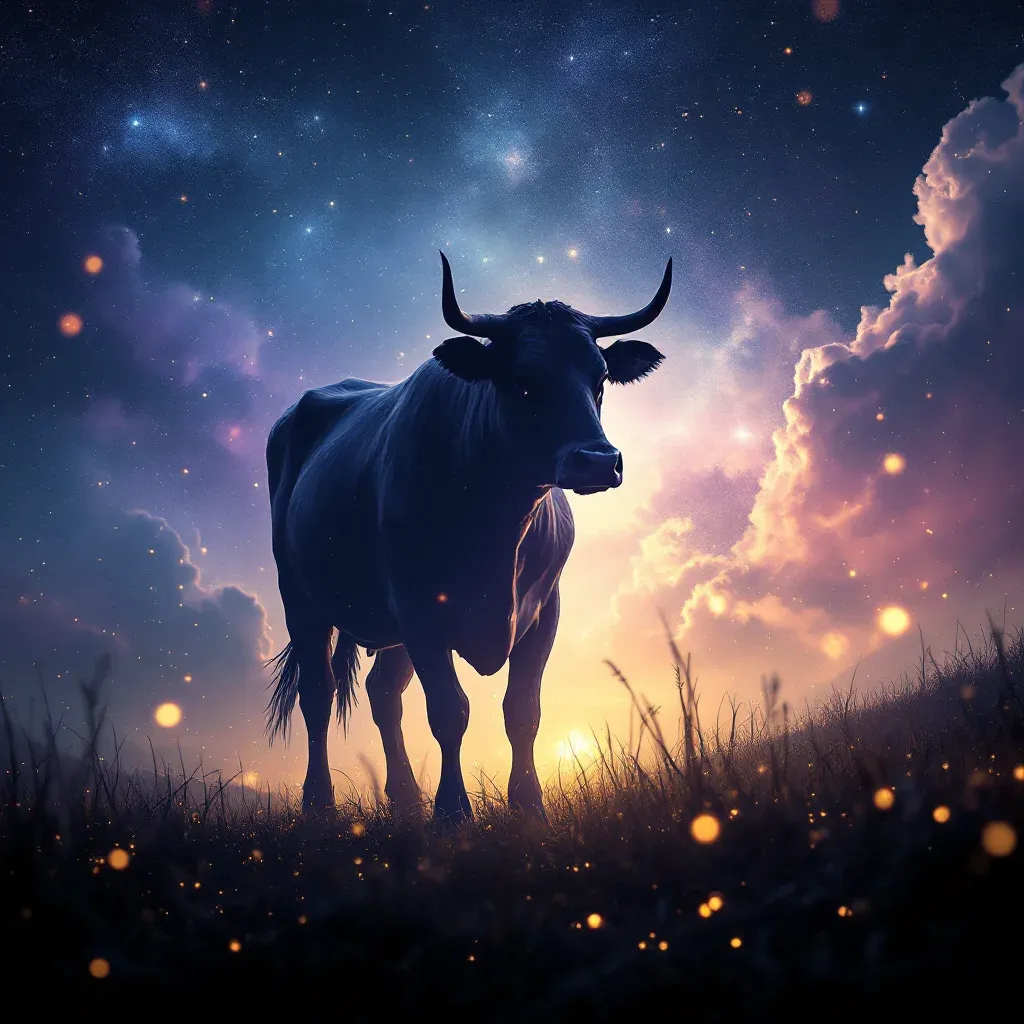
A white cow is one of the gentlest and most uplifting interpretations. In Nablusi’s Tâbîr al-Enâm, whiteness is often paired with purity, openness, and peace of heart. Seeing a white cow may point to lawful and clean earnings, peace in the home, or a clarification of your intention. If the cow is calm and fat, the dream strengthens the sense of a good order, clean livelihood, and inner relief. Whiteness can also speak of a purified intention; perhaps you are seeking a simple truth without overcomplicating it.
From a Jungian point of view, the white cow is a more conscious and peaceful form of the nurturing archetype. Acceptance instead of fear, order instead of struggle, simplicity instead of confusion. According to Kirmani, white and calm animals are often harbingers of good news. But if the white cow is weak, it may show that this good potential has not yet fully taken root. In other words, the intention is good, but the patience needed to nourish it may still be incomplete. In your life, the white cow may be whispering a clean beginning.
Black Cow
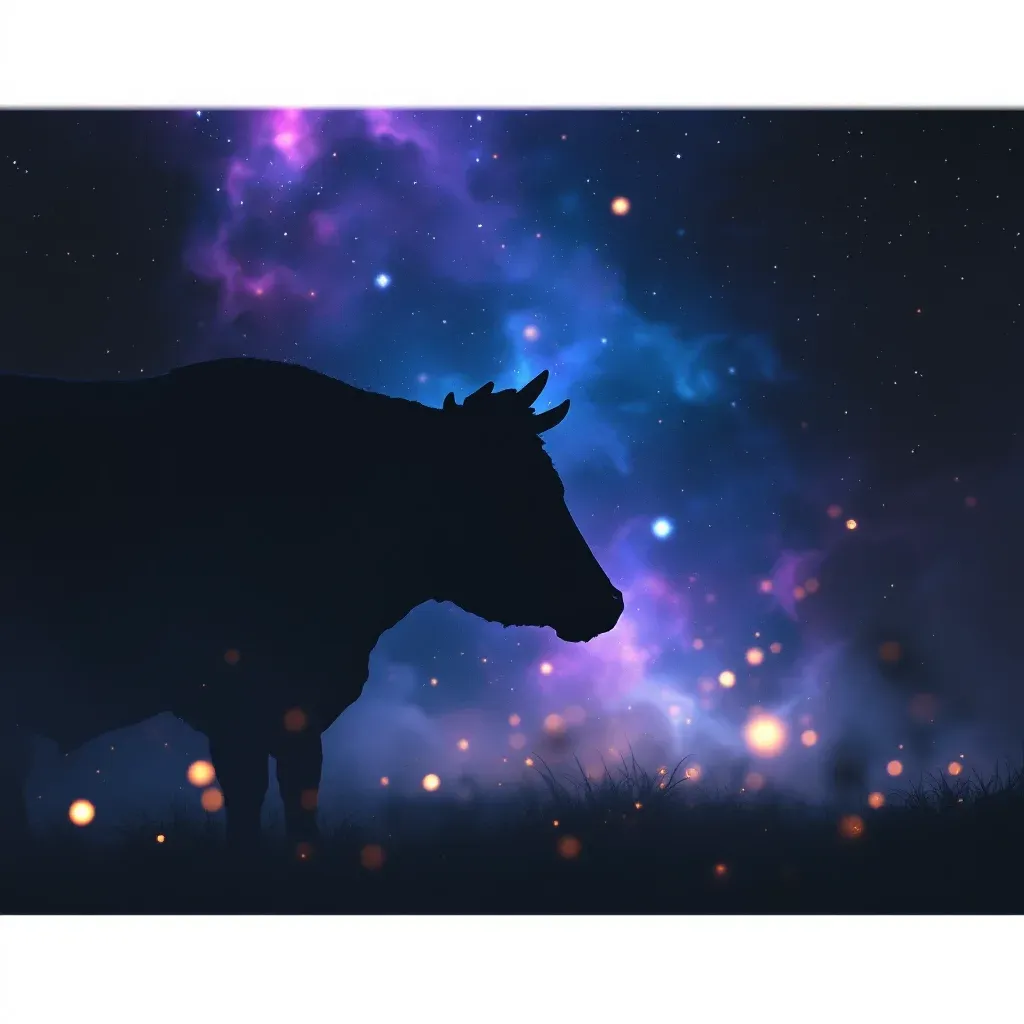
A black cow may look intimidating, but it is not always negative. In Muhammad ibn Sirin’s line, dark-colored animals sometimes carry meanings of weight, seriousness, and hidden strength. Nablusi may also connect black animals with strong instincts buried in the inner world. Seeing a black cow can mean a deep livelihood matter, a heavy responsibility, or an opportunity that does not open easily but carries strong potential. If the cow is calm, this power works productively; if it is aggressive, the burden may become pressure.
According to Kirmani, black and powerful animals can sometimes point to growing wealth along with a greater need for caution. So the black cow is abundance with a shadow. It brings much, but also asks much. In Abu Sa’id al-Wa’iz’s spiritual reading, such symbols test patience and inner discipline. In your life, the black cow may represent a serious period, a heavy but valuable task, or an effort that will pay off in the long run.
Yellow Cow
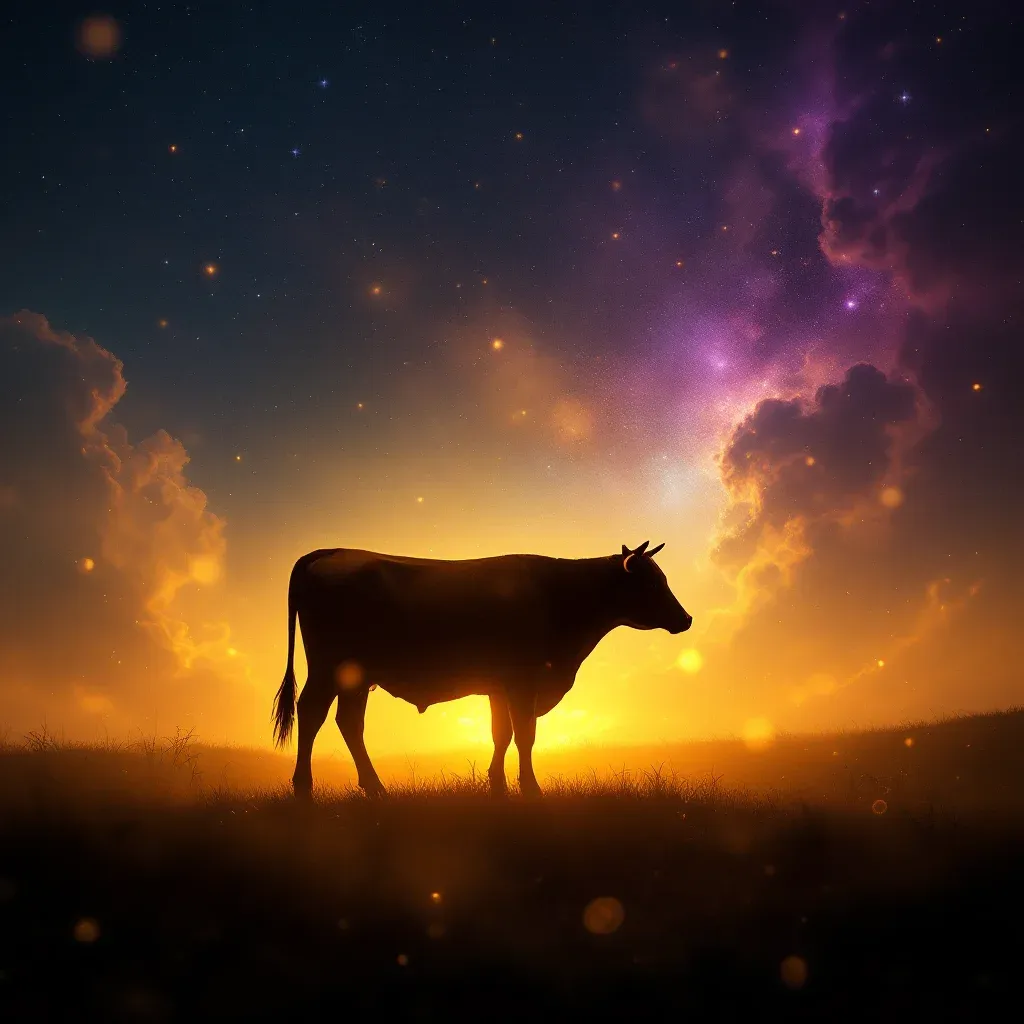
A yellow cow is a sign that asks for caution in traditional interpretation. Yellow is sometimes associated with illness, sensitivity, or envious eyes. Nablusi says that some yellow-colored animals may carry weakness and delicacy. So a yellow cow can point to some wear in livelihood, sensitivity in relationships, or a fragile period in the home. If the cow is yellow but healthy, it may not be only a warning; it may also be a blessing that can be protected if you act carefully.
In Kirmani’s language, yellow tones may be read as effort that is easily exposed to envy or that tires quickly. From a Jungian perspective, the yellow cow stands on the border between consciousness and anxiety. You know something is valuable, but you are not quite sure how to protect it. This dream may be asking you to handle your body, your home, your money, or your relationships with more care.
Brown Cow
A brown cow is the most natural tone of the earth and is often read as steadiness. As Abu Sa’id al-Wa’iz reports, earth tones carry meanings of simplicity, endurance, and connection to the ground. Seeing a brown cow may point to slow but solid income, loyalty to family, a rooted order, or a blessing that is not flashy but deeply trustworthy. This is the kind of cow that speaks of “unpretentious abundance.”
According to Kirmani, animals with root-and-earth associations often point to income that grows through effort and to long-lasting work. If the brown cow is giving milk, it may suggest that you will soon receive the return of your labor. If it looks heavy and tired, it may show that the burden on its back has grown. In Jungian terms, this color shows contact with the persona in its simplest and most authentic form. It may be a period in your life that moves forward without the need for decoration.
Spotted Cow
A spotted cow describes a mixed but lively process. On one side there is light, on the other darkness; on one side hope, on the other hesitation. In Nablusi’s interpretations, mixed-colored animals often carry dual meanings: both opportunity and caution. Seeing a spotted cow may show that several matters in your life are moving at once, so the interpretation cannot be reduced to a single sentence. It may bring good news, or it may bring indecision.
Kirmani advises looking at the animal’s behavior in such cases: is it calm, stubborn, does it give milk? If the spotted cow is calm, it can mean diversified opportunities; if it is restless, confusion is likely. In Jungian reading, this shows that the psyche is not one-color and that the opposites within you are learning to live together. The spotted cow is like shadow and light standing side by side on the path of individuation.
Interpretation by Action
What the cow does changes the fate of the dream. If it gives milk, that is one thing; if it attacks, another. If it is a calf, it carries hope; if it is dead, it speaks of closure. In classical interpretation, the animal’s action is often more decisive than the symbol itself. So here we read each movement separately. In the lines of Kirmani, Nablusi, and Ibn Sirin, action is considered together with wealth, opportunity, fear, and family life.
Calf
A calf is the softest form of a fresh beginning. In Muhammad ibn Sirin’s general approach to animal young, calf-like symbols are read as new opportunities, hopes that need protection, and chances that are not yet mature. Seeing a calf may mean joy in the home, a new step in work, or an income that will grow over time. But because it is a calf, it needs care; so this dream also teaches you to value the opportunity.
From a Jungian angle, the calf awakens the protective and tender side within you. Which new project, relationship, or habit in your life is asking for attention? According to Abu Sa’id al-Wa’iz, young animals can symbolize paths begun with pure intention. But if the calf is weak, it reminds you that the project is delicate. Kirmani may interpret a young animal seen inside the home as joy related to the family. This dream asks to be protected before it can grow.
Pregnant Cow
A pregnant cow speaks of abundance before birth. In Nablusi’s line, pregnancy is read as a blessing or burden that is growing inside but not yet visible. Seeing a pregnant cow may indicate that the effort you have invested is maturing and that a patiently awaited result is near. It can signal not only increasing income but also a change within the home. If the cow is pregnant, life is carrying something; that carrying can be both blessed and heavy.
According to Kirmani, pregnant animals often mean accumulated wealth and expanding opportunities. From a Jungian perspective, this is the form of creative potential before it has taken shape. Something is forming inside you, but you do not yet know its name. If you feel peace in the dream, the process may be unfolding correctly. If you feel unease, the weight of expectation may be wearing you down. The pregnant cow is the womb of patience.
Cow Giving Birth
A cow giving birth is a very powerful sign in classical interpretation. Abu Sa’id al-Wa’iz and Nablusi both associate birth scenes with relief after constriction. The cow giving birth may mean the arrival of a long-awaited result, a project bearing fruit, or a new chapter in the home. If the birth is easy, relief comes easily; if it is difficult, the gain requires effort.
In Muhammad ibn Sirin’s broader line, birth can also mean the turning of years and the transition into a new phase. Jung would see it as the emergence of a new self from the old identity. What is about to be born in your life? Sometimes a new idea, sometimes a job, and sometimes a new side of you. A cow giving birth is the visible form of invisible labor.
Milking a Cow
A milk-giving cow is the clearest form of abundance. Kirmani interprets cow’s milk as lawful sustenance, beneficial earnings, and clean income obtained through effort. Nablusi may also associate milk with usable wealth and goodness entering the home. In a dream, drawing milk from a cow or seeing it give milk usually means that a source has opened and your labor is finding a return. If the milk flows well, blessing flows; if there is no milk, the source may have dried up.
In Jungian reading, milk is the symbol of nourishment and emotional satisfaction. A milk-giving cow shows that you are in touch with an inner source. This source may be a skill, a relationship, or a capacity you have neglected for a long time. If the milk spills, part of the opportunity may be wasted. If you collect it, you are consciously storing the gain. This dream shows the flow of goodness.
Milking a Cow by Hand
Milking a cow means directly collecting benefit. In Muhammad ibn Sirin’s dream interpretations, acts of milking usually mean benefiting from wealth, earning income from a matter, or receiving a right that has already accumulated. According to Kirmani, milking a cow is especially associated with lawful earnings and benefiting from the livelihood of the household. If the milk is plentiful, the chance is wide; if it is little, the benefit to be received is limited.
From a Jungian perspective, this is the effort to consciously use the nourishment hidden in the unconscious. You are drawing out the essence of something through effort. But tenderness matters in this action too; if you are too rough, the source may shut down. The dream may be whispering that you should use your opportunities properly and in moderation.
Feeding a Cow
Feeding a cow is the act of building an order that grows through effort. Nablusi often interprets feeding animals as livelihood, responsibility, and ownership. Feeding a cow in a dream may represent a patient investment, an effort that keeps the family standing, or the care of a long-term project. This is not a dream of output, but of process. You are supporting the path to the result, not the result itself.
Abu Sa’id al-Wa’iz often links dreams involving care and training with the education of the self. From a Jungian perspective, this is the maturation of your giving side. But be careful: feeding requires boundaries as much as love. If you try to feed everyone while starving yourself, the shadow enters the scene. The dream asks what you are nourishing and what you are neglecting.
A Cow Attacking
A cow attacking is one of the most striking and most searched variants. When a usually calm animal shows anger, the unexpected side of life comes into view. In the lines of Nablusi and Kirmani, attacking animals are often read as pressure, fear, sudden conflict, or facing a situation you cannot control. If the cow attacks, you may be under pressure in livelihood matters, family tensions, or a heavy responsibility at work. Details such as horns, blows, or chasing make the interpretation sharper.
In Muhammad ibn Sirin’s general approach, an animal attack also carries sudden warning as well as hostility. So this dream is not necessarily bad news; sometimes it tells you that you need to set a boundary. In Jungian terms, the attacking cow is the enlarged form of repressed anger. What is usually nurturing and calm may have become threatening because it has been neglected. Perhaps one area of work, family, or duty is asking for more attention from you. If you are running, it shows your side that avoids pressure. If you are fighting back, it means you are ready to draw a line. The attacking cow is tension in the place you thought was safe.
A Cow Biting
A cow biting carries a subtler warning than an attack. It is not as harsh as a full assault, but it can mean an unexpected hurt and a small yet irritating contact. According to Kirmani, animal bites are often interpreted as criticism from close circles, a minor loss related to livelihood, or an unexpected hurt feeling. If the cow bites you, an area that seems closest to you may be causing some trouble. This could be a job, a family relationship, or a routine you thought was safe.
Nablusi sometimes explains bites as a thin line between benefit and harm. The biting thing does not fully destroy, but it annoys, leaves a mark, and demands attention. In Jungian reading, this is the visible form of a bond you accepted but that is actually disturbing you. The dream says that a small issue should not be ignored. If there is blood, the effect is stronger; if not, it is more of a warning.
A Cow Chasing You
A cow chasing you can look funny or frightening, but in dream language it is a strong sign of pressure. A cow that chases you shows that something related to livelihood, responsibility, or home order is asking for your response. Abu Sa’id al-Wa’iz often interprets chasing animals as issues that do not leave you alone. If a cow is chasing you, there may be a task you have postponed, a burden you have ignored, or an area you do not want to face emotionally.
In Muhammad ibn Sirin’s line, such scenes are read as a condition that has begun to pursue the dreamer. Jung would see chasing as the stage of shadow and escape. The more you run from it, the bigger it grows. The cow does not have to be aggressive; sometimes it is simply calling you to face something. If you stop and look at it in the end, the force of the symbol weakens. Being chased is often the voice of delayed truth.
Killing a Cow
Killing a cow is a scene that should be read very carefully. In classical interpretation, slaughtering or killing an animal can mean sacrifice, ending a phase, obtaining benefit, or making a harsh break, depending on the details. According to Kirmani, slaughtering an animal may sometimes mean benefiting from wealth and sometimes ending a system. If there is benefit from the meat, it is a closure turned into gain. If the killing is needless and harsh, it may be read as cutting off a fruitful field.
Nablusi evaluates the killing of an animal according to intention and detail. From a Jungian perspective, killing a cow may mean severing a nurturing bond, refusing a responsibility, or ending a structure that has begun to consume you. If you feel relief in the dream, perhaps you are being freed from a burden. If you feel guilt, you may have experienced a rupture with a source of nourishment. This dream stands on a thin line between blessing and loss.
Dead Cow
A dead cow describes a completed cycle. In the lines of Ibn Sirin and Nablusi, dead animals are sometimes read as weakening wealth, the closing of an opportunity, or stagnation in the area of livelihood. Seeing a dead cow may point to the end of a period, especially in matters of livelihood, family order, or a patient long-term effort. This does not necessarily mean disaster; sometimes it simply shows that you can no longer keep feeding what no longer feeds you.
According to Kirmani, a dead animal may symbolize an order that has lost its usefulness. In Jungian reading, it is a confrontation with a dried-up mother energy or a neglected source. What died in your life: a relationship, a habit, a hope, or a form of labor? The dead cow teaches mourning, and then opening a new field of nourishment.
A Cow Running Away
A cow running away means an opportunity slipping from your hands or an order that cannot be held. Nablusi often reads escaping animals as blessings missed, a person who keeps postponing, or an opportunity that cannot be held even when chased. If the cow runs away, it may suggest that a livelihood opportunity has not been properly claimed. Sometimes, the peace of the home also moves away because of a lack of attention.
From a Jungian perspective, the fleeing cow means losing contact with your nurturing side. You may want something very much, but the patience or structure needed to hold it may not have been built. According to Kirmani, such dreams say that blessing will disperse if it is not noticed. If the cow returns in the dream, repair is possible. Escape is not always the end; sometimes it is a call.
A Cow Speaking
A speaking cow is like an unexpected revelation emerging from the ordinary. In classical interpretation, speaking animals are often treated as extraordinary news, a hidden message, or the unconscious speaking directly. Abu Sa’id al-Wa’iz pays special attention to speaking animals, because they can be a strong warning or the symbolic language of truth. If the cow speaks, it may want to tell you something about livelihood, family, or care.
From a Jungian perspective, this is the unconscious taking the floor directly. A truth that you cannot see clearly in daily life comes through the speaking cow. The content matters, but so does the tone: if it is soft, it comforts; if it is sharp, it warns; if it is wise, it guides. In the lines of Kirmani and Nablusi, such extraordinary scenes carry a message beyond ordinary interpretation.
Interpretation by Scene
Where the cow is seen also changes the reading. Seeing it in the home, on the street, in a barn, in a field, or in a herd opens different aspects of family, work, abundance, and community. The setting shows which area the cow symbol is touching. In classical interpretation, the scene completes the animal; in Jungian language, the setting points to the room of the psyche in which the symbol appears.
A Cow Entering the House
A cow entering the house is a strong sign of blessing entering the home. In Nablusi’s home-centered interpretations, an animal coming into the house is often read as news, livelihood, a burden, or a blessing affecting the household. If the cow enters calmly, peace, order, and sustenance may enter the home. If it forces its way in, the pressure of the outside world may be seeping into domestic life.
According to Kirmani, large animals inside the home are linked with the head of the household, a source of livelihood, or important changes in the family. In Jungian reading, a cow entering the house is nourishing energy entering your inner home. What is coming into your inner space: an opportunity, a responsibility, a feeling arriving like a guest? The dream reads the home as a sacred place.
Cow in a Barn
Seeing a cow in a barn means orderly livelihood and controlled abundance. Abu Sa’id al-Wa’iz often interprets animals seen in closed but safe spaces as blessings that are protected. The cow in the barn says that what you have worked for is in its proper place, but it also needs care. This scene can also describe a space that is “safe but stagnant.”
In Muhammad ibn Sirin’s line, the place where the animal stays shows the sustainability of the dream. If the barn is clean and spacious, the order is healthy. If it is dirty, there is a neglected source. In Jungian terms, the barn is the storage area of the unconscious: nourishment, the body, and basic needs are kept here. This dream asks whether your basic needs have been neglected.
Cow in a Field
Seeing a cow in a field points directly to the area of production and effort. Kirmani and Nablusi read field and soil scenes together with income, harvest, and long-term results. If a cow is in a field, the fruit of labor, the earth’s response, and the visible result of effort come to the foreground. This dream is especially connected with work and material order.
From a Jungian perspective, the field is the area of conscious effort. If the cow touches the earth there, something in your life may be taking root. If the cow tramples the field, it may also signal an unproductive burden. The tone of the scene matters: peaceful means productivity, chaotic means scattered effort.
Cow in a Meadow
Seeing a cow in a meadow carries openness and spaciousness. In Nablusi’s readings of green places, the meadow appears as comfort, abundance, and room to breathe. A cow in a meadow may say that livelihood is not only a tight necessity; it can also be a simple joy taken from life. This dream may point to a more flexible order.
From a Jungian perspective, the meadow is where the soul breathes. If the cow is free yet calm there, your nurturing energy is in balance. If it seems lost, you may be searching for direction within abundance. Kirmani may connect animals seen in broad pastures with expanding sustenance. This scene whispers that abundance can exist without pressure.
Herd of Cows
A herd of cows concerns collective abundance, crowded responsibilities, and the general course of the year. In Muhammad ibn Sirin’s line on animal herds, a herd is often read as collective developments, back-to-back opportunities, or successive troubles. If the herd is calm, it suggests collective plenty; if scattered, there are multiple matters that need control.
Nablusi emphasizes social and family influence in herd dreams. In Jungian terms, the herd is movement in the collective unconscious: you are not alone, and many voices are looking at the same issue. If one cow in the herd stands out to you, you may sense that one matter in your life is growing under the pressure of family or environment.
Interpretation by Feeling
The feeling of the cow dream changes a great deal. If you are afraid, that is one thing; if you love it, another. If you are surprised, another. If you feel like you yourself are becoming a cow, that means something even deeper. Emotion is the heart of the symbol. Classical interpretation often explains the scene; the tone of feeling reveals your relationship with the dream. Here we read the inner vibration of the dream.
Fear of the Cow
Being afraid of a cow shows that you may feel pressure even from something that seems calm on the surface. Nablusi gives importance in fearful dreams not so much to the symbol itself, but to the dreamer’s condition. So if the cow feels frightening, what matters is not its nature, but the meaning it awakens in you. You may be feeling a heavy load in the area of livelihood, family, or responsibility.
From a Jungian perspective, this is a meeting with the shadow side of the nurturing archetype. A place that should feel safe may be experienced by the unconscious as threatening. According to Kirmani, fear can sometimes arise from being intimidated by the size of a blessing. This dream asks you to see the real issue beneath the fear.
Turning Into a Cow
Turning into a cow is symbolically very powerful. It may show that you are trapped in a role that carries, feeds, waits patiently, and moves slowly under weight. In Jungian terms, transformation scenes where a part of identity takes animal form create a direct meeting between shadow and archetype. Turning into a cow may carry the feeling of “I am always the one who gives.”
In classical interpretation, such strange transformations may be read as an excess in personal traits, habits merging into identity, or a shift in role. Abu Sa’id al-Wa’iz sometimes explains a human becoming like an animal form through the weight of the ego or the burdens of the world. This dream asks whether you are carrying yourself too much.
Loving the Cow
Loving the cow is the gentle face of the dream. This scene says that you are in harmony with the labor, order, and nurturing side of life. According to Kirmani, treating an animal kindly reflects the intention to preserve the blessing in your hands. If you love the cow, your relationship with livelihood, home, or responsibility may be softening.
From a Jungian perspective, love is the first gate to peace with the shadow. You begin to see the nurturing thing not as an enemy, but as a friend. In Nablusi’s line, such closeness can be read together with beneficial relationships and good outcomes. The dream gently tells you not to belittle your caring side.
Seeing a Sick Cow
A sick cow is a sign of weakening power and wear. In the lines of Ibn Sirin and Nablusi, an animal’s illness may be interpreted as a decrease in wealth, weakness in the home order, or a project becoming unproductive. Seeing a sick cow may say that an area you have been working on has been neglected or overworked.
From a Jungian perspective, this is the wounded side of the mother archetype: a nurturing energy that also needs care. If you have been overstraining something in your life, the cow appearing sick is no coincidence. Abu Sa’id al-Wa’iz emphasizes patience and care in such dreams. Sometimes the only need is to notice the neglected area.
A Lost Cow
A lost cow means blessing gone out of reach or the feeling of loss. Nablusi often links lost animals with a hidden opportunity, scattered order, or something sought but no longer in its place. If the cow is lost, you may be experiencing a gap in livelihood, family, or security. That gap may be a real loss, or it may be an emotional disconnection.
From a Jungian perspective, a lost cow means losing contact with your inner source. You may no longer be fully sure what you are feeding or where your effort is going. According to Kirmani, symbols of loss are calls to pay attention and find your direction again. This dream asks you to follow the trail after loss; because sometimes what is lost outside has simply been forgotten inside.
Frequently Asked Questions
-
01 What does seeing a cow in a dream point to?
It often points to livelihood, effort, family order, and calm abundance.
-
02 What does seeing a white cow in a dream mean?
It is usually read as a clean opportunity, relief, and peace of mind.
-
03 Is seeing a black cow in a dream bad?
Not always. It can point to strong livelihood, seriousness, and patience.
-
04 What does a cow attacking in a dream mean?
It draws attention to sudden pressure in work, family, or livelihood matters.
-
05 What does seeing a calf in a dream say?
It suggests a new beginning, fresh income, or joyful news in the home.
-
06 How is milking a cow in a dream understood?
It means earning through effort and drawing benefit from a cultivated order.
-
07 What does seeing a dead cow in a dream mean?
It can point to the end of a phase, livelihood worries, or an energy that has run dry.
✦ Just for you ✦
Write your dream,
we'll read it
If what we wrote above doesn't quite fit — tell us yours. Your own cow dream, with its unique details, may deserve a different reading.
✦ Your dream arrived.
We'll get back to you when the reading is ready. Don't want to wait? Download RUYAN for an instant reading.
Could not reach the server.
We saved your dream locally — when you reload later, we'll auto-resend it.
Next step
This reading is a beginning. Let's look at your whole dream — if you wish.
RUYAN reads your "Cow" dream through your life, your birth chart, and your recent dreams — one by one, just for you.