Seeing a Chicken in a Dream
Seeing a chicken in a dream is often read as household provision, abundance, effort, and the quiet but living rhythm of everyday life. Sometimes it points to a woman, sometimes to a small but persistent opportunity; the details change the meaning sharply.

General Meaning
Seeing a chicken in a dream is one of the most ordinary-looking symbols, yet it carries many layers. When the chicken appears on the doorstep, in the yard, in the kitchen, in the garden, or in your hands, it speaks of the pulse of the home, the fine rhythm of livelihood, and the quiet efforts that hold life together. This symbol sometimes calls directly to abundance; at other times, it points to jealous eyes, careless words, or the fragile balance within a household. The calmer, healthier, and more alive the chicken is, the more the dream carries order, provision, and daily peace. But if the chicken is fearful, aggressive, running away, or appears dead, the meaning turns toward exhaustion at home, stress about earning a living, or a small but persistent unease.
The warm side of this symbol is simple: a chicken often stands for small forms of fortune. It is less about grand claims and more about the things that set the table, keep the hearth alive, and feed the inner life of the home. In many older interpretations, the chicken is linked with a woman, service, domestic order, modest but blessed wealth, and practical daily benefit. At the same time, the chicken is an unpretentious creature; for that reason, seeing a chicken in a dream can also point to humble signs that arrive before a bigger turning point. A door opens, news comes, a relationship softens, effort begins to pay off — and most often, it happens quietly.
Feeling matters greatly in a chicken dream. Did the chicken give you peace, or did it make you uneasy? Did it come close, or run from you? Was it with chicks, alone, in a coop, inside the house, or out in the street? The texture of the dream changes the meaning of the symbol. For the chicken is both a sign of abundance and a bird of scattered daily concerns. Wherever the chicken is knocking in your dream, that is the place from which the meaning should be read: livelihood, family, a woman figure, the need for protection, small gains, or opportunities spoken of but not yet fully revealed.
Three Lenses of Interpretation
The Jungian Lens
From a Jungian perspective, the chicken belongs to the archetype of the domestic nurturer in the collective unconscious. It carries less of the freedom of a wild bird and more of the rhythm of settled life; when it appears in a dream, it calls the psyche toward what is everyday, concrete, and firmly on the ground. Here, the symbol speaks closely with the mother image, nourishing feminine energy, and the need for protection. The chicken can sometimes look like a plain face of the anima: not glamorous, but sustaining life. In other words, the dream may not be showing you grand romantic meaning, but the small and vital things that must continue.
Jung often said that the animals in dreams are the language of instinctive nature. In this sense, the chicken is a soft but nervous expression of instinct. It does not soar into the sky; it scratches the earth. It does not seek gold; it searches for food. For that reason, the chicken may whisper a question to the conscious self’s obsession with “big goals”: what am I feeding myself with today? If the chicken in the dream was afraid, it may suggest that your contact with the shadow is weak at this point — perhaps there is a small but constant anxiety in your life, a tendency to dismiss the feminine, or an inclination to belittle domestic responsibilities.
The chicken’s connection to the egg is also important in a Jungian reading. The egg is the shell of potential; the chicken is the life-field in which that potential is carried. So seeing a chicken may point to the “ordinary but fruitful material” that must be carried on the path of individuation. The road to the Self does not always open with grand symbols; sometimes a chicken returns you to your own rhythm. The dream may be asking: which part of your life is being neglected? Which small duty is actually keeping the whole structure standing? Which nurturing side of you has been left in the shadows?
The Ibn Sirin Lens
In the interpretation tradition of Muhammad ibn Sirin, the chicken is often read together with household benefit, a woman figure, service, and daily provision. Through its meat, eggs, and the way it moves within the home, the chicken represents a small but visible form of wealth and fortune. According to Kirmani, seeing a chicken can point to activity within the household, a matter connected to a woman, or news that arrives unexpectedly but proves useful. In Nablusi’s Tâbîr al-Anâm, the chicken is at times linked to domestic service and at times to lawful earnings that come to one’s hand; but if the chicken becomes aggressive or runs away, the interpretation turns more cautious.
As narrated by Abu Sa’id al-Wa’iz, the chicken may indicate a quiet livelihood and benefit coming from the household. Yet if there are many chickens, the meaning can shift toward busy chatter, scattered concerns, or small arguments inside the home. When the lines of Ibn Sirin and Nablusi come together, the chicken dream is not read as purely auspicious or purely unlucky; it is more often understood as “fortune within the home.” If the chicken is calm, clean, and well-fed, it suggests a blessed order. If it is dirty, wounded, or aggressive, it reminds you to pay attention to a domestic imbalance.
In Kirmani’s interpretations, the chicken can sometimes point to a serving figure whose worth has not been fully recognized. That may be the dreamer’s own labor at home, or the fatigue of a woman around them. Nablusi, with a more careful tone, looks at the chicken’s condition: if it is white and tame, it is good; if black and timid, there is a hidden issue; if noisy, the dream warns of scattered words. In some interpretations the chicken represents a fortune that arrives slowly but surely; in others, modest benefits. For that reason, the dream cannot be reduced to a single line. How you saw the chicken is what opens the door of interpretation.
The Personal Lens
Now let the dream come back to your own life. Is there something lately that needs small but steady attention? A household task, a relationship, a financial concern, a woman figure, a mother’s words, a sibling issue? A chicken often speaks not through major events, but through the ordinary. There may be a part of your life that looks small on the outside but is either tiring you or nourishing you. The dream may be shining a light there.
Ask yourself: what did the chicken look like in the dream? Was it tame, fearful, large, sick, with chicks? Does that feeling resemble any area of your real life? If the chicken gave you peace, perhaps your desire to bring order is growing stronger. If the chicken frightened you, perhaps a responsibility is quietly pressing on you from within. The chicken may sometimes say, “Do not belittle small things”; at other times, it whispers, “Do not take on too much.”
Also listen to this: are you feeding someone in your life? Feeding is not only about food; attention, effort, patience, words, and care are also forms of nourishment. A chicken dream may ask whether your giving nature is being seen. Or the opposite may be true: perhaps you have forgotten how to receive nourishment. Are you extending to yourself the same gentleness you offer others? A chicken is a small truth moving through the house; finding where it moves in your heart is the key to the interpretation.
Interpretation by Color
The chicken’s color quietly changes the direction of the dream. Here, color is not just a visual detail; it is the tone of intention, the weight of the message, and the emotion hidden inside the symbol. A white chicken leans toward a clearer, cleaner, and more blessed reading; a black chicken may point to something hidden; a gray chicken to hesitation; a yellow chicken to sensitivity; and a speckled chicken to a mixed but layered condition. Interpreters such as Kirmani and Nablusi always connect the color of the animal to its state, because color is like the outer skin of character in the chicken.
White Chicken
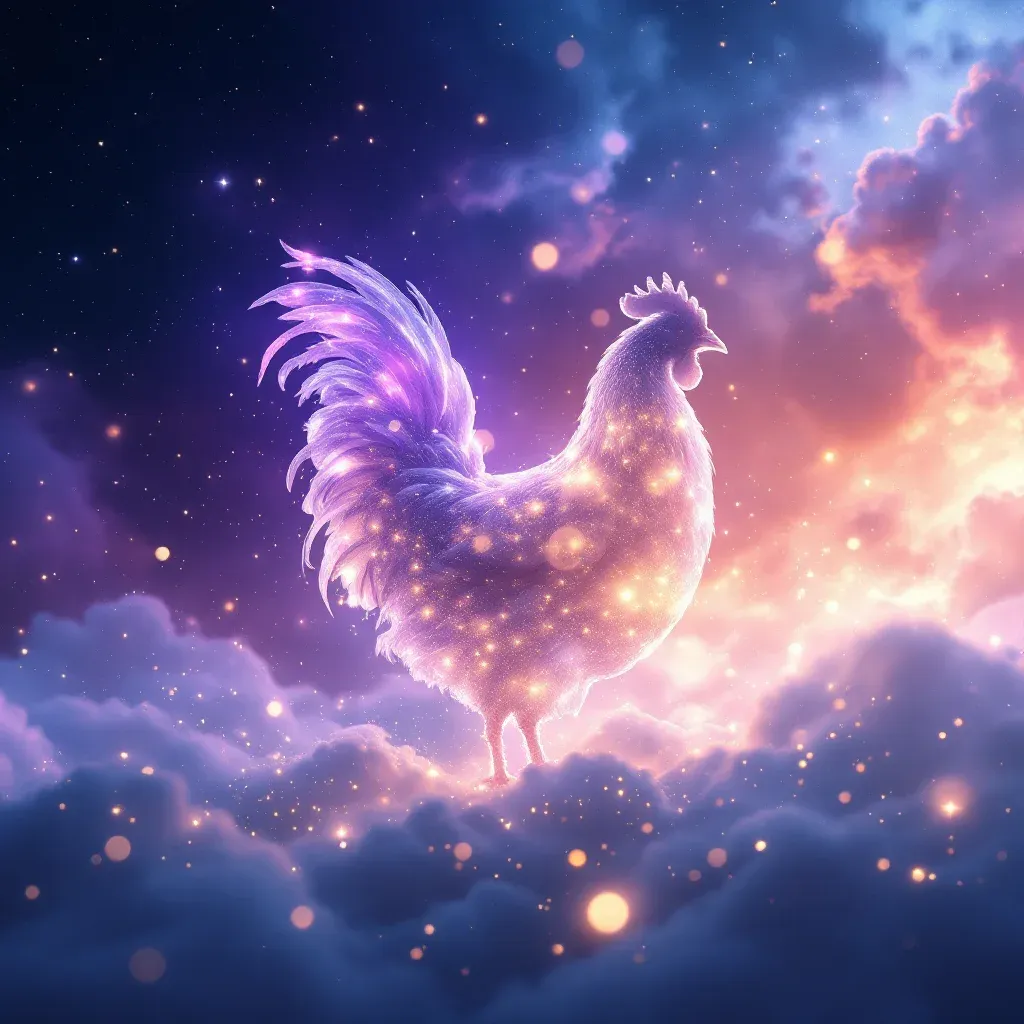
In classical interpretation, a white chicken is often a symbol of good, clean, and gentle fortune. In the line of Muhammad ibn Sirin, whiteness is read as clarity, relief, and peace of heart. If the chicken is white and calm, it may suggest that a household matter or small livelihood will arrive through a clean path. This dream can point to a softer atmosphere in the family, goodwill coming from a woman figure, or a clear result shaped by effort.
From a Jungian perspective, the white chicken is a purified and nurturing form of feminine energy. It may speak of the need to organize your life, simplify, and ease conflicts. According to the interpretation line transmitted by Abu Sa’id al-Wa’iz, white and tame animals are often linked with mercy and calm. If the chicken had eggs or was close to its chicks, this whiteness turns into the protection of a potential. The only thing to watch is not to mistake whiteness for naïve innocence; sometimes excessive good will can also become tiring. Still, this is one of the softest doors in a chicken dream.
Black Chicken
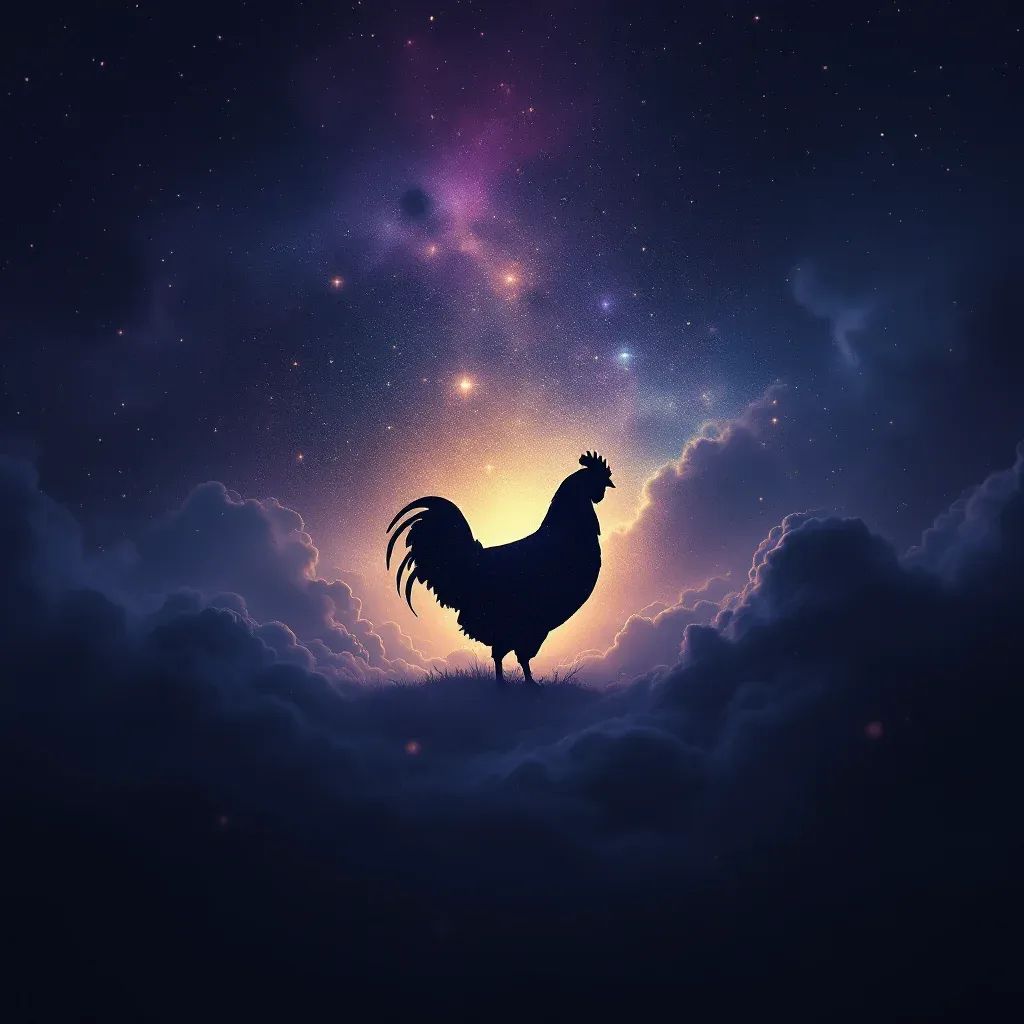
A black chicken is not always negative, but it can point to a hidden tension, a feeling that does not open easily, or the presence of a domestic shadow. In Nablusi’s Tâbîr al-Anâm, the darker the color, the greater the need for caution. If the chicken is black, a home-related matter may be more closed than it seems; someone may be silent, waiting, or carrying an inner hesitation. According to Kirmani, dark-colored animals can sometimes symbolize a hidden benefit or a piece of news that requires care.
In the Jungian lens, the black chicken is a gentle form of meeting the shadow. Even if it appears frightening, it can be read as the domesticated face of a repressed feeling. Fragility, jealousy, distrust, or a sense of not being sufficiently nourished may be hidden here. If the black chicken was not aggressive, the dream invites you to notice a hidden part of your inner world. If the unease was strong, the dream asks you to handle a domestic matter carefully rather than hastily.
Yellow Chicken
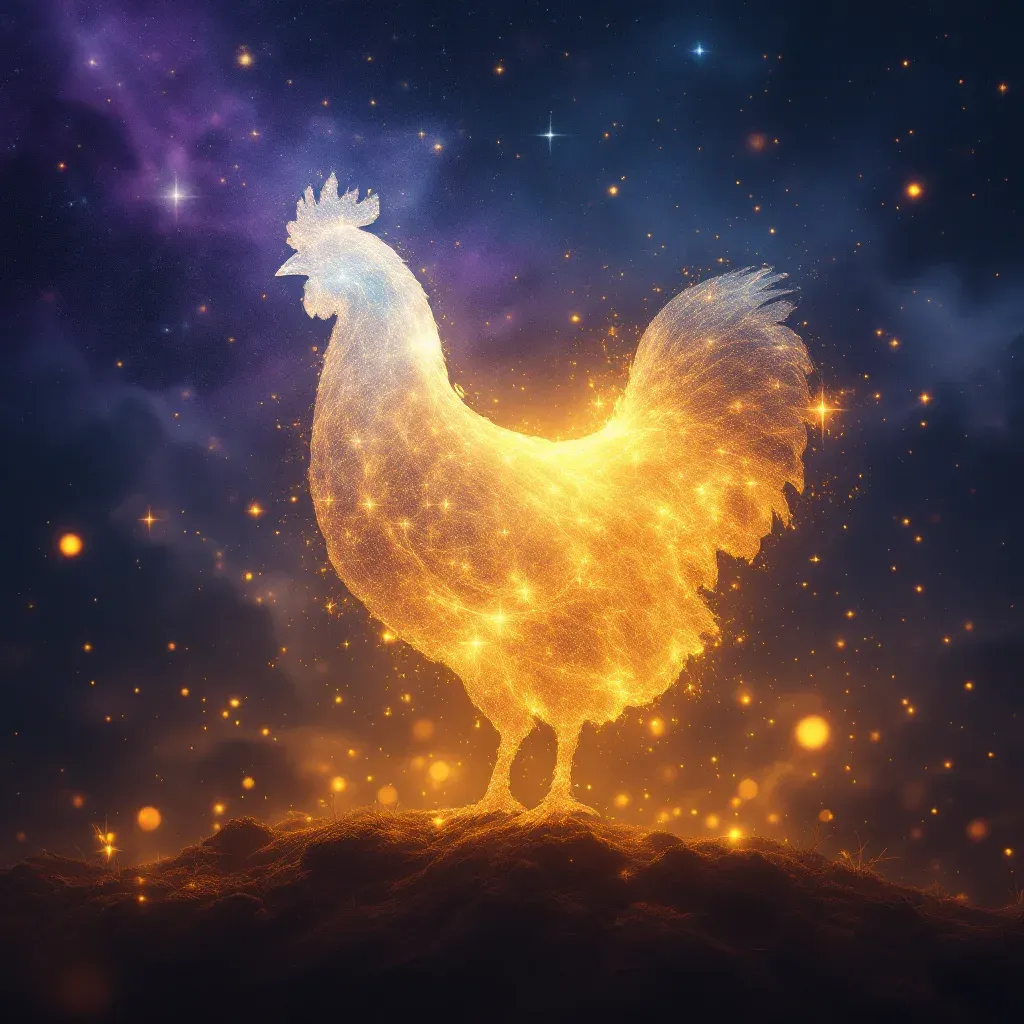
A yellow chicken is a delicate sign that requires attention. In older interpretations, yellow is sometimes linked with weakness, sometimes with envy or pallor. For that reason, in the lines of Kirmani and Nablusi, yellow is often a color that calls for caution. If the chicken looks yellow and weak, it may mean a drop in daily energy, fatigue in the home, or a situation that needs protection. But if the yellow is bright, fresh, and lively, it can also symbolize a small yet noticeable opportunity.
In Jungian reading, the yellow chicken is like a part moving between consciousness and instinct. It carries life energy, but it is also fragile. This color may ask whether you are being too alert about something. Especially if anxiety has grown around livelihood, household order, or family balance, the yellow chicken dream makes that visible. In the style of Abu Sa’id al-Wa’iz, yellow is sometimes less about physical weakness and more about the subtle thinning of the soul. The dream may also whisper, “Do not drain yourself too much.”
Gray Chicken
The gray chicken is the bird of hesitation and in-between tones. It is neither a fully blessed sign nor a heavy one; more often, it symbolizes a matter that is still waiting to be resolved. In Muhammad ibn Sirin’s approach, unclear colors often point to intentions that have not yet become clear. If the chicken is gray, a news item may have arrived but not been fully understood; someone may have spoken, but not shown their real intention.
In Nablusi’s line, gray leaves the interpretation suspended between two sides. This dream may point to a situation in family life waiting for a decision, mixed feelings, or a state caught between joy and worry. From a Jungian angle, the gray chicken carries the blur between persona and inner voice. There is a part of you that cannot yet say exactly what it wants, but it continues to feel. In such a dream, the chicken does not tell you to hurry; it tells you to clarify the image first. The valuable thing is not to condemn indecision, but to read it.
Speckled Chicken
A speckled chicken is a multi-voiced and layered symbol. The blend of colors can show both abundance and disorder. Kirmani often draws attention to environmental movement in animals of mixed color; this means multiple daily concerns happening at once inside the home. A speckled chicken dream may be saying that there is opportunity on one side and details requiring care on the other.
From a Jungian perspective, the speckled chicken reflects a fragmented self. On one side there is trust, on the other unease; on one side receiving, on the other giving. This dream may show that you are trying to carry several roles at once. Read through Abu Sa’id al-Wa’iz’s spiritual tone, the speckled chicken recalls the variety of worldly matters and the daily preoccupations that can scatter the heart. The good side is that abundance can also come in variety. What you must watch is not letting a scattered agenda pull you away from your center.
Interpretation by Action
In a chicken dream, the real meaning often opens through movement. Did the chicken come to you, run from you, attack you, lay eggs, have chicks, die, or did you feed it? Once the action changes, the interpretation changes; for the chicken is not a fixed symbol, but a living form of relationship. In this section, the tone of movement opens the door of the dream. Kirmani and Nablusi both imply that judging without looking at the animal’s behavior is incomplete.
Seeing Chicken Chicks
Seeing chicken chicks points to a new fortune that has begun but still needs protection. In Muhammad ibn Sirin’s line, young animals are often read as beginnings, trusts, and benefits that require care. A chick is a small joy born inside the home, a new responsibility, a warmth added to the family, or an opportunity that has not yet grown. If the chick is lively and moving, the beginning carries hope.
From a Jungian angle, a chicken chick may symbolize a growing part of your own self. Your fragile side may not yet fully trust the world. This dream reminds you of the need for protection, patience, and nourishment. In Abu Sa’id al-Wa’iz’s language, young animals are sometimes “a small form of mercy.” But if the chick is lost or cold, the dream may show that something new has been neglected. The value of small beginnings should not be underestimated.
Feeding a Chicken
Feeding a chicken means giving effort, nurturing, and making small benefits sustainable. In Nablusi’s Tâbîr al-Anâm, the act of feeding is read both as serving a good and as an effort that seeks a return. If you are feeding a chicken in a dream, it often means building household order, softening a relationship, or patiently growing a livelihood. If the chicken is healthy, your effort will be returned; if it is hungry, weak, or uneasy, it may mean that what you give is not being received well.
From a Jungian angle, this scene belongs to the mother archetype that nourishes. You are growing something: an intention, a relationship, a job, a home routine, an inner discipline. In Kirmani’s line, feeding a chicken can also be seen as preparing something for the benefit of the household. But watch this: overfeeding can create dependency. The dream may also ask you to see the line between helpful nourishment and consuming excess.
Seeing a Dead Chicken
A dead chicken usually represents a faded opportunity, an ended desire, or a collapsed daily order. In Muhammad ibn Sirin’s interpretations, a dead animal often shows a field where movement has stopped. If the chicken is dead, a matter inside the home may have reached an end; sometimes that ending is blessed, sometimes it leaves a bitter emptiness. If the dead chicken is bloody, the matter is sharper; if it is bloodless and still, the ending may have come more naturally.
According to Nablusi, endings are not always bad; sometimes they are the close of an exhausting cycle. In the Jungian lens, the dead chicken is the symbol of a nurturing habit that has lost its life force. It may point to a structure that once helped you but now only burdens you. In Abu Sa’id al-Wa’iz’s spiritual language, a dead animal sometimes reminds one of the world’s transience. This dream asks: what should I stop carrying now?
A Chicken Attacking You
A chicken attacking you is when something that seems small suddenly presses on you in an unexpected way. Kirmani often emphasizes environmental irritation or verbal tension in aggressive animals. If the chicken attacks, it may mean pressure from within the home, a sharp comment, a woman’s objection, or the weak but persistent weight of livelihood stress. If it flaps its wings and comes at you, it can also symbolize emotional pressure.
In Jungian reading, the attacking chicken is the domesticated face of repressed anger. It is not a great beast, but a troubling shadow-part that crosses boundaries. It can also point to your need to protect your own limits. In Nablusi’s line, aggression changes the nature of the animal and requires caution in interpretation. Do not dismiss the attack, but do not inflate it into disaster either. Here, the chicken represents the “small but irritating” matters.
Being Chased by a Chicken
Being chased by a chicken often describes an issue you have been avoiding but which is now following you. In Muhammad ibn Sirin’s style, being chased usually carries a call to face something that has been covered over. If the chicken is chasing you, the matter may not look large from the outside, but it may disturb you deeply. A household task, family expectation, an unspoken issue with a woman, or a postponed decision may all lie inside this symbol.
From a Jungian perspective, being chased is the shadow archetype in pursuit. The chicken may seem funny here, but in truth it is the psyche’s call to “see what you have treated as too small to matter.” According to Kirmani, an animal following you can also point to a small but persistent demand linked with livelihood. If you escaped, the issue has only been postponed for now; it may not be fully resolved. If you were caught, the time for facing it has arrived.
A Chicken Laying Eggs
A chicken laying eggs is one of the most fertile signs in classical interpretation. Nablusi and other interpreters often connect the egg with birth, fortune, hidden benefit, and potential that will soon open. If the chicken is laying eggs, there may be a household blessing, a project that will bear fruit through effort, or a new beginning that needs protection. If there are many eggs, the dream speaks of multiplying opportunities.
In Jungian reading, laying eggs is the inner potential beginning to speak from within its shell. Something is ripening, but it is not visible yet. In Abu Sa’id al-Wa’iz’s spiritual interpretation, the egg calls to hidden blessings and patience. If the egg is broken, the potential may have opened too early. A whole egg waits for the right time. The feeling you had while the chicken was laying eggs tells whether the dream carries blessing or worry.
Slaughtering a Chicken
Slaughtering a chicken is interpreted in some traditions as the completion of a matter, the breaking of a daily bond, or preparation for lawful provision. In Kirmani’s view, the act of cutting can be good or can point to a harsh separation, depending on intention. If you are slaughtering a chicken, there may be a decision being made inside the home, a debt being closed, or a habit being ended. If there is blood, the effect is stronger; if it is quiet, the transition is gentler.
In the Jungian lens, cutting is about separation and boundary-setting. Slaughtering something domesticated like a chicken may reflect your wish to cut loose a soft but unnecessary tie in your life. In Nablusi’s interpretation, meat and slaughter are often connected with wealth and livelihood. The dream may be asking: what should I stop feeding now? Because sometimes cutting is not destruction; it is making room.
Buying a Chicken
Buying a chicken in a dream means organizing your livelihood, deliberately investing in household order, and turning toward a small but fruitful area. In the lines of Muhammad ibn Sirin and Nablusi, symbols of buying and selling are interpreted together with the lawfulness of intention and the form of gain. Buying a chicken, especially if it is for the house, points to a plan that will benefit the family. If the price is high, the effort is heavy; if it is cheap, the benefit comes more easily.
From a Jungian perspective, buying is the ego bringing a piece of the outer world inward. Buying a chicken can mean consciously bringing a nurturing function into your life. This may be a new responsibility, a new relationship style, or a new routine. In Kirmani’s approach, with dreams of buying, one often looks at the result of the intention: if the chicken is healthy, the venture is blessed; if it is weak or sick, what has been taken may become a burden.
A Chicken Running Away
If the chicken is running away, there is a fortune you cannot catch, a peace that slips away, or a matter you do not want to hold onto. In Nablusi’s approach, running away often shows weakening ties. If the chicken is running from you, it may be because you are pressing too hard on a domestic issue; or it may be that someone is putting distance between you. The chicken seems to say, “Give me space.”
In Jungian reading, a chicken that runs away symbolizes the small, everyday things that cannot be controlled. You may be focusing on big problems and missing a small but important piece slipping through your hands. In Abu Sa’id al-Wa’iz’s language, a fleeing animal sometimes carries the restlessness of the self. If the chicken ran away, you may need to soften your grip, stop pushing so hard, and let events move more naturally.
Interpretation by Scene
Where did the chicken appear? In the house, on the street, in the coop, in the garden, on the table, beside the bed? The setting tells you which area of life the symbol touches. A chicken is a domestic creature; therefore the location changes the interpretation greatly. Indoor scenes are about family, livelihood, and privacy; open spaces are about opportunity, scattering, or outside influences.
A Chicken Entering the House
A chicken entering the house means a direct message about the household, a movement connected to livelihood, or a small but effective blessing coming from outside. Kirmani emphasizes the influence that enters the home when animals appear in it. If the chicken enters the house, it can mean abundance, or it can mean a matter that will need to be discussed inside the home. If the chicken is peaceful, the atmosphere softens; if it is tense, some confusion may be brought in.
From a Jungian perspective, the house is the inner space of the psyche. A chicken entering the house represents everyday needs seeping into your inner world. In Nablusi’s interpretation line, living beings crossing the threshold often bring messages from the outer world inward. The chicken may also carry the influence of a woman figure. The dream may be asking: what are you making room for in your home? Because whatever is allowed in eventually becomes part of the household rhythm.
Seeing a Chicken Inside a Coop
A coop is the chicken’s natural place, so a chicken inside the coop is often read as order, belonging, and protected fortune. In Muhammad ibn Sirin’s interpretation, an animal being in its own place can be connected with matters proceeding in the right manner. If the chickens are calm in the coop, it shows that domestic matters have settled into a certain order. If there are many of them, abundance is present — but so is noise.
From a Jungian perspective, the coop is the boundary of the soul. If the chicken is there, instinctive energy is living in a controlled but alive form. In Abu Sa’id al-Wa’iz’s spiritual language, this resembles a disciplined self. But if the coop is narrow and dirty, the dream can also carry a sense of pressure. A chicken is good in its place; if it is cramped, the order has become too rigid.
Seeing a Chicken in the Garden
Seeing a chicken in the garden means a fortune moving between the home and the outer world. In Nablusi’s line, the garden is often tied to a person’s private space and the invisible labor they carry. If the chicken is in the garden, order is in contact with the outside world; this may involve opportunity, news, or a visitor. If the chicken is scratching the garden, there is effort made for small gains.
In a Jungian frame, the garden is the area where the soul grows what it is cultivating. If the chicken is moving there, a bridge is being formed between inner nourishment and outer life. Kirmani interprets animals in open spaces together with environmental influences; therefore a chicken in the garden can bring both opportunity and interference. If the garden is beautiful and the chicken healthy, the meaning is gentle. But if the garden is cluttered, scattered concerns and lack of focus may also be involved.
Seeing a Chicken in the Kitchen
Seeing a chicken in the kitchen is a very concrete image of livelihood, preparation, nourishment, and family labor. In Muhammad ibn Sirin’s line, the kitchen is the place where provision is processed. If the chicken is in the kitchen, the household’s abundance is directly connected to preparation. If the chicken is cooked, the effort is reaching its result; if it is alive, the preparation is still underway. Its smell, cleanliness, and your interaction with it determine the tone of the interpretation.
From a Jungian point of view, the kitchen is the place of transformation. What is raw is cooked, what is scattered takes shape. When the chicken appears here, we can say that the raw material of your daily life is being processed. In Nablusi’s view, the coming together of food and animal often touches benefit and fortune. If the kitchen is crowded, domestic burdens may have increased. If it is calm, the dream may be praising order.
Seeing a Chicken with Its Chicks
Seeing a chicken with its chicks is one of the strongest chicken images connected with family, protection, multiplication, and tenderness. In the lines of Kirmani and Abu Sa’id al-Wa’iz, animals with their young are often interpreted through mercy and responsibility. If the mother chicken is protecting its chicks, there may be something fragile yet valuable in your own life that needs guarding — children, a new job, a new relationship, or a new intention.
From a Jungian perspective, the mother chicken carries the warm face of the mother archetype. The chicks symbolize growing parts of yourself. You may be trying to watch over several things at once. This dream often shows both the beauty and the burden of care. If the scene is peaceful, your nurturing side is strong. If the chicks are scattered, it may also show that your energy is too divided.
Interpretation by Feeling
In a chicken dream, feeling is the hidden door of the symbol. The same chicken can bring abundance to one person and pressure to another, warmth to one and anxiety to another. What did you feel in the dream? Curiosity, fear, tenderness, disgust, comfort, or a sense of being trapped? Emotion determines the main color of the interpretation.
Being Afraid of a Chicken
Being afraid of a chicken usually points not to a great fear, but to a small yet persistent discomfort. In Muhammad ibn Sirin’s line, fear changes the tone of the dream and can shade the auspicious side of the symbol. A chicken is not actually frightening; but if it seems that way to you, an everyday matter may have grown larger in your inner world. This can show pressure at home, a verbal conflict, or the strain of a small responsibility.
In the Jungian lens, this fear is a gentle form of contact with the shadow. What you are afraid of is not the chicken itself, but the daily burden it represents. With Nablusi’s cautious approach, the presence of fear requires more careful interpretation. Ask yourself: what am I really afraid of? Not the chicken, but the responsibility it calls forth? That question may unlock the dream.
Becoming a Chicken or Turning Into One
Turning into a chicken can be associated with feeling too domestic, too in need of protection, or too ordinary. From a Jungian point of view, it shows tension between persona and essence. Perhaps you look strong to the outside world while inwardly wanting more protection, nourishment, and room. Becoming a chicken can sometimes mean a reduced desire to engage with life, and sometimes a natural slowing down.
In classical interpretation, such transformations are often read as changes of form and approached with care. Kirmani emphasizes the transformation of character and state in dreams of shape-shifting. Becoming a chicken does not mean becoming smaller; it means stepping into another rhythm. If the transformation is peaceful, there is softening. If it carries shame or fear, there may be a distortion in how you value yourself.
Talking with a Chicken
Talking with a chicken is one of the most symbolic and surprising faces of the dream. In Abu Sa’id al-Wa’iz’s spiritual language, a talking animal can sometimes be a piece of advice arriving from the edge of your inner voice. If the chicken speaks, a small but important part of daily life may be sending you a message. That message may concern nourishment, home order, patience, a woman figure, or livelihood.
In Jungian reading, a talking animal is the direct speech of the unconscious. The chicken becomes a mouth that seems small but carries truth. According to Nablusi, an animal’s voice can also point to news coming from the surroundings. What you talked about with the chicken is crucial, because often the words hide a truth you do not want to hear — but need to hear.
Seeing a Sick or Wounded Chicken
A sick chicken speaks of a weakened order, a tired relationship, or an area whose nourishment is failing. In the lines of Muhammad ibn Sirin and Nablusi, illness is often read together with weakness and the need for care. If the chicken is wounded, it may suggest that a household matter has been hurt. This could be financial fatigue, emotional hurt, or the exhaustion of a woman.
In the Jungian lens, the sick chicken is an inner part in need of care. Your own tenderness may not be enough for yourself, or perhaps you have taken on too much. According to Kirmani, a wounded animal draws attention to the part of life that is not functioning well. This dream comes not to frighten you, but to help you repair. If you do not see the wound, it grows; if you do, healing can begin. The chicken whispers here: do not neglect this.
Caressing a Chicken with Affection
Petting a chicken shows a warm relationship with household abundance. In Nablusi’s line, holding an animal gently is often a sign of a blessed contact. If the chicken gives you peace, it means you are at ease with the ordinary flow of life. This dream speaks of the ability to find joy in small things and of love for the home and the effort that sustains it.
From a Jungian perspective, this is a sign of a healthy relationship with the nurturing feminine energy. Gentle contact with the chicken shows that your patient side is becoming stronger. In Abu Sa’id al-Wa’iz’s language, this is the kindness of the heart. If affection was returned, harmony in relationships may increase. If the chicken ran away in fear, you may need to review the line between tenderness and possession.
Feeling Relief After Seeing a Chicken
Feeling relief after seeing a chicken is one of the most auspicious readings of the symbol. It may mean a softening in the flow of daily life, a reduction in household tension, or the approach of a small blessing. In the lines of Kirmani and Muhammad ibn Sirin, peace of heart supports the interpretation. Here the chicken is not a burden, but a calm messenger.
From a Jungian point of view, relief is the psyche making peace with the symbol. The unconscious is presenting something not as a threat, but as support. In Nablusi’s view, the heart’s openness is precious in interpretation. So if you felt relieved when you saw the chicken, you may think that a small but important area of your life is settling into order. Sometimes the soul brings healing not through a grand sign, but through an ordinary chicken.
Frequently Asked Questions
-
01 What does seeing a chicken in a dream point to?
It points to household provision, effort, abundance, and everyday news.
-
02 What does seeing a white chicken in a dream mean?
It points to a cleaner, more blessed, and calmer opening of fortune.
-
03 Is seeing a black chicken in a dream bad?
Not necessarily; it may point to a hidden issue or a woman figure that calls for care.
-
04 What does a chicken attacking in a dream mean?
It can show pressure from home, verbal tension, or a small conflict.
-
05 What does seeing chicken chicks in a dream mean?
It means a new opportunity, a responsibility that needs care, or family joy.
-
06 How is feeding a chicken in a dream read?
It is read as growing effort, patiently nourishing a relationship or a livelihood.
-
07 What does seeing a dead chicken in a dream mean?
It may show a faded desire, a weakening opportunity, or an ending household cycle.
✦ Just for you ✦
Write your dream,
we'll read it
If what we wrote above doesn't quite fit — tell us yours. Your own chicken dream, with its unique details, may deserve a different reading.
✦ Your dream arrived.
We'll get back to you when the reading is ready. Don't want to wait? Download RUYAN for an instant reading.
Could not reach the server.
We saved your dream locally — when you reload later, we'll auto-resend it.
Next step
This reading is a beginning. Let's look at your whole dream — if you wish.
RUYAN reads your "Chicken" dream through your life, your birth chart, and your recent dreams — one by one, just for you.