Seeing a Bird in a Dream
Seeing a bird in a dream often points to news, freedom, lightness of spirit, and changes on the horizon. The bird’s color, sound, flight, and the feeling it leaves in you all deepen the meaning. Details show whether this dream is whispering good news or a warning.
General Meaning
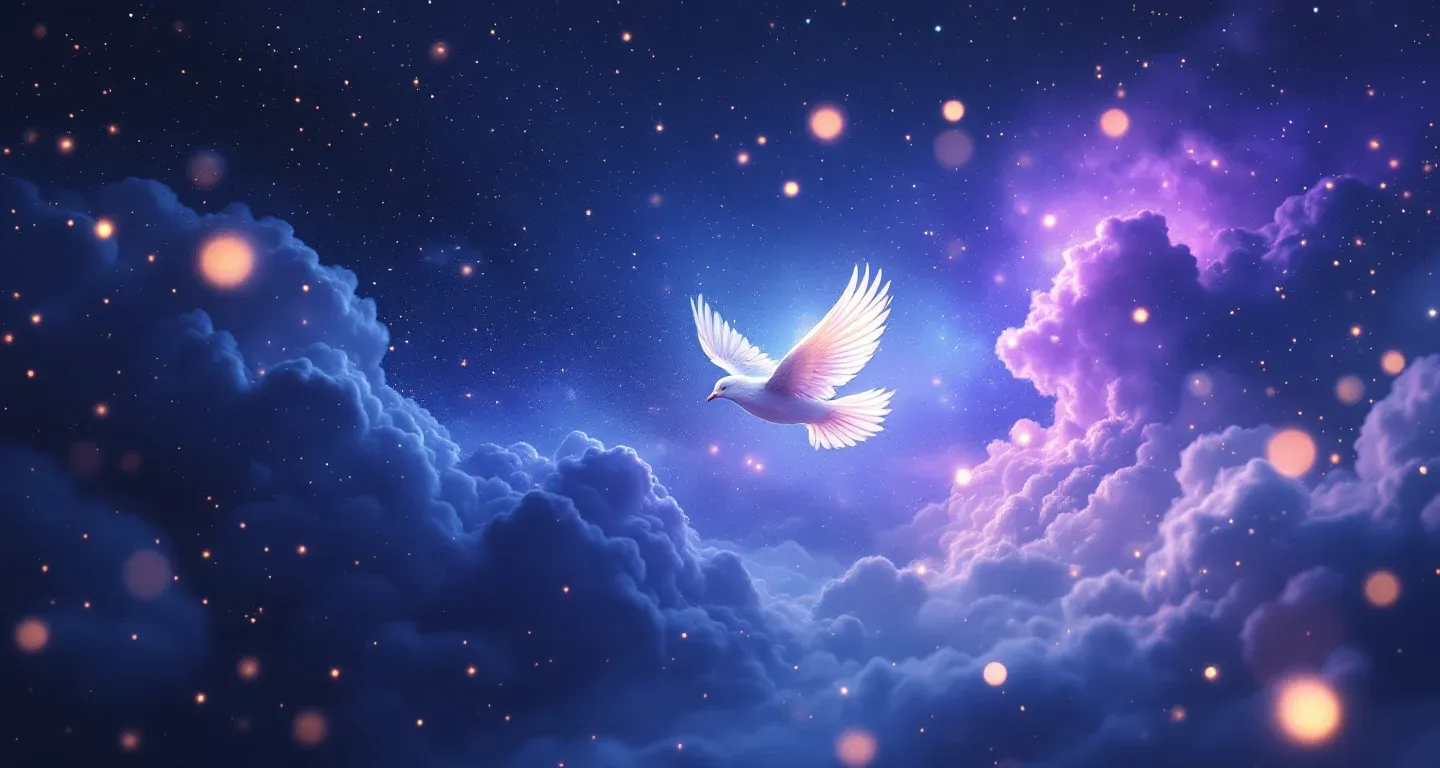
Seeing a bird in a dream is one of the oldest signs touching the skyward side of the soul. The bird often carries news; at times it speaks the language of joy, at times of separation, and at times of a longing the heart can no longer hold. A flying bird lightens what has grown heavy inside you, while a bird in a cage can stand like a waiting word, a postponed path, or a sentence left unsaid. For that reason, bird dreams do not open only one door; the bird’s species, color, voice, number, and the feeling you had in the dream all change the direction of interpretation.
In traditional interpretation, the bird has been linked with news, fortune, travel, and sometimes sudden turns in a person’s fate. In the interpretations associated with Ibn Sirin, the bird is often read as a symbol of rising news and a message that reaches you. In Nablusi’s Tâbîr al-Anâm, the bird is sometimes connected with provision and sometimes with a voice coming from far away. Kirmani pays close attention to the bird’s behavior: is it aggressive, calm, landing in a nest, or being carried upward into the sky? Abu Sa’id al-Wa’iz listens to the bird from a more mystical place: the lightness of the soul, the call of the heart, the window opening onto the heavens within you. In other words, the bird is not simply “good” or “bad”; it is a threshold.
That threshold sometimes brings joyful news, and at other times a sign of a burden you no longer want to carry inside. The beating of a bird’s wings resembles a change in your life that has not yet found its name. If the bird watches you in the dream, it may be asking you to pay attention to something; if it lands on you, it may point to a closeness approaching. The clearer the bird’s song, the clearer the language of the message. Silence, on the other hand, often calls up an inner waiting.
Interpretation from Three Windows
Jung Window
From a Jungian perspective, the bird is one of the lightest yet highest symbols of the psyche. The winged being carries the side of you that does not submit to gravity; it appears as an energy that wants to rise from the unconscious. Seeing a bird is often a call on the path of individuation: your everyday identity, the outer shell called the persona, begins to loosen before a wider self. Here the bird is not only a messenger; it is sometimes a subtle sign sent by the Self, the center.
How the bird appears in the dream matters. If it is flying, there may be an opening where your soul wants to be free. If it is in a cage, a repressed desire, a postponed expression, or a constrained feminine energy comes forward. Jung says that animals in dreams often represent the instinctual layer; the bird is the skyward form of that instinct rather than the earthbound one. For that reason, the bird is one of the softer forms of meeting the shadow. A person can sometimes fear lightness itself, because lightness means the loosening of control.
If the bird appears in the dream together with the mother figure, a nest, an egg, or a chick, it may call up the nurturing archetype. Feminine energy, protection, and tenderness become more visible. On the other hand, a bird of prey can carry a harsher face of the shadow: sharp intuition, impulsive attack, pressure coming from above. In Jung’s language, none of these is automatically good or bad; what matters is how they build a bridge between consciousness and the unconscious. The bird sometimes frees you, and sometimes shows you the place where you are avoiding freedom.
So the bird dream can be read as a threshold on the road to individuation. Your soul may want to look toward a wider horizon. Perhaps a long-unsaid intention, a new direction, a new language, or a new part of the self is trying to take wing. In Jung’s approach, the dream is not revenge for what has been repressed; it is a call to wholeness. The bird is one of the lightest, yet most insistent, voices of that call.
Ibn Sirin Window
In the interpretive tradition of Ibn Sirin, the bird is often associated with news and travel. In classical dream interpretation, seeing a bird can turn into a sign or a glad tidings depending on the kind of bird. A bird descending from the sky may be read as news coming from far away; a bird landing on your hand may point to unexpected fortune; a bird flying away can suggest a chance that cannot be held. According to Kirmani, the bird’s color and state matter greatly; a calm bird carries ease, while a restless or aggressive bird may point to unrest around you.
In Nablusi’s Tâbîr al-Anâm, the bird is sometimes linked with provision and blessing. Seeing a bird in the house may be understood as news reaching the household or an event touching the home. In the form transmitted by Abu Sa’id al-Wa’iz, the bird becomes the lightness of the soul and a hidden gate of destiny; a bird’s song may sometimes count as joyful speech and at other times as a warning that awakens the heart. Here there are small nuances between the sources: for some, the bird is clearly good news; for others, it is first a warning and then good news.
The beak, claws, flock, and nest of the bird also matter in interpretation. In the readings that developed around Ibn Sirin, a baby bird can symbolize a newly beginning task; a flock of birds can symbolize crowded news or collective movement. Kirmani especially pays attention to whether the bird is held in the hand: a bird that stays in your hand is fortune held in your hand; a bird that escapes is like an opportunity slipping away. Nablusi, when identifying what the bird represents, also looks at the dreamer’s state: for a single person, the bird may sometimes point to a spouse; for a traveler, to a journey; for someone in debt, to relief; for a person in hardship, to an opening door.
Yet in traditional interpretation, not every bird speaks the same way. A black bird may sometimes speak of heavy news, while a white bird may open a door to goodness. An attacking bird may show pressure from outside; a caged bird may show a narrowed possibility; a dead bird may signal the end of an era. In Abu Sa’id al-Wa’iz’s mystical line, the bird also touches the balance between the soul and the ego. For this reason, seeing a bird in a dream is at once an outer message and an inner call.
Personal Window
When you look at this dream through your own life, first ask yourself: what news have you been waiting for lately? Maybe a message, a phone call, a door, a road, an approval… Bird dreams often arrive with waiting. There may be a side of you that wants to fly, but you have not yet found its name. Or the reverse: you may have received a sign that something is about to lighten your life.
Remember how the bird behaved toward you in the dream. Did it come close, did it run away, was it in a cage, was it flying, was it singing? Every detail connects to the emotional rhythm of your real life. If you felt peace when you saw the bird, an area of life may be opening. If you felt fear, even the idea of freedom may be unsettling you. Sometimes a person wants to fly but cannot bring themselves to leave their burden behind. The bird reminds you of exactly that.
For you, is this dream about news in a relationship? A shift at work? A journey you have postponed for a long time? Perhaps your creative side wants to become more visible. Ask yourself: “What in my life is ready to rise into the sky now?” The bird is often a call heard not by the mind, but by the heart. If the bird landed on you in the dream, it may point to closeness and fortune; if it moved away from you, this may be a time to learn the art of letting go. In short, this dream whispers that you should look up to the sky, but not forget the nest.
Interpretation by Color
The bird’s color is one of the fastest signs changing the direction of the dream. Colors open the tone of the message the bird carries. A white bird calls in relief and purity, while a black bird may shift into a deeper and more cautionary language. Yellow, blue, red, or multi-colored birds open different doors both in traditional interpretation and in symbolic reading. Interpreters such as Kirmani and Nablusi often value color as a way of setting the tone of the sign, even when they do not separate it entirely from the species of the bird.
White Bird

A white bird usually leans toward good news, pure intention, and an open heart. In the interpretations associated with Ibn Sirin, whiteness recalls the soft and relieving arrival of news. Nablusi, too, tends to connect the white bird with lightness in the heart and purity in the surrounding intentions. If the white bird lands on you, it may point to a reconciliation, kind words, or a development that will ease your mind. But if the bird is very far away, it may also show that the relief you await has not fully arrived yet.
Black Bird
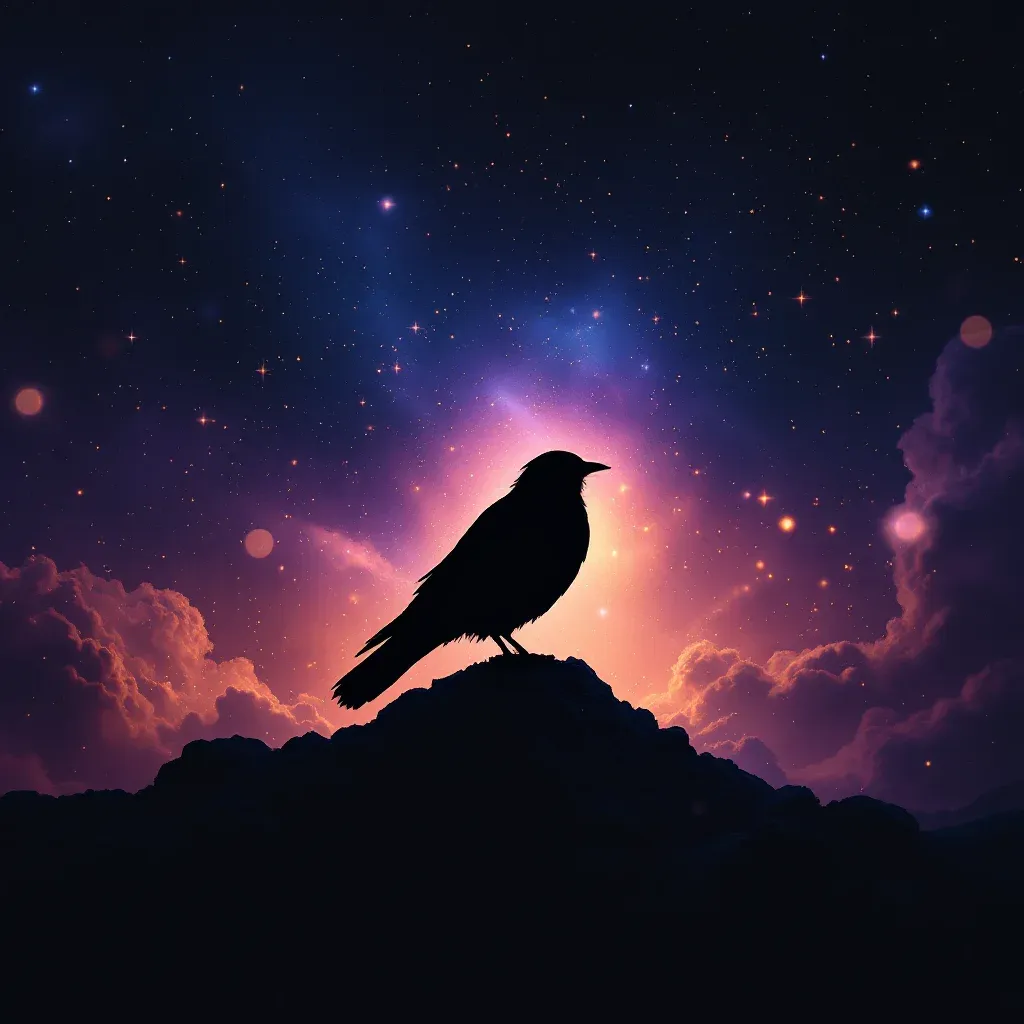
A black bird is not always bad, but the tone of its message is heavier. Kirmani is inclined to read dark-colored birds as figures carrying warning. In Nablusi’s line, a black bird may be a hidden intention, a heavy piece of news, or a matter touching your inner shadow. If the black bird looks aggressive, there may be a word, pressure, or uncertainty around you that is wearing you down. But if it is only flying in the distance, it may instead point to a thought rising from the depths of the unconscious.
Yellow Bird

In traditional interpretation, a yellow bird can sometimes suggest weakness, sometimes caution, and sometimes jealousy. Abu Sa’id al-Wa’iz often linked yellow tones with matters that leave the soul tired. Yet if the yellow bird is bright and alive, it can also point to mental clarity and becoming visible. If the bird is pale yellow, it may be wise not to rush a matter. If it shines like gold, a good piece of news may be opening its door.
Blue Bird
A blue bird is less classical but deeply symbolic. Nablusi’s readings of blue connect it with calm, distance, and the sky. A blue bird may describe inner peace, mental spaciousness, and a far-off dream drawing closer to you. The bird’s flight may show a time when the soul finds its own language; its stillness may show waiting inspiration. A blue bird often carries not the heart’s news, but the soul’s news.
Multi-Colored Bird
A multi-colored bird symbolizes a state where several feelings move at once. According to Kirmani, mixed colors can suggest indecision and multi-layered developments. Such a bird whispers that your life may currently hold several headlines at once, both joyful and tiring. While one side of fortune is opening, another issue may require your attention. A multi-colored bird shows that the dream does not speak in one color; it also reminds you that life itself is rarely made of only one shade.
Interpretation by Action
What the bird does gives the dream its real language. Flying, landing, singing, attacking, being fed, or dying — each opens a different threshold. In traditional interpretation, the bird’s behavior is read together with the way news arrives. Kirmani focuses on movement; Nablusi emphasizes the way the action touches you.
Flying Bird
A flying bird is the clearest symbol of freedom. In the interpretive tradition of Ibn Sirin, flight can be read as the rising of a matter, a piece of news moving away, or an intention lifting into the heavens. If the bird is flying high and smoothly, there may be a road opening before you. But if it flies too fast and without control, it may also describe a lost opportunity or impatience. A flying bird often carries the thin line between “going away” and “rising.”
Bird in a Cage
Seeing a bird in a cage is most closely linked with constrained feeling and delayed freedom. Nablusi tends to interpret a bird in a closed and limited state together with household matters or personal narrowing. If the cage is clean and orderly, it may be a temporary waiting period. If the cage is narrow, dirty, or broken, it shows the weight of a situation you want to escape. This dream sometimes whispers that you need to protect something you love, and sometimes that you need to let it go.
Singing Bird
A singing bird is like the voice of news. According to Abu Sa’id al-Wa’iz, a bird’s song is a call touching the soul or a sign of a word approaching you. If the song is pleasant and clear, a joyful development or inner relief may come. If it is sharp, disturbing, or continuous, it may represent a message that is tightening your nerves. The bird’s song can also point to a truth that breaks the silence within you.
Bird Attack
A bird attack points to a disturbance that looks small but has a strong effect. Kirmani says that aggressive animals often carry pressure or warning from the environment. When a light being like a bird turns aggressive, it may mean an unexpected word, a sudden piece of news, or something that seems minor but still stings. If the bird pecks you or comes at you with flapping wings, you may be feeling unprotected in some matter. This dream reminds you to guard your boundaries.
Feeding a Bird
Feeding a bird means a hope you are investing in and a fortune you are helping to grow. In Nablusi’s line, the act of feeding approaches the meaning of serving provision and developing something with compassion. If the bird eats without running away, a relationship, job, or intention you are tied to may be strengthening. If you felt peace while feeding the bird, your heart is open to spaciousness. If you struggled, you may be pushing too hard against something. The reward of effort comes in time.
Catching a Bird
Catching a bird represents an opportunity that will come into your hands or a feeling brought under control. In the interpretive line of Ibn Sirin, a bird held in the hand is sometimes fortune and sometimes a trust. If you caught the bird gently, you may be meeting a blessed opportunity. If you caught it harshly, this may be a period where the desire for control is stronger than usual. If the bird escaped, it says that some things can return to you only when you let them go.
Bird Flying Away
A bird flying away may be read as a lost opportunity, a conversation that has ended, or a piece of news moving farther away. Kirmani often interprets a bird that slips out of the hand as an opportunity changing hands. But this is not always loss; sometimes it is simply the right path. If you felt relief as the bird left, then something needs to be released. If there was sorrow, you may be living through a separation your heart has not yet accepted.
Dead Bird
Seeing a dead bird can be the symbol of a closing period, a fading enthusiasm, or delayed news. Abu Sa’id al-Wa’iz often treats images of dead animals as a drop in inner energy or the end of a season. A dead bird may look sad, but it can also describe a space that has been emptied. That space is the place of a new beginning. If the bird’s death shook you deeply, you may have clung too strongly to a hope.
Baby Bird
A baby bird is the most delicate state of a newly forming intention. Nablusi often links young animals with beginnings and the need for care. Seeing a baby bird may point to a task that needs protection, a new relationship, or an idea that requires effort. If the chick is very small, it should not be rushed. The dream says: be gentle.
Flock of Birds
A flock of birds means collective news, crowded developments, and a busy period. If a flock fills the sky, it may show that several matters in your life are moving forward at the same time. According to Kirmani, many birds signal a time when outside influences increase. If the flock flies in an orderly way, things may progress in harmony. If it is scattered, your inner and outer rhythm may be mixed up.
Interpretation by Scene
Where the bird appears makes the message more concrete. Home, street, tree branch, window, or sky — each scene places the bird’s meaning on a different ground. In traditional interpretation, location makes it clearer whom and what the news is touching.
Bird Entering the House
A bird entering the house is interpreted as news touching the home, a guest, or a development approaching your inner world. Nablusi often reads home scenes together with family, provision, and close-range influences. If the bird stays calmly in the house, there may be good news for the household. If it enters and leaves in a hurry, it may describe a temporary movement affecting the home’s order. A bird entering the house can also symbolize joy entering the heart.
Bird in the Sky
Seeing a bird in the sky points to pure freedom and distant goals. In the interpretive line of Ibn Sirin, things rising toward the sky are often linked with desire, prayer, and elevation. If the bird disappears into the sky, a distant matter may still be out of reach. But if it glides clearly, there is an intention moving toward its goal. This scene whispers that the soul is opening toward broad horizons.
Bird at the Window
A bird at the window symbolizes news standing on the threshold. It is neither fully inside nor outside; in other words, it may be a development waiting to happen, a relationship at the decision stage, or an opportunity not yet let in. Kirmani tends to read symbols around windows and doors in terms of entry, exit, permission, and fortune. If the bird lands on the window, your attention may be turning to something you do not want to hear, but that is on its way.
Bird in a Tree
A bird resting in a tree carries the balance between root and wing. According to Nablusi, a tree is linked with family, lineage, growth, and continuity. A bird in a tree means both rootedness and ascent. If the bird sits calmly among the branches, a matter in your life may be taking root. If it hops from branch to branch, indecision or multiple options may be increasing.
Bird in a Cage
The scene of a bird in a cage describes the area where freedom is limited. This may be a home, a job, a relationship, or an inner state of being trapped. Abu Sa’id al-Wa’iz tends to read animals seen in closed spaces together with the soul’s constriction. If the cage is clean, it may indicate a disciplined but narrow life space; if it is dirty and dark, there may be repressed pressure. If the bird sings inside the cage, that strange image can also mean inner resistance.
Interpretation by Feeling
The feeling you had toward the bird opens the heart of the interpretation. The same bird can bring good news to one person and fear to another. For that reason, feeling is the hidden compass of interpretation. The emotion the bird awakened in you shows what the dream is calling to you.
Being Afraid of the Bird
Being afraid of the bird may mean that you are avoiding a matter that looks light on the surface but has real force inside. Sometimes this fear comes from the uncertainty of news to come; sometimes it comes from the responsibility freedom brings. From a Jungian angle, this can be read as fear of facing the soul’s call to rise. In traditional interpretation, fear strengthens the warning side of the dream: you may mishear a word, react too early to a development, or make a small matter larger than it is.
Being Happy to See the Bird
Feeling happy when you see the bird is a sign of inner relief and readiness. In Abu Sa’id al-Wa’iz’s mystical line, joy is the heart meeting the right news. If the bird gave you happiness, there may be lightness approaching in your life. This joy may be the sign of a meeting, a kind word, or a relief you have been expecting.
Talking to the Bird
Seeing yourself talking to a bird is a state of receiving an intuitive message. In Jung’s language, this is the unconscious speaking to you in symbolic form. In traditional interpretation, a speaking bird is unusual but powerful; it often suggests that news will arrive directly and in an interesting way. If you remember what the bird said, those words are the key to the dream. If you do not remember, the feeling of closeness is enough.
Becoming a Bird
Seeing yourself turn into a bird is the most direct image of the desire for freedom. Such images can appear in periods when the persona feels too tight and the self longs for a wider life. In traditional interpretation, a human becoming a bird is often linked with ascent, travel, or a change of status. But sometimes it also speaks of the fear of being cut loose from the ground. This dream asks: “What burden do you want to become lighter from?”
A Wounded or Sick Bird
A wounded bird means a hurt hope. A dream may have wanted to take flight but met difficulty. Nablusi’s line often understands symbols of wound and illness as reduced energy and an area needing care. Seeing a wounded bird whispers that there is a sensitive place in you or near you that must be protected. This dream sometimes says, “Do not be harsh,” and sometimes waits to say, “Make room for healing.”
A Free Bird
A free bird is the moment when the soul gains spaciousness. Open sky symbolizes lightness and inner trust. If the free bird made you happy, you may have entered a better flow in life. If it saddened you, you may be watching something that has become free move away from you. In either case, the dream seeks balance between letting go and accepting.
Frequently Asked Questions
-
01 What does seeing a bird in a dream point to?
It usually highlights news, freedom, fortune, and an inner sense of lightness.
-
02 What does seeing a white bird in a dream mean?
It is often read as calm, pure intent, good news, or a feeling of relief in the heart.
-
03 Is seeing a black bird in a dream bad?
Not always; more often it carries a warning, a shadow aspect, or heavy news.
-
04 What does it mean to see a bird flying in a dream?
It can suggest release, an opening path, distant news, or an intention rising.
-
05 What does seeing baby birds in a dream tell you?
It suggests a new hope, a task that needs protection, or a tender intention.
-
06 How is feeding a bird in a dream understood?
It can point to compassion, a dream you are nurturing, and a fortune that is growing.
-
07 What does seeing a dead bird in a dream mean?
It may suggest a dream fading, delayed news, or the closing of a chapter.
✦ Just for you ✦
Write your dream,
we'll read it
If what we wrote above doesn't quite fit — tell us yours. Your own bird dream, with its unique details, may deserve a different reading.
✦ Your dream arrived.
We'll get back to you when the reading is ready. Don't want to wait? Download RUYAN for an instant reading.
Could not reach the server.
We saved your dream locally — when you reload later, we'll auto-resend it.
Next step
This reading is a beginning. Let's look at your whole dream — if you wish.
RUYAN reads your "Bird" dream through your life, your birth chart, and your recent dreams — one by one, just for you.