Seeing a Bee in a Dream
Seeing a bee in a dream often points to effort, abundance, order, and the quiet power of acting together. A bee can symbolize lawful earnings and productivity, or carry a small but meaningful warning. The details matter: its color, whether it stings, and whether it appears in a hive or lands on you.

General Meaning
Seeing a bee in a dream often carries the blessings of work, order, community spirit, and sometimes a subtle warning. A bee is not a creature that wanders aimlessly; whatever it gathers, it brings back to the hive. Wherever it goes, there is intention, effort, and purpose. For that reason, this dream often whispers that something in your life is moving, and that an unseen order is being built quietly. In the bee’s language, there is both the sweetness of honey and the sting of the needle. In other words, the dream carries two wings: one that comforts, and one that makes you think.
The role the bee plays in the dream matters greatly. If it is only flying from afar, there may be tasks, conversations, opportunities, or small tensions circling around you. If there is a hive, the themes of family, team, work environment, and belonging become stronger. If a bee lands on you, there is an opportunity approaching your life, or a matter that asks for attention. If it stings, this can sometimes be read as a painful word, a delayed reaction, or the burden you have been carrying finally becoming visible. Details such as killing it, chasing it, feeding it, or collecting honey can change the direction of the dream completely.
In classical interpretations, the bee has often been seen as a good sign; yet this goodness is not a gift that falls from the sky. It is a reward that comes through sweat and effort. The dream may be telling you: work, build order, and keep your intention clean. At times, the soul that is searching for its place in the crowd finds an echo in the disciplined community of bees. Then the bee becomes not just an insect, but a symbol of your own power to work, create, and share.
Three Perspectives
Jung’s Perspective
From a Jungian point of view, the bee is a powerful archetype of collective life and disciplined productivity. It gains meaning less as a solitary being and more as part of an order. For this reason, seeing a bee in a dream often reminds you of the delicate balance between the “I” and the “we” on the path of individuation. The hidden theme may be the human ability to remain centered while still joining the group, and to connect personal labor to a wider web of meaning. Psychologically, the bee can also call attention to the bridge between persona and self: is the functional face you show the world aligned with your inner essence?
The bee’s sting can be read as a symbol of meeting the shadow. Every productive system contains tension: too much sacrifice, burnout, jealousy, control, small but accumulating anger… If the bees attack in the dream, it may be the unconscious saying, “You have scattered too much,” or “Something is piercing you.” Honey, by contrast, is the transforming fruit of effort. It does not turn pain directly into sweetness, but it speaks of the inner reward that appears at the end of patiently processed experience. In Jung’s language, this is the process of creating meaning from raw material.
A bee colony is also a fitting symbol of the collective unconscious. Seeing a swarm rather than a single bee suggests that your life is not only your individual story, but part of a larger weaving with your environment, your work, your family, and your habits. The order of the hive speaks to the soul’s search for inner order. If you feel peaceful among the bees, it may show that you are beginning to align with your own rhythm. If you feel uneasy, the load of persona may have become heavy; the side of you that works for everyone else but arrives late for itself may be asking for attention. In Jung’s eyes, the bee is a call to find meaning through labor and to remember your place within the community.
Ibn Sirin’s Perspective
In the tradition associated with Muhammad ibn Sirin, the bee is often linked with blessing, benefit, and lawful gain that rises from among the people. The fact that a bee produces honey points to lawful provision and a blessing earned through effort. According to Kirmani, the bee represents a hardworking community and an orderly line of work; especially if a hive is seen, it may point to increased order and income within the household or work circle. In Nablusi’s Tabir al-Anam, the bee is sometimes interpreted as useful people, and at other times as a small but important group that requires caution. In other words, the dream may look sweet on the surface, while asking for prudence underneath.
As Abu Sa’id al-Wa’iz is reported to have conveyed, the bee can also mean benefit gathered from people, earnings that come through sweat, and perseverance in a task. If the bee does not harm you, this indicates that a door of blessing is open. But if it stings you, some interpretations read this as a painful word, a delayed payment, or an unexpected jolt in the work you have invested in. Kirmani takes a more practical line here: an attacking bee is a small but persistent matter surrounding you. Nablusi, meanwhile, may read it sometimes as fitna, and sometimes as a warning.
In some interpretations attributed to Muhammad ibn Sirin, entering a hive suggests that you are moving closer to good, and controlling bees may be equivalent to managing a community. However, killing a bee is viewed unfavorably by some scholars, because harming a useful creature can resemble cutting off a source of earnings or closing the door to work. On the other hand, Abu Sa’id al-Wa’iz sometimes interprets a dead bee as a livelihood that has slowed down or a movement that has faded. So there are fine differences among the sources: for some, the bee announces a good deed; for others, it points to small conflicts inside a useful environment. The dream’s language is understood according to the bee’s condition.
Personal Perspective
Now ask yourself gently: What work have you been in lately, and what kind of effort does it ask of you? If you saw a bee in a dream, there may be an area in your life that needs order. Perhaps it is a project that grows slowly, perhaps a new balance you need to build in your family, or perhaps a call to return to the rhythm of your own body. A bee usually does not say, “Do more.” It whispers more like, “If you are working, gather your intention.”
How did you see the bee in this dream? Was it flying, coming toward you, in a hive, carrying honey, or stinging you? Every detail touches a different corner of your life. If you were afraid of the bee, perhaps you have been tired of turning small problems into large ones. If you liked the bee, perhaps you are ready to finally see the return of something you have been creating. If there were many bees, your life may be full of crowd-like but productive energy: meetings, conversations, responsibilities, shared tasks…
And there is another thing: a bee goes to the flower, not to empty space. What is your soul moving toward these days? What is feeding you, and what is drying you out? The dream does not accuse you; it simply draws attention. Perhaps you are giving too much and resting too little. Or perhaps you have been working for a long time and waiting for results. A bee dream comes as if to say, “Hear the sound of your effort.” Which part of you is working, which part is tired, and which part is waiting for honey? The answer to those questions is the real key.
Interpretation by Color
The bee’s color softens or sharpens the tone of the dream. The same bee means something different when it is white, black, yellow, or gold. Colors either cleanse the symbol’s energy or make it more intense. Classical interpretation often notes that appearance changes the meaning of a dream. In the lines of Kirmani and Nablusi, light colors are often read as good intention and gentle news, while dark colors point to caution, pressure, or hidden matters. The bee’s color shows which door it is speaking through.
White Bee
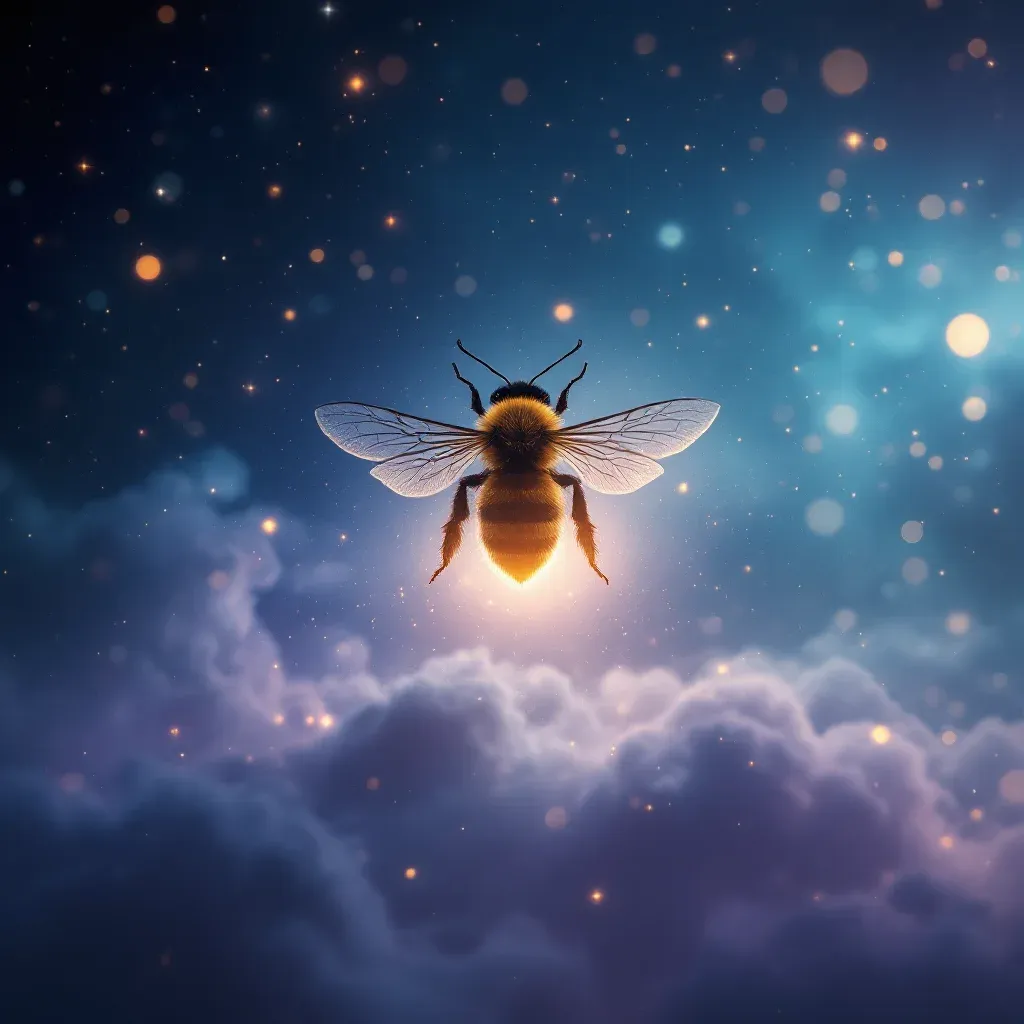
A white bee is a rare yet very gentle sign. Seeing a white bee in a dream can speak of effort guided by clean intentions, lawful and peaceful earnings, and work that grows without breaking hearts. Abu Sa’id al-Wa’iz often links clear and spacious signs with good beginnings, and the white bee can be read along those lines. Its whiteness calls to the purity of honey, a soft language in relationships, and a pace of production that does not wear you down. If the white bee lands on you, a blessed opportunity or sweet news may be approaching.
Black Bee

The black bee carries a heavier tone. In Nablusi’s Tabir al-Anam, small creatures seen in dark colors are sometimes interpreted as hidden tension, jealous eyes, or fatigue building up from within. Seeing a black bee does not necessarily mean something bad, but it does ask for attention. Especially if the black bee is attacking, there may be harsh words, strong competition, or a pressure weighing on you. Kirmani, in such readings, recommends looking at the intention and the outcome together: a black bee can sometimes simply symbolize a strong, disciplined effort that does not give up easily.
Yellow Bee
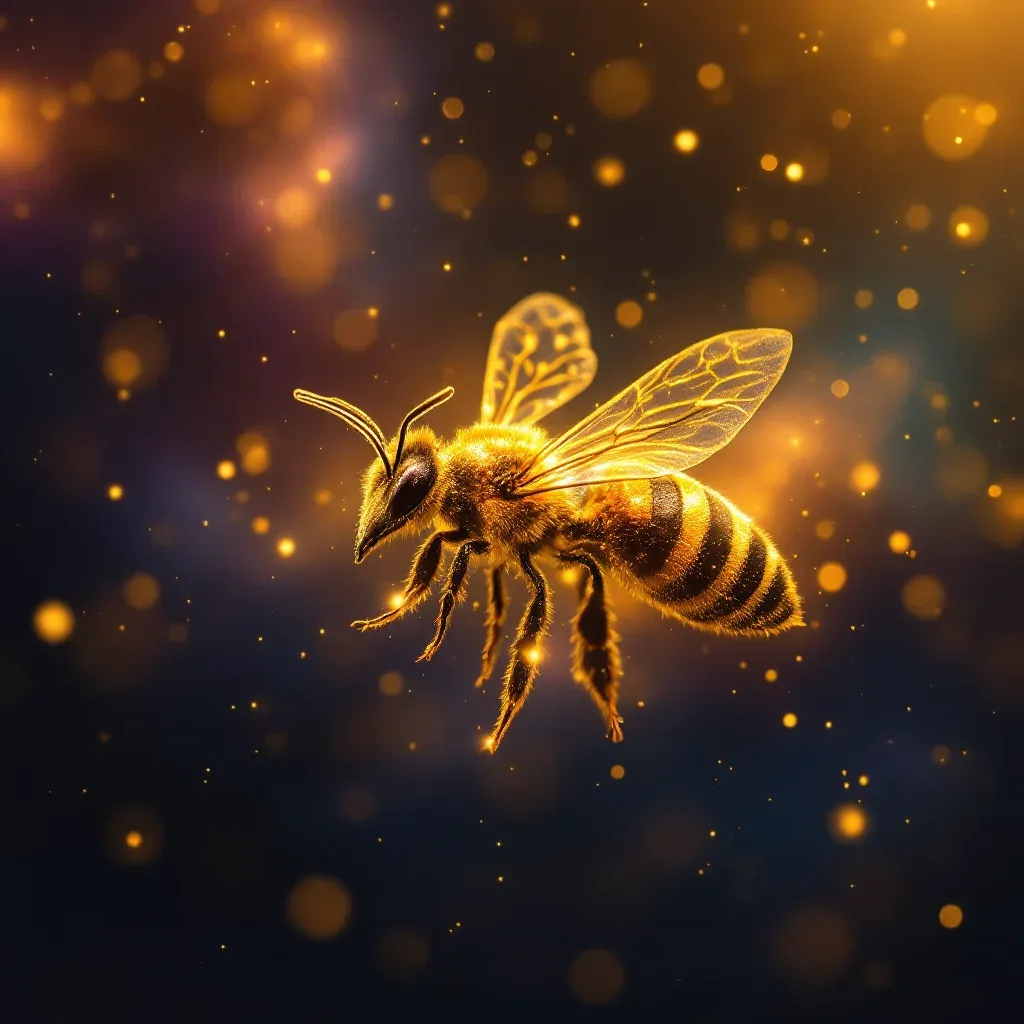
The yellow bee is one of the most classical and vivid images. Yellow means sun, attention, energy, and sometimes a gentle warning. In the line associated with Muhammad ibn Sirin, yellow tones may connect with visibility and alertness. A yellow bee may show that a job you have been working on is beginning to attract attention, or that people around you are noticing you more. But if the yellow becomes too dominant, it can also carry restlessness, haste, or the feeling of being too exposed in a matter. Like a color related to the sun, the yellow bee carries both blessing and motion.
Golden Bee
A golden bee is a symbol of abundance and valuable effort. According to Kirmani, such an image may point to the fact that what you have worked for will gain worth. The golden tone suggests a piece of work that stands out, or that receives recognition, beyond the ordinary. This dream can mean promotion, honor, or the shining of your hidden skill like gold. Yet gold also has weight; what is precious wants to be protected. So the golden bee also whispers, “Take good care of what you have.”
Gray Bee
A gray bee is a tone of uncertainty and transition. Not fully light, not fully dark… This dream may describe an unfinished task, mixed emotions, or a system in your life that has not yet settled into place. In Nablusi’s interpretive line, gray tones point to areas that are unclear but can still be resolved. The gray bee feels neither fully threatening nor fully promising; it asks you to wait and observe. If there are many gray bees, you may be in a period where several things in life remain open at once.
Interpretation by Action
In a bee dream, movement is one of the strongest keys to meaning. A bee is never a static symbol; in every state it is doing something, going somewhere, approaching something, or defending something. The same bee can be read as hope when flying, warning when stinging, blessing when making honey, and a closed cycle when dead. In this section, we listen to the pulse of the dream by looking at what the bee is doing. In the lines of Kirmani, Nablusi, and Abu Sa’id al-Wa’iz, action is one of the most important signs shaping the interpretation.
Seeing a Swarm of Bees
A swarm of bees means crowded energy, intense work, a noisy environment, and collective movement. In the line associated with Muhammad ibn Sirin, groups of living creatures are often connected with community, people, and shared affairs. If you saw a swarm of bees, there may be a lively period around you: meetings, messages, conversations, joint projects, or family intensity. If the swarm feels friendly, it carries abundance and vitality; if it feels aggressive, it can create pressure. Multiple bees can also be read as many small tasks arriving one after another rather than one single issue.
Seeing Baby Bees
Baby bees are a sign of a new effort, an idea still growing, or the possibility of fresh income. Abu Sa’id al-Wa’iz often links things seen in a small and new state with beginnings and seeds. Seeing baby bees describes a process that is not yet fully mature, but already carries a sweet future within it. If the baby bees look orderly and healthy, you have a task that is growing through patience. If they appear scattered or weak, that matter may need more care.
Feeding Bees
Feeding bees means consciously giving energy to an area where you are already invested. According to Nablusi, showing care to a useful creature may mean supporting a work that will bring gain or helping a community to grow. If you are feeding bees, you may have a project you are protecting, a relationship you are nurturing, or a skill you are patiently developing. This dream often carries a good intention, but it also asks: is the effort you give truly feeding you too? Or are you only keeping someone else’s hive alive?
Being Stung by a Bee
A bee sting is one of the most memorable and felt aspects of the dream. Kirmani often interprets the sting as a painful but small matter, not a major collapse, but something that should not be ignored. A bee sting may represent a hurtful word, an unexpected expense, pressure at work, or a demand coming down on you. The place of the sting also matters: the hand can point to work and effort, the face to visibility, and the foot to the path and direction. If the pain grows after the sting, a hidden issue has now become visible.
Being Bitten by a Bee
In everyday speech one usually says “stung by a bee,” but in dream language the feeling of being bitten can also appear. Being bitten means a boundary has been crossed. In Nablusi’s line, small creatures that cause harm may point to sharp words, sudden reactions, or unexpected outbursts coming from your surroundings. If the bee is biting or stinging you, someone may be pushing you too hard. This dream reminds you of your inner boundary against places that say, “keep carrying more.” Sometimes it is also the symbol of a period in which you are pushing yourself too hard.
Seeing a Bee Chasing You
A bee chasing you means a responsibility approaching you, or a matter you have been avoiding catching up with you. Abu Sa’id al-Wa’iz often says that in dreams of being chased, the tasks people avoid return to knock on the door again. If a bee is chasing you, a small but persistent issue may not be leaving you alone: a delayed conversation, a pending payment, an unfinished task… If you panic while running, the burden may be growing; but if you move away calmly, the matter may actually be manageable.
Killing a Bee
Killing a bee is a symbol that needs to be approached carefully in classical interpretation. In the line associated with Muhammad ibn Sirin, harming a useful creature can sometimes mean closing the door to earnings or interfering impatiently with your own labor. Kirmani, however, may in some cases read it as putting an end to a pressure that seems harmful. So it is not one-sided. If you felt relief while killing the bee, it may suggest that you cut off a burden weighing on you; but if you felt regret, you may have pushed away a useful opportunity too harshly.
Catching a Bee
Catching a bee means gathering scattered energy. This dream shows that you are noticing an opportunity and trying to bring it under control. According to Nablusi, seizing a living creature can resemble trying to guide its meaning. If you are catching the bee, your desire to organize your affairs may be strong. But if you hold it too tightly, you may be controlling even the useful thing in a way that causes harm. Catching requires not only skill, but also measure.
Running Away from a Bee
Running away from a bee can show a tendency to enlarge a small threat; yet sometimes it is a wise act of setting boundaries. Abu Sa’id al-Wa’iz emphasizes a person’s limit of endurance in scenes of escape. If you are running from a bee, perhaps you want distance from the details that have been tiring you in daily life. In another reading, the dream may symbolize your attempt to avoid a task that bothers you. The feeling of the escape matters: is it fear, caution, or exhaustion?
Seeing a Bee Making Honey
Seeing a bee making honey is one of the most auspicious images. Honey is the final product in which effort turns sweet. In the lines associated with Muhammad ibn Sirin and Kirmani, honey production is interpreted as lawful earnings, fruitful work, and a beautiful reward at the end. If the bee is making honey, a long-running task may finally bear fruit. This may not be money alone; sometimes it is peace, sometimes respect, and sometimes inner satisfaction. Honey arrives like a reward that was delayed, but truly deserved.
Interpretation by Scene
Where the bee appears makes the meaning even clearer. A bee seen at home does not speak in the same tone as one seen in a field, on a bed, at work, or inside a hive. The place shows which area of life the dream touches. In classical interpretation, the scene helps the symbol find its owner. If a bee enters your home, family and privacy are emphasized; if it appears at work, profession and responsibility come forward; if it appears in nature, growth and abundance take the lead.
A Bee Entering the House
A bee entering the house can be read as movement, news, or abundance coming into the home. According to Kirmani, useful creatures associated with the house often touch family order and livelihood. If a bee enters your home, a matter concerning the household may become active. But if the bee feels restless, there may also be small arguments, hustle and bustle, or the noise of guests. A bee carrying honey makes the scene more favorable.
Seeing a Hive
The hive is the most central scene in a bee dream. It means order, unity, division of labor, and stored abundance. Nablusi often interprets collective and organized structures within the frame of livelihood and order. If the hive is full, matters are likely going well; if it is empty, the expected yield may not yet have formed. The hive is also your inner world: how much productivity, how much protection, and how much sharing live inside you?
Seeing Bees in a Garden
Seeing bees in a garden is a sign of something growing in a natural flow. A garden is a field of effort, care, and vitality. If bees are there, something in your life may be blooming little by little. Abu Sa’id al-Wa’iz often associates positive images around gardens and flowers with abundance. If the bee moves calmly through the garden, it gives the feeling of being in the right place at the right time. A large number of bees may show that the garden is in demand, or that your labor has become visible.
Seeing Bees at Work
Seeing bees at work says a lot about your work rhythm, team relationships, and productivity. The bee is already the symbol of labor, so when it appears in the workplace, that theme becomes stronger. In interpretations attributed to Muhammad ibn Sirin, vitality in the work sphere, the door of earnings, and the people around you all matter. If the bee is peaceful at work, the rhythm is good; if it is aggressive, there may be pressure, competition, or too much load. Especially if it appears with desks, papers, meetings, or phones, it suggests that the noise of work has increased.
Seeing Bees on the Bed
Seeing bees on the bed suggests a thought, disturbance, or unexpected warning entering your private space. This scene may say that your place of rest is not fully resting. In Nablusi’s line, the bed relates to private life and inner ease. If the bee is on the bed, your mind may not be able to shut down because of one issue. Sometimes it is also interpreted as a small but irritating sting in relationships, a hurtful word, or tension that slips into sleep.
Interpretation by Feeling
How you felt about the bee in the dream opens the final door of interpretation. Fear, peace, curiosity, disgust, admiration… Each feeling shows which side of the symbol touched you. The same bee may feel like abundance to one person and a threat to another. That is why emotion is the dream’s faithful translator. As much as traditional interpretation matters, the tone of feeling in the dream matters too.
Being Afraid of a Bee
Being afraid of a bee is often linked to small matters growing large inside you. The fear does not come so much from the bee itself, but from what it might bring: a sting, pain, pressure, loss of control… Abu Sa’id al-Wa’iz says that in dreams involving fear and animals, there may be a truth you are hesitating to approach. If you are afraid of the bee, there may be something in your life that unsettles you, yet may actually be easy to resolve. Fear sometimes enlarges the dream as much as the issue.
Feeling Love for a Bee
Feeling love for a bee shows a willing approach to effort, routine work, and productivity. This dream says the bee awakens inspiration in you rather than threat. In Kirmani’s practical interpretive line, closeness to what is useful means an openness to the door of earnings. If you love the bee, you may be making peace with the thing you work on in your life. The act of giving effort, accepting process, and respecting patience becomes visible. This is a good sign for your spirit.
Feeling Like a Bee
Feeling like a bee reveals the part of you that works hard, gathers a lot, and keeps order. In Jungian language, this may mean the persona leans too strongly on usefulness; yet it can also show that the productive center of the self is strong. If you are working like a bee in the dream, you may feel the weight of responsibilities you carry. But this dream also asks: are you always the one who gives, or do you sometimes get to taste your own honey too?
A Talking Bee
A talking bee is the direct voice of the unconscious. The bee’s speech is a symbolic form of a truth that does not usually find words in waking life. For Jung, animals speaking is the symbolic expression of instinctive knowledge. If the bee is speaking to you, its words may carry a warning, a direction, or an approval. If you remember what it said, the core of the dream is likely there. A talking bee can carry especially strong guidance about direction, work, and boundaries.
Seeing a Lost Bee
A lost bee describes scattered effort or a small attempt that has lost its direction. If the bee has disappeared, the rhythm of a task or relationship may have broken down. Interpretations in Nablusi’s line about lost or weakened creatures often point to diminishing benefit. A lost bee is a dream that asks, “Where did the old order go?” Yet every loss is not the end; sometimes it is only a repositioning.
Seeing a Sick Bee
A sick bee is productivity slowing down. This dream may mean exhaustion, a cramped routine, or effort that cannot be shared properly. Abu Sa’id al-Wa’iz often reads weakened or exhausted symbols as signs that support is needed. If you saw a sick bee, one of your matters may need care. Maybe the pace, maybe the intention, maybe your own right to rest. If the bee is ill, the hive grows quiet too; the dream draws your attention to this.
Seeing a Bee with Honey
A bee carrying honey is one of the clearest images of good news. Honey shows that the expected result has arrived and the effort has become sweet. In the lines associated with Kirmani and Muhammad ibn Sirin, such scenes are remembered with favor. A bee with honey may mean earned income, pleasing news, or the reward of a task you have invested in. Yet too much honey also requires care, because what is sweet can spoil if it is not protected. So the dream reminds you not only to gain, but also to preserve what is gained.
Touching a Bee
Touching a bee means making direct contact with a matter. If the contact is gentle, it gives a sense of mindful closeness and control. If it is rough, it carries the risk of being stung. Touching a bee may symbolize approaching a subject you want to handle but have been wary of. In classical interpretation, such contact requires reading intention and outcome together. To touch can mean to claim, to test, or sometimes to show unnecessary boldness.
Frequently Asked Questions
-
01 What does seeing a bee in a dream mean?
It points to abundance, effort, order, and sometimes a small warning.
-
02 What does seeing a white bee in a dream mean?
It is usually read as cleaner intentions, good news, and a gentle kind of gain.
-
03 Is seeing a black bee in a dream bad?
Not necessarily, but it can carry pressure, jealousy, or a sharp warning.
-
04 What does a bee attack in a dream mean?
It can describe a job, a word, or a sense of group pressure coming toward you.
-
05 What does seeing a baby bee in a dream mean?
It suggests a new small effort, a fresh gain, or a growing idea.
-
06 How is feeding bees interpreted in a dream?
It is read as nurturing a project, and patiently growing results.
-
07 What does seeing a dead bee in a dream mean?
It may point to a stalled matter, reduced abundance, or a closing cycle.
✦ Just for you ✦
Write your dream,
we'll read it
If what we wrote above doesn't quite fit — tell us yours. Your own bee dream, with its unique details, may deserve a different reading.
✦ Your dream arrived.
We'll get back to you when the reading is ready. Don't want to wait? Download RUYAN for an instant reading.
Could not reach the server.
We saved your dream locally — when you reload later, we'll auto-resend it.
Next step
This reading is a beginning. Let's look at your whole dream — if you wish.
RUYAN reads your "Bee" dream through your life, your birth chart, and your recent dreams — one by one, just for you.