Seeing a Baby in a Dream
Seeing a baby in a dream often signals a new beginning, a tender feeling that needs protection, or an intention that has not yet taken shape. Sometimes it speaks of joy, sometimes responsibility, and sometimes it reminds you of your own vulnerable side. The details change the meaning.

General Meaning
Seeing a baby in a dream often speaks from the freshest place in life. It may be a beginning that has not yet been named, a feeling that wants protection, or an intention waiting patiently to grow. In dream language, a baby is not only about childhood; it also carries vulnerability, innocence, and responsibility wrapped together with hope. That is why a baby dream can sometimes open like good news, and sometimes leave an invisible burden on your shoulder. The dream is whispering, “What is beginning in your life right now?”
A baby dream is closely tied to relationships, family, home life, and the way you give and receive care. A baby may call out your tender side, or it may reveal a neglected part of yourself. A smiling baby can point to inner ease, while a crying baby may point to a gap that needs attention. A newborn baby suggests a process that has not yet fully formed; a baby in your arms shows a responsibility you have taken on; a lost baby can point to a bond or intention that needs protection. The smallest detail can change the whole meaning.
In classical interpretation, a baby is sometimes a blessing and sometimes a good thing that arrives through effort. That is because every new thing first needs care. Seeing a baby may point to a new job, a new relationship, a new hope, a new home rhythm, or a new inward birth. Here, the feeling of the dream matters deeply: Were you looking at the baby with love, or with worry? Did your heart widen when you touched the baby, or did you feel burdened? The dream speaks through that feeling.
Three Lenses of Interpretation
The Jungian Lens
From a Jungian perspective, the baby is one of the purest images of the Self, full of possibility. It represents what has not yet taken shape, yet already holds an entire future within it. For this reason, seeing a baby in a dream is not limited to longing for a child or becoming a parent; it can also point to the birth of a new self on the path of individuation. Sometimes the fragile core hidden beneath the persona appears in the form of a baby. Sometimes a soul that has long been in contact with shadow finally embraces its softer side in a dream.
Jung reads the baby motif together with the archetype of rebirth. One identity is ending while another is not yet complete; the baby appears at this threshold. The dream is almost saying, “You are not finished, but you are being born.” In this sense, the baby symbolizes a potential that is incomplete, yet alive. If the baby is crying, it often points to a repressed need or a part of you that wants to be seen. If the baby is calm, a new inner balance may be forming. A smiling baby can be read as reconciliation with the inner child.
In terms of feminine energy, the baby also opens the space of nurturing, holding, and growing. In some dreams, the baby shows your movement toward a more balanced anima or animus, because wholeness cannot be built without tenderness. If a man dreams of a baby, it may signal the awakening of emotional softness and the capacity to care. For a woman, the baby can symbolize creative power, new ways of relating, or inner fertility. In Jung’s language, this is an archetypal birth: the soul being born again from within itself.
The baby also symbolizes the uncertainty the future carries. You hold a tiny life in your hands, but no one yet knows where it will lead. That is why seeing a baby in a dream carries responsibility as well as hope. Your psychological thresholds, the places where you are ready or not ready, and your willingness to grow all appear in this symbol. In the individuation process, the baby is one of the most delicate and precious things entrusted to you.
The Ibn Sirin Lens
In the interpretation tradition of Muhammad ibn Sirin, images of children and babies are often linked with the renewal of worldly affairs, joyful news within the home, and the taking on of a new burden. In some readings, a baby points to livelihood and good news; in others, it signals increased responsibility. That is because what is newly born can only grow through care. For this reason, seeing a baby in a dream may open the door to a blessed beginning, but it may also place a trust on your shoulders that requires patience.
According to Kirmani, if the baby in the dream is beautiful and brings peace, it is interpreted as relief entering the home, joyful news, or a gentle development. If the baby is crying, appears dirty, or looks weak, the interpretation becomes more cautious; Kirmani says that in such cases, affairs should be handled carefully and with attention. In Nablusi’s Tâbîr al-Anâm, too, a child or baby is a symbol that carries both blessing and responsibility; it may be read as worldly enjoyment, or as expansion that comes after a temporary tightness.
As reported by Abu Sa’id al-Wa’iz, seeing a baby may sometimes indicate that a joyful piece of news is approaching, or that a hidden wish in the heart is about to come to light. In classical interpretation, however, the baby’s gender, condition, facial expression, crying, and the way it is carried all matter greatly. For example, in some reports a male baby can point to a heavy responsibility and a benefit that comes through effort, while a female baby is more often read as mercy, softness, and an opening of the heart. These distinctions are presented in different tones across the sources.
For some interpreters, seeing a baby means relief from debt and greater harmony at home; for others, it means that before something new can be born, patience is required. In Nablusi’s approach and Kirmani’s approach, there is a subtle difference: one highlights the opening of the door to good, while the other reminds you of the responsibility that comes with that good. Read together, the dream becomes complete. A baby is not only good news; it is also the name of a trust.
The Personal Lens
How did you look at the baby in this dream? Was there warmth in you, or urgency? Because seeing a baby in a dream often reflects your emotional response to something new in your life. Maybe a relationship is just beginning, maybe a matter at home has entered a delicate phase, or maybe a long-held intention is finally trying to become visible. The dream reads the way you meet that new thing.
Who or what in your life has needed more care lately? A person, a plan, a job, the home environment, even a tired part of yourself… Sometimes a baby dream reminds you of your capacity to tend to something with care. Sometimes it asks, “You carry everyone else all the time—so who is carrying you?” If you held the baby in your arms, that often points to ownership and responsibility. If the baby was crying, an ignored area may be calling out to you.
Ask yourself this as well: Does the thing that is beginning in your life bring joy, or does it feel like a burden? The same symbol can be read very differently depending on the emotional tone. A baby may be the messenger of new love; it may also be the sign of a sensitivity that must be protected. What part of you did the baby awaken—your caring side, your fearful side, your hopeful side, or your tired side?
This dream can also touch relationships directly. A new page may have opened in a relationship, or an old bond may have become more fragile. The baby shows how you are carrying the newness in your heart. So do not only look for the meaning outside yourself; listen to which part of you is trying to grow.
Interpretation by Color
In baby dreams, color is like a fine veil over emotion. The same baby may speak of a pure intention when white, a fear or force in the depths of the unconscious when black, sensitivity and the need for caution when yellow, love and closeness when red or pink, and calm or distance when blue or gray. In classical interpretation, color details matter greatly; even in the style of Kirmani and Nablusi, color can shift the direction of the meaning.
White Baby
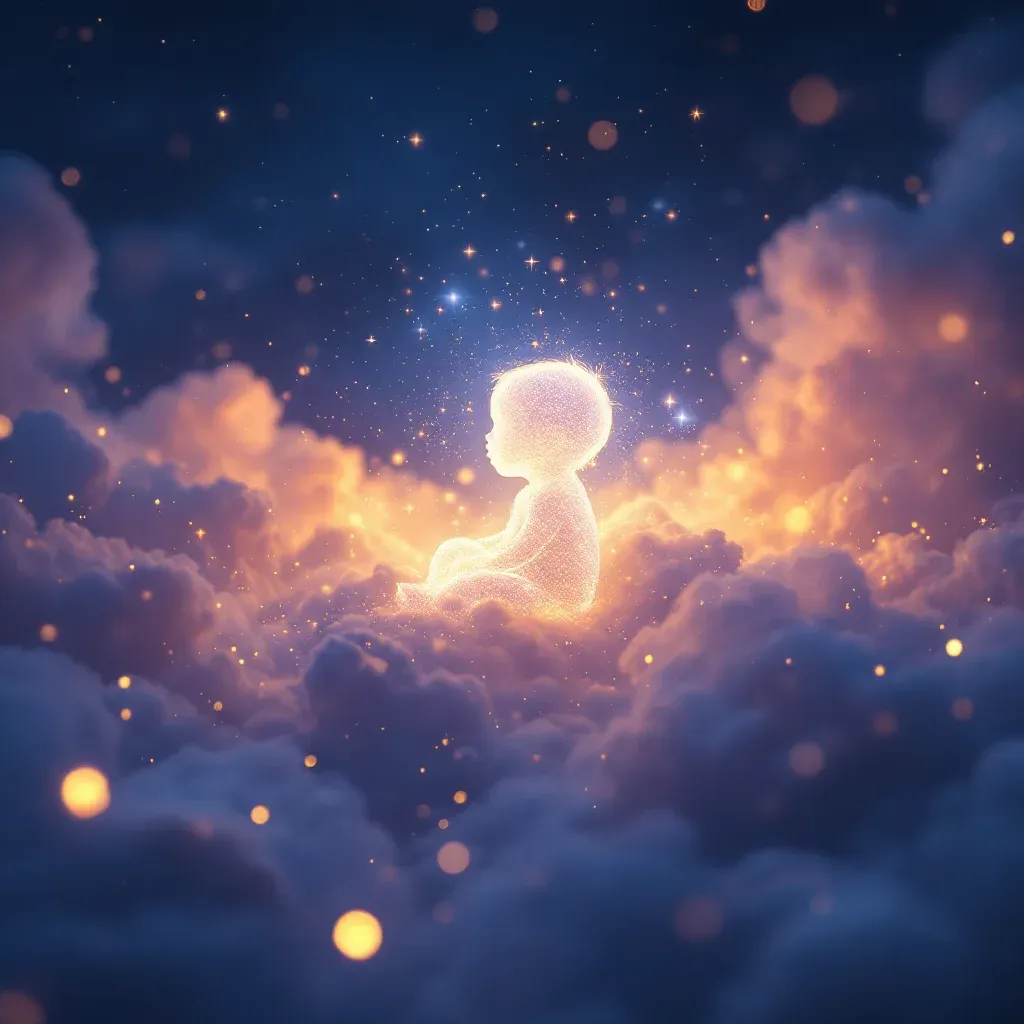
A white baby most often calls in a blessed beginning, a clean intention, and an innocent wish carried in the heart. In Nablusi’s interpretive line, white is often read together with clarity and relief; for that reason, seeing a white baby suggests that gentle news and comforting developments may be near. It is especially connected with a fresh page opening in the areas of home, family, and relationships.
From a Jungian angle, a white baby resembles pure potential before it has touched the shadow. It appears like a part of the soul that has not yet been stained, wounded, or closed off by defenses. If the white baby brought you peace in the dream, you may have come close to your own fragile but strong core. This can sometimes point to a relationship that can be repaired, or to a fresh emotional beginning. Kirmani says that in such scenes the good is open, yet because it is a baby, the emphasis on care and tenderness remains.
Black Baby
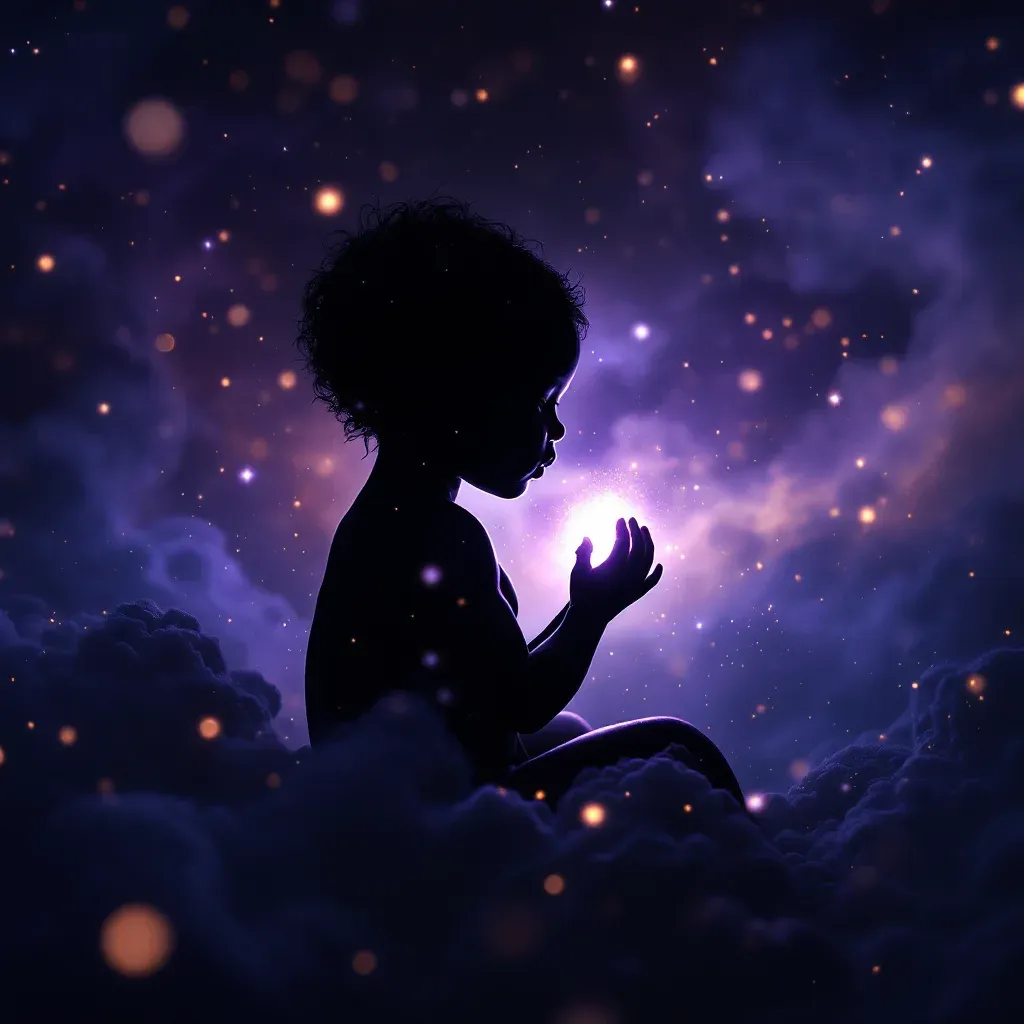
A black baby may seem surprising at first, but it does not only carry negativity; sometimes it reveals the deep, unrecognized parts of the unconscious. In Jungian terms, black is the color closest to the shadow archetype. So seeing a black baby can mean that repressed feelings, fears, or an unnamed responsibility is coming into view. The dream may be whispering, “What you did not want to look at has now become visible.”
In the Ibn Sirin tradition, blackness is read differently depending on the context. As Abu Sa’id al-Wa’iz reports, a dark and somber-looking baby can point either to a troubling matter or to a task that requires great effort but eventually brings benefit. If the baby did not frighten you, it may also represent hidden and deep potential. If it did frighten you, then something in you wants to be spoken. What matters here is whether black felt threatening or profound.
Yellow Baby

A yellow baby is traditionally read as a color that calls for caution. Yellow tones may point to sensitivity or to an energy that tires quickly. In Kirmani’s style, pale or yellowish images suggest that affairs should move gently. For that reason, seeing a yellow baby may remind you not to rush and not to neglect the need for care and tenderness.
On a Jungian level, yellow suggests that the light of consciousness is increasing, but emotional sensitivity is also rising. If the baby is yellow, the new thing in your life may be passing through a delicate phase. Misunderstandings in relationships, fragile balances at home, and vulnerable expectations in the heart can all appear through this color. In Nablusi’s view, everything newly born wants protection; yellow makes that need more visible. The dream may be advising you to be gentle.
Red or Pink Baby
A red or pink baby is connected with love, closeness, warmth, and vitality. Especially in pink tones, it can point to soft emotional bonds, a search for tender connection, and an opening of the heart. In Abu Sa’id al-Wa’iz’s more spiritual tone, such a color can be read as the heart coming alive and the soul warming through love. If the baby appeared joyfully to you in the dream, there may be a lovely softening in relationships.
Red, however, is a stronger call. In Jung’s view, red is the color of life force and instinct. If the baby is red, the beginning may be charged with intense feeling. This can be love, jealousy, or a heightened protective instinct. The dream may show that love is not only sweet, but also passionate and protective. Kirmani pays close attention to the movement of the heart in such images.
Gray or Blue Baby
A gray baby can point to emotions that have become neutral, a process that is still on hold, or a relationship that has not yet become clear. In Nablusi’s interpretive logic, gray tones are neither fully good nor fully bad; they show an in-between zone of uncertainty. This baby may be telling you, “There is something waiting.”
A blue baby, on the other hand, represents a calmer, more inward, and deeper emotional field. In Jungian reading, blue is linked with spirituality and inner peace. If the baby is blue, the new beginning may carry emotional depth. It could mean a relationship moving slowly but safely, greater calm in the home, or a quiet birth in your inner world. As Abu Sa’id al-Wa’iz would suggest, where there is stillness, the greatest news sometimes grows.
Interpretation by Action
In baby dreams, the story often opens through movement. If the baby is being born, held, breastfed, crying, lost, or speaking, the tone of the interpretation changes. Classical interpreters give the state and action at least as much importance as the form itself. A baby may seem like a passive symbol, but every action in the dream reveals the nature of your relationship to it and the level of responsibility involved.
Newborn Baby
A newborn baby is the purest form of a beginning. In Muhammad ibn Sirin’s interpretive line, birth often connects with fresh news, a new opening, or an opportunity that was not visible before. If you saw a newborn baby in your dream, a process in your life may have begun without yet being named. It could be a relationship, a job, an intention, or a new order within the family.
From a Jungian perspective, a newborn baby is a part of the self that is extremely delicate but full of potential. When something is just born, it needs protection; for that reason, the dream may be steering you away from haste. In Nablusi’s interpretation as well, what is newly born is often mentioned together with joy and effort. So it may be a blessed opening, but it needs attention to stay open.
Holding a Baby
Holding a baby means willingly taking responsibility into your arms. According to Kirmani, such scenes can point to a person taking on a task, protecting a family bond, or carrying an emotional burden. If the baby felt light in your arms, the responsibility may suit your nature. If it felt heavy, what you have taken on may be more than you thought.
In Jungian reading, holding a baby is the acceptance of the inner child. In other words, you may be embracing the part of yourself that wants protection. This is an important threshold, because a person moves toward wholeness only when they can carry their own vulnerability. Holding the baby carefully in a dream also points to an attentive and protective manner in relationships.
Breastfeeding a Baby
Breastfeeding a baby is about nourishing, growing, and keeping something alive. In the interpretations reported by Abu Sa’id al-Wa’iz, breastfeeding is read as the growth of something you have invested in, and as carrying life to another from your own essence. This dream may point to giving support with tenderness in relationships, feeding a project, or showing sacrifice within the family.
Jungianly, breastfeeding is the expression of creative energy. Something within you is giving life to something else. Yet the dream can sometimes show a one-sided pattern of giving. If you felt tired while breastfeeding, you may be giving too much and receiving too little in return. In Nablusi’s line, breastfeeding carries both mercy and attachment, because what is fed becomes tied to you.
A Crying Baby
A crying baby is one of the most attention-demanding symbols. Kirmani says that a crying child may be a warning that falls into the home, because crying is the voice of a need that wants to be seen. Seeing a crying baby in a dream may mean a repressed feeling, a neglected relationship, or a delayed responsibility is calling to you.
On a Jungian level, a crying baby is one of the clearest signs of contact with the inner child. Some part of the soul is still hungry, and it says so through sound. If you were able to soothe the baby, your ability to meet the problem may have grown. If you could not, there may be an emotionally starved area in your life. Nablusi’s reading highlights the need for attention and mercy.
A Smiling Baby
A smiling baby is relief and an opening of the heart. In the interpretive tradition of Muhammad ibn Sirin, smiling faces are often associated with good news. When a baby smiles, the language of the dream softens; meanings of ease in a task, warmth in a relationship, or greater peace at home begin to emerge.
From a Jungian perspective, a smiling baby means reconnecting with inner innocence. Your playful, alive, and safe side has become visible. This dream can especially represent a softening after difficult times. Still, too much joy can sometimes appear just before a delicate period, so the overall feeling of the dream matters. Abu Sa’id al-Wa’iz says that joyful images often call in heart relief.
Feeding a Baby
Feeding a baby means steadily growing, supporting, and protecting something. In Nablusi’s world of interpretation, the act of feeding is connected with seeking blessing in the area where you have made an effort. Feeding a baby in a dream may mean keeping a relationship alive, tending to a project, or strengthening family bonds.
From a Jungian angle, this is the act of patiently growing a new formation within you. Sometimes it is an idea, sometimes love, sometimes a new way of living. Growth takes time. If the baby was calm while being fed, your effort may be finding a response. If the baby refused to feed, the area you are trying to nurture may not be ready yet.
Losing a Baby
Losing a baby may seem frightening, but it does not directly mean disaster. More often, it expresses fear that something needing protection may slip away. In the lines of Kirmani and Nablusi, loss themes are interpreted alongside neglect, disorganization, and lack of attention. If you lost a baby in the dream, you may be struggling to protect something new in your life.
From a Jungian perspective, this scene concerns the directionless state of inner potential, meaning that a person has not yet fully claimed the part of themselves that is being born. Sometimes it is a bond in a relationship that is not being nourished enough; sometimes it is an opportunity not being taken up. The dream calls for awareness, not panic. In Abu Sa’id al-Wa’iz’s view, loss is often a call to search again.
A Dead Baby
A dead baby is one of the heaviest symbols and must be interpreted with great care. This image often speaks of an unfinished hope, a process that ended too early, or an intention that never got to live. In Nablusi’s tradition, images of death do not always mean literal death; sometimes they indicate an ending state, or a door closing so that a new beginning can come. In this context, a dead baby points to a process that ended before it could grow.
From a Jungian standpoint, it may mean that potential has been suppressed or that a newly born part has not been nourished enough. Even so, the dream does not speak only of loss; it can also open the need to grieve and let go. In relationships, this symbol may gather expectations; in work, impatience; in the inner world, a passion that has burned out. What matters most in such a dream is honestly seeing what has quietly ended inside you.
A Speaking Baby
A speaking baby is unusual, but deeply meaningful. In the reports of Abu Sa’id al-Wa’iz, a speaking child may be seen as the mouth of a wise message or the expression of an unexpected truth. If the baby speaks in your dream, your unconscious may be giving you a direct message. If you remember the words, they are especially valuable.
In Jungian terms, a speaking baby shows that a part of you that seems immature actually carries a wise inner voice. Sometimes the purest place in us says the truest thing. The dream may therefore be asking you to listen to the intuition that logic has silenced. In Kirmani’s line, such a scene may also be read as an unexpected message or a small but effective sign.
An Angry or Screaming Baby
An angry or screaming baby intensifies the emotional field. This dream shows that an issue has become too loud to keep postponing. In Muhammad ibn Sirin’s tradition, children’s voices can sometimes point to tension in the home; but the deeper emphasis is on needs becoming visible. If the baby is shouting, some area is demanding your attention.
In Jungian interpretation, this is the rise of a repressed feeling. The delicate part within you is no longer willing to stay silent. If you felt anger in the dream, there may be a boundary violation in relationships or within the family. If you felt only concern, the call is more about protection. In either case, the dream is saying, “Hear me.”
Interpretation by Scene
Wherever the baby appears, the dream takes on the spirit of that place. A home, a street, a hospital, a crowd, or an empty room each carries a different relationship pattern. The baby reads differently inside the home, outside, or in unfamiliar hands. In classical interpretation, the setting shapes the direction of the symbol.
A Baby Entering the Home
A baby entering the home may mean a new blessing, a message, or a new sensitivity entering the household. Kirmani often links clean and beautiful figures entering the home with auspicious developments. If the baby enters the house, there may be a new beginning in family life, a new responsibility, or a softening in relationships.
From a Jungian perspective, the home is the structure of the self; a baby entering the home looks like a new part being born into that structure. This means a new feeling is finding its place in your inner life. If the baby moves peacefully through the home, the new thing may be settling into your life. If it cries inside the house, there is a sensitivity in the family field that needs attention.
A Baby in a Hospital
A baby in a hospital points to healing, protection, and vulnerability in a symbolic rather than medical sense. In Nablusi’s line, places like hospitals indicate that something needs to be cared for. If the baby is in a hospital, a newly begun process may not yet be strong enough on its own.
In Jungian interpretation, this scene describes a beginning that needs psychic healing. Maybe a new relationship, a new plan, or a new family rhythm is not yet resilient. The baby here is like a potential trying to hold on to life. The dream may be advising patience and asking you not to force everything to conclusion too quickly.
A Baby on the Street
Seeing a baby on the street points to a vulnerable area. This scene may express distraction, defenselessness, or a feeling exposed in public life. According to Abu Sa’id al-Wa’iz, delicate figures seen in open spaces are connected to secrets and relationships that need protection.
From a Jungian angle, the street is collective life; if the baby is on the street, your private and fragile part may have been dropped into the middle of the outer world. This can mean feeling exposed in relationships, or living a new beginning where everyone can see it. The dream is calling for privacy and protection.
A Baby in a Crowd
Seeing a baby in a crowd means a sensitivity is being left too visible. In Muhammad ibn Sirin’s interpretive logic, a crowd is linked with outside influence and too much talk. If the baby is in a crowd, there may be too many voices, opinions, or pressures around one matter.
On a Jungian level, this is the inner child getting squeezed by the social persona. Perhaps you are trying to protect a new feeling while everyone else’s expectations push in. This scene especially speaks to situations in relationships where other people’s opinions carry too much weight. If the baby still remains visible, your sensitivity is still intact.
An Abandoned Baby Outside the Home
An abandoned baby is one of the heaviest scenes. In the lines of Nablusi and Kirmani, an abandoned child image is read through neglect, forgetfulness, and lack of care. This dream may show that a relationship, intention, or inner need has not been properly owned.
From a Jungian perspective, the abandoned baby is the inner child left in the shadow. The part of you that longs for tenderness may have been left alone somewhere. This scene can carry both fear of abandonment in relationships and the fear of leaving someone else halfway. The dream comes not to accuse you, but to awaken you.
Interpretation by Feeling
The strongest key to a baby dream is often the feeling itself. Did you feel joy, fear, tenderness, guilt, or surprise? The same baby opens completely different doors depending on the feeling around it. Classical interpreters also pay close attention to this, because the symbol is completed not by itself, but by the heart’s response to it.
Feeling Happy About the Baby
Feeling happy about the baby in a dream means being at peace with what is new. This may be a relationship, a home rhythm, news, or an intention. In Muhammad ibn Sirin’s interpretive tradition, joy often comes with auspicious openings. If you were happy about the baby, your heart may be ready to accept a new beginning.
From a Jungian perspective, this feeling signals healthy contact with the inner child. Your pure, playful, and gentle side may have become visible. This dream can also point to more warmth and trust in emotional relationships. The feeling of joy strengthens the blessing side of the dream.
Feeling Afraid of the Baby
Feeling afraid of a baby may seem strange at first, but it is highly meaningful. Sometimes even the smallest things awaken a large sense of responsibility. Kirmani reads frightened scenes as warnings: there is an area that needs attention. If you are afraid of the baby, a new relationship, duty, or feeling may be more challenging than you expected.
A Jungian reading sees fear as contact with the shadow. The part of you that wants protection may be afraid of a responsibility that has not yet grown. This dream carries the question, “Am I ready?” If fear is present, the issue may be less the baby itself and more the newness it represents.
Feeling Tenderness Toward the Baby
Feeling tenderness toward the baby means coming close to the soul’s soft center. In Abu Sa’id al-Wa’iz’s spiritual tone, tenderness is the opening of mercy. Such a dream may show that you are standing in a more nurturing, protective, and warm place in relationships.
From a Jungian standpoint, this means greater harmony with the anima and a stronger peace with the inner feminine field. Tenderness creates the inner climate needed for something new to grow. The dream may be whispering, “What you can nourish belongs to you.”
Feeling Guilty About the Baby
Guilt usually carries the sense that something has not been protected enough. If you felt guilt in a baby dream, there may be an area in life you believe you have neglected. Nablusi’s interpretive line values the question of honoring a trust; for that reason, guilt can sometimes be a real warning, and sometimes an overburdened conscience.
On a Jungian level, this feeling can point to harshness toward yourself. You may not be treating your own fragile side gently enough. The dream may be inviting you to forgive yourself and return to the unfinished place with love. Guilt can be a doorway to repair, as long as it does not freeze you.
Feeling Sad After Seeing the Baby
A sad baby dream may carry lost innocence, a postponed desire, or a longing coming from the past. In Muhammad ibn Sirin’s traditional line, sorrow can sometimes also be read as a tightening before relief. If the baby makes you sad, you may be holding an inner mourning for the fragility of something new.
From a Jungian angle, this sadness may be contact with childhood wounds or the unmet needs of the inner child. Still, this does not have to be a bad sign. Sometimes sadness shows that something is finally being seen honestly. To see is the first threshold of healing.
A General Summary
Seeing a baby in a dream carries a very clear call, even though it cannot be reduced to one sentence: what matters is how you are carrying what is new in your life. That new thing may be a relationship, an intention, a home rhythm, or the soft center within you. A baby carries both joy and responsibility; it can be both a blessing and a trust. In classical interpretation, this is why patience, care, and mercy are read together.
The Jungian lens reminds you that the baby is the symbol of a self that is being born. The Ibn Sirin tradition adds blessing, responsibility, and news to that birth. The personal lens brings you back to your own life: What are you growing right now? What are you trying to protect? What may you have neglected? The dream opens around these questions.
The essence of a baby dream is this: what looks small may carry the biggest future. If the dream left you with warmth, try to nourish the new thing with love. If it left you with fear, recognize the area that needs protection. If it left you with sorrow, return to the fragile place within you. A baby always speaks in the language of beginnings; what matters is the heart with which you answer.
Frequently Asked Questions
-
01 What does seeing a baby in a dream indicate?
It points to a new beginning, innocence, and an intention that needs protection.
-
02 What does seeing a newborn baby in a dream mean?
It suggests a process that has just begun and a fresh opening ahead.
-
03 Is seeing a crying baby in a dream a bad sign?
It can reflect emotional neglect, an issue that needs attention, or inner restlessness.
-
04 What does seeing a smiling baby in a dream mean?
It is usually a gentle sign of relief, joy, and a promising new start.
-
05 How is holding a baby in a dream interpreted?
It means taking on responsibility, owning a task, or protecting a relationship.
-
06 What does breastfeeding a baby in a dream suggest?
It is connected to nourishing, growing, and sustaining something you have invested in.
-
07 What does seeing a dead baby in a dream mean?
It can be read as an unfinished hope, a closing chapter, or an intention that was delayed.
✦ Just for you ✦
Write your dream,
we'll read it
If what we wrote above doesn't quite fit — tell us yours. Your own baby dream, with its unique details, may deserve a different reading.
✦ Your dream arrived.
We'll get back to you when the reading is ready. Don't want to wait? Download RUYAN for an instant reading.
Could not reach the server.
We saved your dream locally — when you reload later, we'll auto-resend it.
Next step
This reading is a beginning. Let's look at your whole dream — if you wish.
RUYAN reads your "Baby" dream through your life, your birth chart, and your recent dreams — one by one, just for you.